
Search News
Industry Portal
Hot Articles
Biometric Lock vs Keypad Lock: Which Is Safer in Daily Use?
Time
Click Count
Daily security starts with what happens at the door
Choosing between a biometric lock and a keypad lock looks easy at first glance.
The harder question appears after months of real use, shared access, battery warnings, wet fingers, forgotten codes, and late-night lockouts.
That is why the debate around biometric lock security has moved beyond novelty.
It now sits inside a larger smart hardware conversation about reliability, identity, and physical protection.
From the SHSS perspective, smart access belongs to the same critical layer as strong fasteners, resilient tools, and protective equipment.
Each one secures a boundary that people depend on every day.
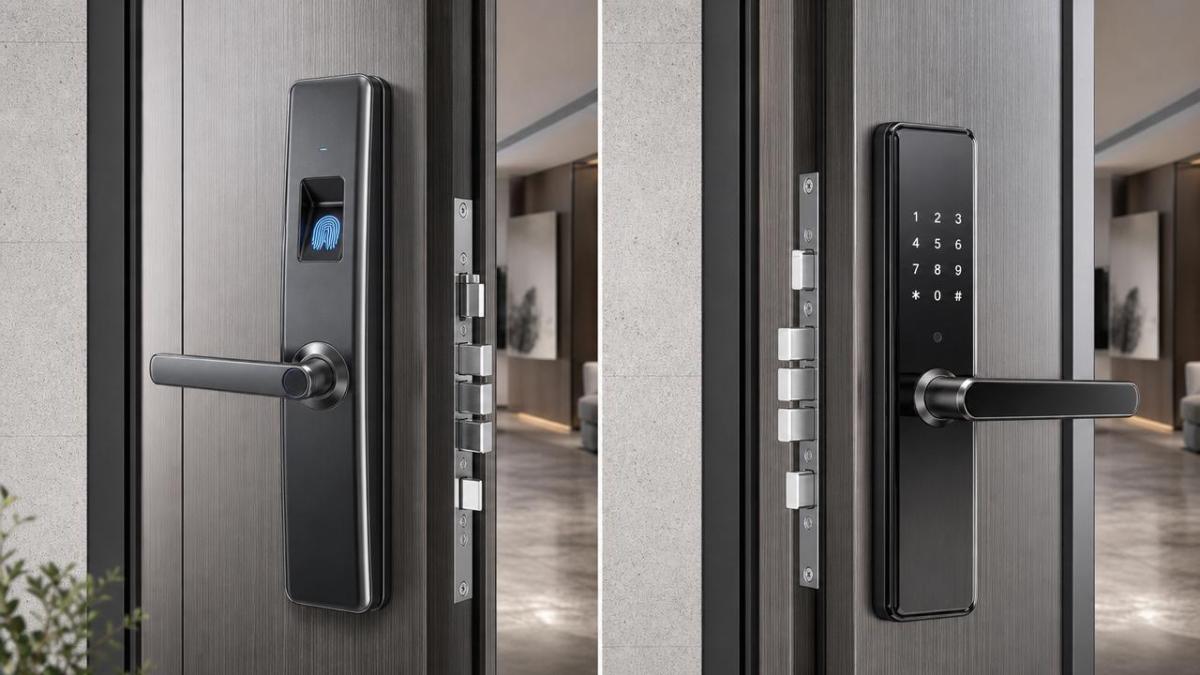
For home entry, the safest choice is rarely the most futuristic one.
It is the lock that resists common failure points while staying usable under ordinary pressure.
What separates a biometric lock from a keypad lock
A keypad lock verifies knowledge.
If the right PIN is entered, the door opens.
A biometric lock verifies identity through a fingerprint, face, iris, or another body-based credential.
In daily residential use, fingerprint models dominate because they are faster and more affordable.
This difference matters because each system fails in different ways.
Codes can be guessed, shared, observed, or forgotten.
Biometric credentials cannot be casually borrowed, but sensors can reject a valid user if the reading conditions are poor.
So when people ask which lock is safer, they are really asking which risk profile they can manage better.
Why this comparison matters more now
Smart locks are no longer niche devices for premium homes.
They are now part of mainstream upgrades tied to AIoT ecosystems, app control, remote alerts, and digital household management.
At the same time, people expect hardware to work with the same certainty they expect from structural hardware or protective gear.
A lock is not just convenience technology.
It is the first physical checkpoint for personal safety, package security, and private space.
Industry attention has also shifted because biometric recognition is improving rapidly.
Better sensors, faster matching, and local processing make a modern biometric lock more practical than earlier generations.
Still, improved recognition does not automatically mean stronger everyday protection.
The full answer depends on attack methods, maintenance habits, and backup options.
Safety in daily use is more than anti-theft strength
A useful comparison should look at several dimensions at once.
In practice, daily safety means the lock resists misuse without becoming a burden to legitimate entry.
A lock that is secure on paper but frustrating at the door often leads to bad habits.
People may keep doors unlocked, share backup codes too freely, or disable smart features entirely.
Where a biometric lock often feels safer
The strongest everyday advantage of a biometric lock is credential control.
A fingerprint cannot be guessed the way a simple PIN can.
It also cannot be casually told to a neighbor, visitor, or delivery contact.
That lowers the quiet risk of code spread over time.
A good biometric lock also reduces visible entry patterns.
There is no keypad routine to watch, memorize, or record from a nearby camera.
For homes with frequent comings and goings, that matters more than many buyers expect.
Some models add local storage of biometric templates instead of cloud dependence.
That design choice improves privacy and aligns with the broader SHSS view that edge intelligence can strengthen physical security.
The limits behind the promise
A biometric lock is not automatically better just because it uses advanced recognition.
Low-quality sensors may struggle with dry skin, cuts, gloves, aging fingerprints, or cold weather.
Cheap units can also have weak liveness detection.
That means the safety difference between models can be much larger than the difference between categories.
Why keypad locks still hold their ground
Keypad locks remain popular because they are predictable.
A number code works even when fingers are wet, scratched, or covered by gloves.
That reliability can be reassuring in harsh weather, busy family routines, or temporary rentals.
They also make temporary access easy.
A short-term PIN for cleaning staff, guests, or repair work is simple to create and revoke.
Yet this flexibility creates the main weakness.
The more often codes are shared, reused, or left unchanged, the less meaningful the lock becomes as a controlled boundary.
Another issue is pattern exposure.
Repeated button wear, smudge trails, and visible typing behavior can narrow down likely combinations.
That does not guarantee a breach, but it increases avoidable risk.
The real answer depends on the setting
No lock category wins equally in every daily environment.
- For a single household with stable users, a biometric lock often offers tighter control and faster daily entry.
- For homes with many temporary visitors, a keypad lock may handle changing access more simply.
- For older properties with exposed weather, sensor tolerance and battery backup become more important than unlock method alone.
- For mixed-use spaces, a hybrid model with fingerprint, PIN, app, and mechanical override is often the safest route.
This is where modern smart hardware thinking matters.
The lock should be treated as one component in a larger security chain.
Door material, strike plate strength, firmware support, lighting around entry points, and alert settings all affect the outcome.
How to judge a lock beyond marketing claims
A safer buying decision usually comes from practical checks, not headline features.
Look for these signals
- Fast local recognition instead of heavy cloud dependence.
- Encrypted storage of fingerprint templates.
- Liveness detection or anti-spoof protection.
- Low-battery alerts and external emergency power support.
- A physical key override that is secure but accessible.
- Clear user deletion controls for old credentials.
- A durable body and reinforced deadbolt, not just a smart front panel.
For a biometric lock, sensor quality deserves special attention.
For a keypad lock, audit trail features and PIN management matter more than style.
If a product does both, compare how well each method works rather than assuming the combination guarantees safety.
A balanced view for everyday use
So, which is safer in daily use?
In many homes, a well-built biometric lock is safer because it limits casual credential sharing and reduces observation risk.
But that advantage holds only when the sensor is dependable, the template storage is secure, and backup access is thoughtfully designed.
A keypad lock can still be the better daily choice when environmental conditions are rough or access needs change often.
The better question is not whether biometric is modern and keypad is basic.
It is whether the lock matches the real pattern of entry, the level of access control needed, and the tolerance for failure.
A smart comparison starts with the door, but it should end with the full security ecosystem around it.
Before deciding, map the access habits, check the override options, and compare how each lock handles the small problems that happen every week.
That is usually where true safety reveals itself.
Recommended News