
Search News
Industry Portal
Hot Articles
How to Evaluate a Biometric Lock Factory Before You Source
Time
Click Count
Why does the choice of a biometric lock factory matter so much?
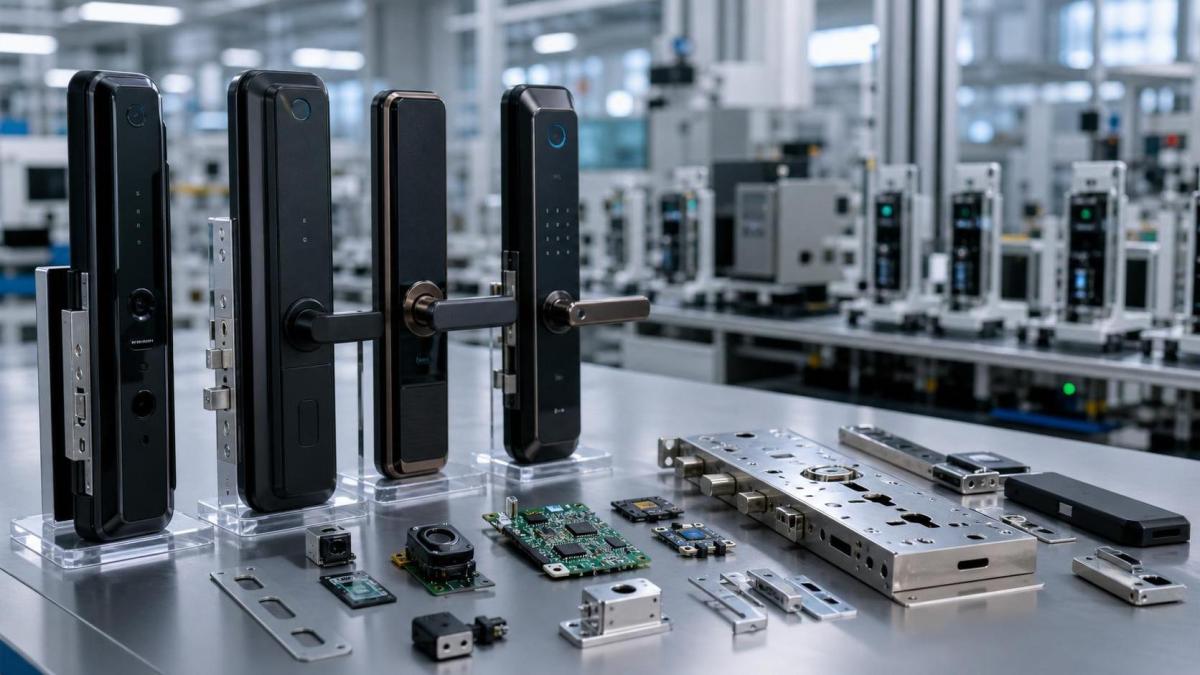
A biometric lock factory is not just a source of hardware. It shapes product reliability, data handling discipline, delivery stability, and your long-term support burden.
That matters because biometric locks sit at the meeting point of physical security and digital identity. A weak supplier can create failures on both sides.
In practical sourcing, price is rarely the real risk. The larger risk is paying for rework, compliance gaps, field failures, or unstable lead times later.
A capable biometric lock factory should prove that it can manage sensors, firmware, mechanical durability, and secure production processes in one system.
This is why industry platforms such as SHSS track biometric security alongside fasteners, tools, lighting, and PPE. The common theme is dependable protection under real operating pressure.
When a facial scan controls access to a server room, or a fingerprint lock guards a commercial site, procurement quality becomes a security decision, not only a cost decision.
What should you check first when screening a biometric lock factory?
Start with production reality, not brochure language. Many suppliers assemble standard parts, but fewer control the critical steps that affect consistency.
The first useful question is simple: what does the factory actually make in-house? Sensor integration, lock body machining, PCB testing, firmware loading, and aging tests should be visible.
A factory visit or remote audit should clarify whether the biometric lock factory owns process control or depends heavily on outside subcontracting.
It also helps to ask how the factory separates consumer-grade smart locks from commercial or project-grade products. That distinction usually reveals its engineering maturity.
- Monthly output by product family, not just total units.
- Main biometric methods used, such as fingerprint, facial recognition, iris, or palm vein.
- Lock body materials, surface treatment, and cycle life targets.
- Firmware update method and version traceability.
- Failure analysis flow for returned units.
If answers stay vague, that usually signals limited process ownership. A dependable biometric lock factory can explain its controls in operational terms.
How can you tell whether the biometric technology is credible?
This is where many sourcing mistakes happen. Buyers often compare fingerprint speed or app functions, but skip the deeper question of recognition integrity.
A good biometric lock factory should explain sensor type, false acceptance risk, false rejection behavior, liveness detection, and performance in low light, dust, or wet-finger conditions.
For higher-security applications, ask whether the system uses 3D structured light, infrared support, or anti-spoofing logic against masks, prints, and replay attempts.
In real projects, the fastest unlock time is not always the best metric. Stable recognition across thousands of repeated entries matters more than showroom speed.
The same applies to template storage. A serious biometric lock factory should explain whether biometric data stays on-device, how encryption keys are handled, and how templates are deleted.
SHSS often frames smart access as a digital gatekeeper. That perspective is useful here because the lock must resist both mechanical attack and identity fraud.
A quick comparison table helps reveal weak claims
Which quality and compliance signals deserve the closest attention?
This question usually decides whether a sourcing project stays smooth after the first shipment. Certifications matter, but they are only the starting point.
Look for a biometric lock factory that can show process consistency through incoming inspection, torque testing, cycle testing, environmental testing, and final function checks.
For electronic and connected locks, confirm certification paths relevant to your market, such as CE, FCC, RoHS, or regional smart lock standards.
If biometric templates or cloud functions are involved, compliance needs broader review. Privacy controls, access logs, retention rules, and user consent design all affect commercial risk.
This is where SHSS’s cross-disciplinary view becomes useful. Mechanical endurance, algorithm integrity, and data governance should be checked together, not as separate boxes.
One practical test is to request three documents at once: the latest QC flow, the top defect list, and the corrective action record. Strong factories respond with structure.
Another useful sign is whether the biometric lock factory tracks serial-level traceability. That makes later recalls, updates, and warranty analysis far easier.
How do cost, MOQ, and lead time really compare between factories?
A low unit price can hide expensive constraints. Tooling charges, firmware customization, app localization, and packaging changes often reshape the total landed cost.
Ask each biometric lock factory to quote the same structure. Include sample cost, certification support, pilot run quantity, mass production lead time, spare parts ratio, and warranty terms.
More important, separate one-time engineering cost from repeat order pricing. Without that split, factory comparisons become misleading.
Lead time should also be broken down. Component readiness, assembly capacity, testing time, and export scheduling affect delivery more than the quoted calendar number.
In actual sourcing, a stable biometric lock factory with slightly higher pricing may create lower total cost because it reduces quality claims and emergency replenishment.
- Ask for standard and peak-season lead time separately.
- Check whether key chips or sensors have dual-source options.
- Confirm battery, motor, and semiconductor availability risks.
- Request packaging drop-test details if export damage has been a past issue.
This approach aligns with broader smart hardware sourcing logic. Whether evaluating locks, tools, or smart lighting, cost should be measured against failure exposure and service life.
What mistakes cause the most expensive sourcing failures?
The most common mistake is treating all biometric locks as the same category. Residential convenience locks and commercial security locks are built for very different duty cycles.
Another mistake is accepting sample success as proof of mass production readiness. A factory may deliver good prototypes while struggling with yield control later.
It is also risky to ignore fallback access methods. Every biometric lock factory should explain emergency power options, mechanical override design, and failure recovery procedures.
A less visible problem is software ownership. If firmware, app service, or cloud access depend on third parties, support continuity can become fragile.
The last major error is skipping pilot validation in the real environment. Dust, humidity, user behavior, and installation quality often reveal issues absent in lab conditions.
A short pre-order checklist can prevent most of these issues
- Define the use case by traffic volume, door type, and security level.
- Match the biometric method to the actual environment.
- Verify certifications and privacy controls before deposit decisions.
- Run a pilot batch under real installation conditions.
- Agree on defect response time, spare policy, and firmware update responsibility.
So how should you make the final decision?
A strong biometric lock factory usually stands out through clarity. It explains process ownership, technology limits, testing evidence, and cost structure without evasive language.
The best choice is rarely the cheapest or the most feature-heavy. It is the supplier that can keep security performance stable across volume, time, and compliance pressure.
A practical next step is to score each biometric lock factory across five areas: manufacturing control, biometric credibility, quality systems, supply stability, and total cost visibility.
Then compare pilot results against those scores. That method gives a more reliable sourcing decision than catalog comparison alone.
For sectors shaped by AIoT and advanced manufacturing, that discipline is becoming standard. Security hardware now needs the same hard proof expected from other critical infrastructure components.
If you build your evaluation around evidence instead of claims, the right biometric lock factory becomes easier to identify, and expensive surprises become far less likely.
Recommended News