
Search News
Industry Portal
Hot Articles
Brazil Tightens INMETRO Audit Rules for Biometric Locks
Time
Click Count
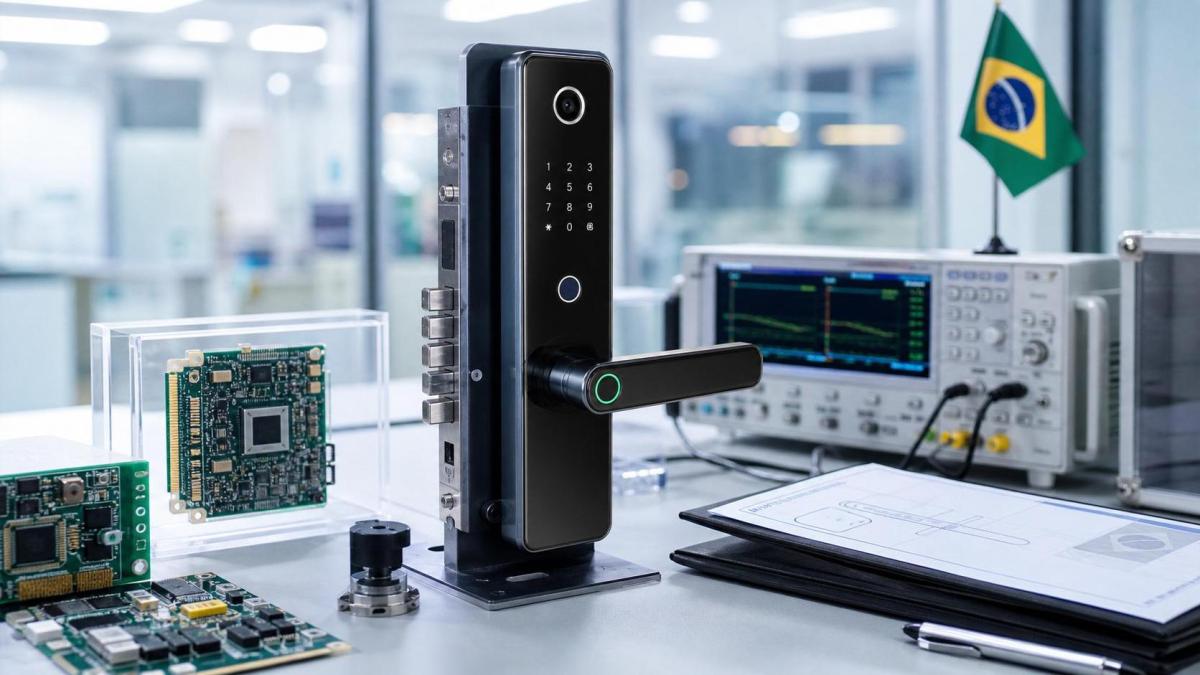
Effective from 2026-09-01, Brazil’s INMETRO will apply a stricter compliance requirement to iris and vein biometric locks entering the local market. The change goes beyond product certification in a general sense and moves directly into encryption architecture and key lifecycle control, which means manufacturers, importers, testing counterparts, and procurement teams may all face renewed documentation and approval work. For companies already active in Brazil, this is worth attention because previously certified products may still be pushed back into reassessment under the new rule.
What the new requirement formally changes
According to the provided information, Brazil’s National Institute of Metrology, Quality and Technology (INMETRO) issued Portaria 127/2026 on 2026-07-08. Under this measure, all iris and vein biometric locks entering the Brazilian market must, from 2026-09-01, pass an independent audit by a locally authorized laboratory.
The audit requirement covers the encryption algorithm used for biometric templates, specified here as a dual-mode approach involving AES-256-GCM and domestic SM4, as well as key lifecycle management. The provided information also states that only 23% of previously INMETRO-certified Chinese brands meet the new requirement, with most expected to undergo retesting. Importers are also required to resubmit a complete encryption architecture white paper.
Where the pressure is likely to appear first
Certified exporters may face a second compliance gate
From an industry perspective, manufacturers and exporters of iris and vein biometric locks are likely to be affected first because the new requirement reaches into core technical design rather than outward product labeling alone. The impact is likely to show up in recertification preparation, technical file review, and coordination with Brazilian-side testing arrangements. What deserves closer attention is whether existing certification files already contain enough detail on encryption design and key management to support the newly required local audit.
Importers will carry a heavier documentation burden
Importers are directly affected because the rule requires resubmission of a complete encryption architecture white paper. In practical terms, that can influence customs preparation, certification handover, and product launch timing. Importers should pay close attention to whether their current supplier documentation is complete, internally consistent, and aligned with the audit scope described in the rule change.
Procurement and channel planning may need adjustment
For procurement teams, distributors, and channel operators, the key issue is not only whether a product was previously certified, but whether it can clear the updated audit requirement after 2026-09-01. Analysis shows that purchasing decisions, replenishment cycles, and model selection may need to account for retesting exposure and documentation readiness. This is especially relevant where delivery schedules depend on uninterrupted certification status.
Testing and compliance service providers may see workload shifts
Authorized laboratories and certification support providers may also be affected because the rule specifically requires an independent local audit. Observably, this can increase the need for technical interpretation, file screening, and audit preparation support. Companies using external compliance partners should focus on scope clarity, submission sequencing, and whether supporting reports fully match the encryption and key management descriptions being filed.
What companies should review now
Recheck whether existing approvals still support market entry
Analysis shows that previously obtained INMETRO certification should not be treated as sufficient on its own for affected biometric lock categories. Companies should review whether the certified product configuration, encryption implementation, and related technical records are positioned to satisfy the new local audit requirement from 2026-09-01 onward.
Prepare technical files for deeper scrutiny
The immediate practical issue is documentation quality. Since importers must resubmit a complete encryption architecture white paper, suppliers and importers should closely review the consistency of technical descriptions, architecture narratives, and key lifecycle documentation. Where the provided information does not define detailed formatting or review standards, it is more appropriate to understand this as an area requiring continued attention rather than assuming a settled filing practice.
Reassess delivery schedules and procurement commitments
Because the provided information indicates that most previously certified Chinese brands may need retesting, companies should closely monitor any orders, tenders, or shipment plans tied to affected product lines. This does not by itself confirm shipment disruption in every case, but it does point to a higher compliance dependency in delivery planning and supplier qualification.
Watch for changes in downstream commercial documents
What deserves closer attention is how this requirement may begin to appear in procurement specifications, importer submission checklists, and after-sales traceability expectations. Even where official execution details remain limited in the provided information, companies involved in sales support and post-delivery service should watch for updated document requests linked to encryption architecture and audit proof.
Why this looks more like an execution signal than a distant policy note
Observably, this development is better understood as an active compliance tightening rather than a general policy discussion. The rule sets a clear effective date, identifies a local audit mechanism, and expands the practical burden on both product makers and importers. At the same time, analysis shows that some parts of market execution still need to be observed carefully, especially the detailed review approach taken by authorized laboratories and how consistently the new requirement is reflected in commercial and certification workflows.
How the market is likely to read this development
The industry significance of this update lies in the fact that Brazil is linking market access for certain biometric locks more directly to auditable encryption design and key management documentation. A rational reading is that this is already a landed compliance change for affected products, while the exact execution rhythm still warrants follow-up observation. For companies in the supply chain, the immediate issue is not broad market speculation but whether current models, files, and importer coordination are ready for the revised audit threshold.
Basis of this article and what still needs verification
This article is based on the user-provided news title, event date, and event summary. For events of this type, relevant source categories typically include official regulatory notices, publications from supervisory authorities, customs or trade administration updates, industry association releases, standards-related documents, and reporting by established trade media. A specific official source link was not provided in the input, so the exact official publication path still needs to be verified on an ongoing basis. Further observation should focus on detailed implementation language, certification interpretation, changes in tender and procurement documents, market feedback, and how affected companies carry out retesting and document resubmission.
Recommended News