
Search News
Industry Portal
Hot Articles
Iris Recognition in Access Control: Accuracy Limits, Lighting Effects, and Compliance
Time
Click Count
Iris recognition has become a serious option for access control where cards, PINs, or fingerprints no longer meet risk expectations. In secure buildings, data centers, industrial plants, and smart city infrastructure, the appeal is clear: stable identity verification, low contact, and strong resistance to casual impersonation.
Yet deployment success depends on more than a headline match rate. Real performance is shaped by sensor quality, lighting behavior, user movement, spoof defenses, network design, and biometric compliance. In practice, iris recognition is not just an algorithm choice. It is a system decision.
Why iris recognition matters in modern access control
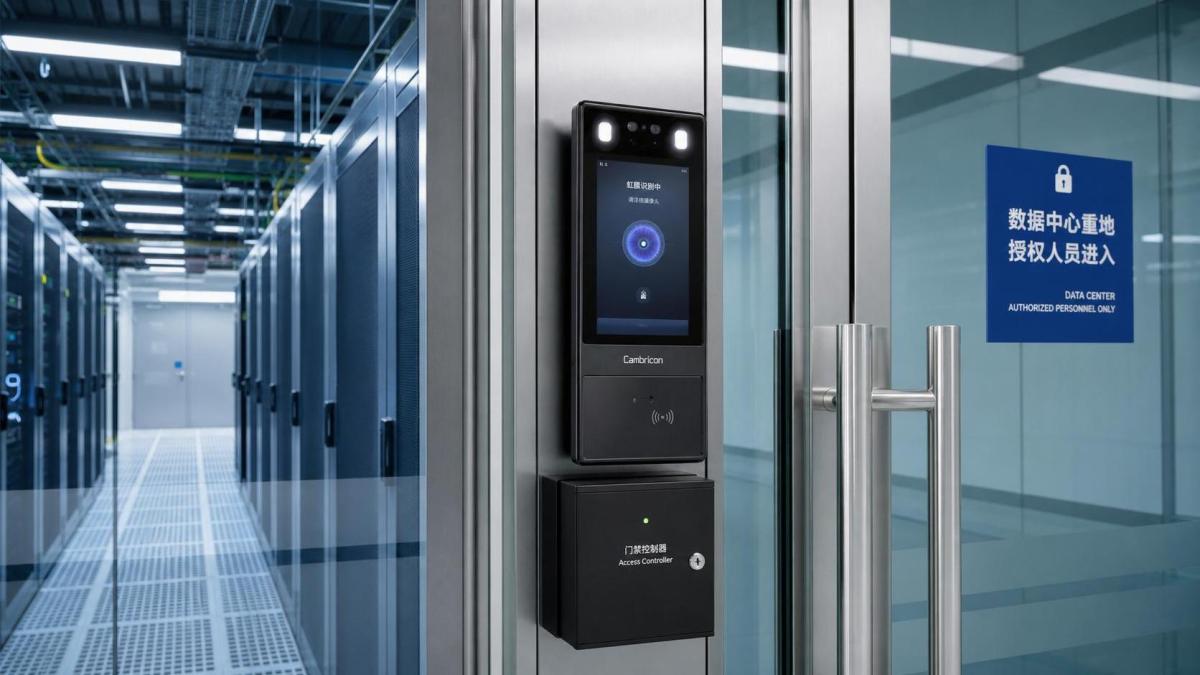
Across integrated security environments, physical entry points now protect digital assets, operational continuity, and worker safety at the same time. That shift explains why iris recognition is attracting attention beyond traditional high-security laboratories.
For SHSS and similar intelligence-focused platforms, this sits naturally beside smart lighting, AIoT hardware, and critical infrastructure protection. A door reader is no longer isolated hardware. It is part of a broader chain linking optics, embedded processing, compliance, and site operations.
The iris offers strong uniqueness and relative long-term stability. Unlike badges, it cannot be forgotten. Unlike some contact-based methods, it supports hygienic throughput. That makes it attractive for facilities where convenience must not dilute control.
What iris recognition actually measures
An iris recognition system captures the textured pattern around the pupil, usually with near-infrared illumination. The system converts that pattern into a template, then compares it against enrolled data during verification or identification.
That distinction matters. Verification answers whether a claimed identity is correct. Identification searches who the person is from a larger database. Accuracy expectations, processing load, and user experience change significantly between those two modes.
A strong technical evaluation therefore looks past generic phrases like “high precision.” It asks how the camera captures the eye, how the template is protected, what quality thresholds are enforced, and how failures are handled at the door.
Accuracy is statistical, not absolute
Vendors often promote extremely low false acceptance rates. Those figures can be real, but they are measured under defined conditions. Operational environments add glare, off-angle faces, glasses, aging sensors, and rushed users.
More useful metrics include false acceptance rate, false rejection rate, failure to acquire, and transaction time. A reader that rarely accepts the wrong person may still disrupt operations if acquisition fails too often.
Where lighting conditions change the result
Lighting is one of the most underestimated variables in iris recognition. Although near-infrared imaging helps reduce dependence on visible light, the surrounding scene still affects capture quality, user positioning, and optical noise.
Bright backlight near glass entrances can reduce contrast. Outdoor installations may face shifting sunlight, reflections, dust, and rain residue. In industrial sites, helmet visors and safety glasses create another layer of optical interference.
This is where adjacent systems matter. Smart lighting design can improve biometric consistency at entry points. Controlled illuminance, stable color temperature, and reduced glare often support better acquisition than algorithm tuning alone.
Common lighting-related evaluation points
- Performance under daylight, low light, and mixed light transitions.
- Tolerance for reflections from glasses, face shields, and polished surfaces.
- Capture distance and angle range at real walking speed.
- Behavior when ambient light changes after door opening.
- Sensor recovery after dust, smudges, or temperature shifts.
In short, lighting should be treated as part of the biometric design envelope. The strongest deployments test the entrance environment, not only the reader specification sheet.
Operational limits beyond the lab
Even high-performing iris recognition can degrade when human behavior meets site pressure. Tailgating concerns, shift changes, visitor traffic, and emergency egress policies all influence whether a technically strong system feels reliable day to day.
Enrollment quality is a frequent root cause of later dissatisfaction. If initial capture is rushed, inconsistent, or poorly guided, comparison quality suffers long before any algorithmic ceiling is reached.
Another practical limit is throughput. A system that performs well for one authenticated person may struggle when many people arrive together. That is especially relevant in commercial towers, logistics sites, and critical infrastructure compounds.
Spoof resistance and system trust
The security discussion around iris recognition often focuses on uniqueness, but trust also depends on attack resistance. A convincing solution needs more than a pattern match. It needs confidence that the sample comes from a live person.
Modern systems may combine texture analysis, pupil dynamics, infrared response, depth cues, or challenge-response techniques. No method is perfect, but layered controls are harder to bypass than a single optical check.
This is especially relevant in facilities aligned with the SHSS view of “last lines of defense.” Entry control protects server rooms, production zones, restricted storage, and safety-sensitive areas where one weak checkpoint can compromise a larger security architecture.
Compliance is part of performance
Biometric accuracy alone does not make a deployment acceptable. Iris templates are sensitive personal data in many jurisdictions, and the legal treatment of collection, storage, transfer, and retention can reshape system design from the beginning.
GDPR is the best-known reference point, but not the only one. Local labor rules, sector regulations, cross-border transfer restrictions, and cybersecurity obligations may all apply, depending on the site and ownership structure.
A compliance-minded assessment usually asks where templates are stored, whether they are encrypted at rest and in transit, how consent or lawful basis is established, and how data deletion is triggered after role changes or contract termination.
Key compliance checks before approval
- Purpose limitation for access control and no uncontrolled secondary use.
- Template minimization instead of unnecessary image retention.
- Clear retention schedule and deletion workflow.
- Role-based access to biometric records and audit trails.
- Documented fallback access for people not enrolled or temporarily unreadable.
In other words, compliance is not separate from technical quality. Weak data governance can turn a strong biometric deployment into a strategic risk.
Best-fit scenarios for iris recognition
Iris recognition is most effective where identity assurance must stay high and user volume remains manageable within the capture design. It often fits layered entry points better than every public-facing doorway.
Typical use cases include data center mantraps, research facilities, pharmaceutical production, energy infrastructure, executive access zones, and restricted commercial building areas. It can also support unattended access where auditability matters.
In mixed industrial environments, the best results usually come from combining iris recognition with card credentials, visitor workflows, and environmental controls. That balance protects continuity without forcing one biometric method into every scenario.
How to judge a system before rollout
A useful evaluation begins with the site, not the brochure. Entrance geometry, lighting behavior, user protective gear, expected throughput, and local privacy constraints should define the test plan.
Pilot testing should include difficult conditions, not only ideal ones. Measure acquisition time, rejection patterns, help-desk load, and fallback frequency. Compare daytime and night performance. Review how the system behaves after cleaning cycles and firmware updates.
It also helps to map the biometric reader into the wider smart hardware environment. Door controllers, edge compute, lighting controls, network segmentation, and security monitoring should reinforce one another rather than operate as isolated purchases.
The next step is usually straightforward: define the access risk level, shortlist systems that can document both optical performance and data governance, and validate them in the real entry environment before wider approval.
Recommended News