
Search News
Industry Portal
Hot Articles
Biometric Security Wholesale: What to Compare Before Placing a Bulk Order
Time
Click Count
Biometric Security Wholesale: What Matters Before a Bulk Order?
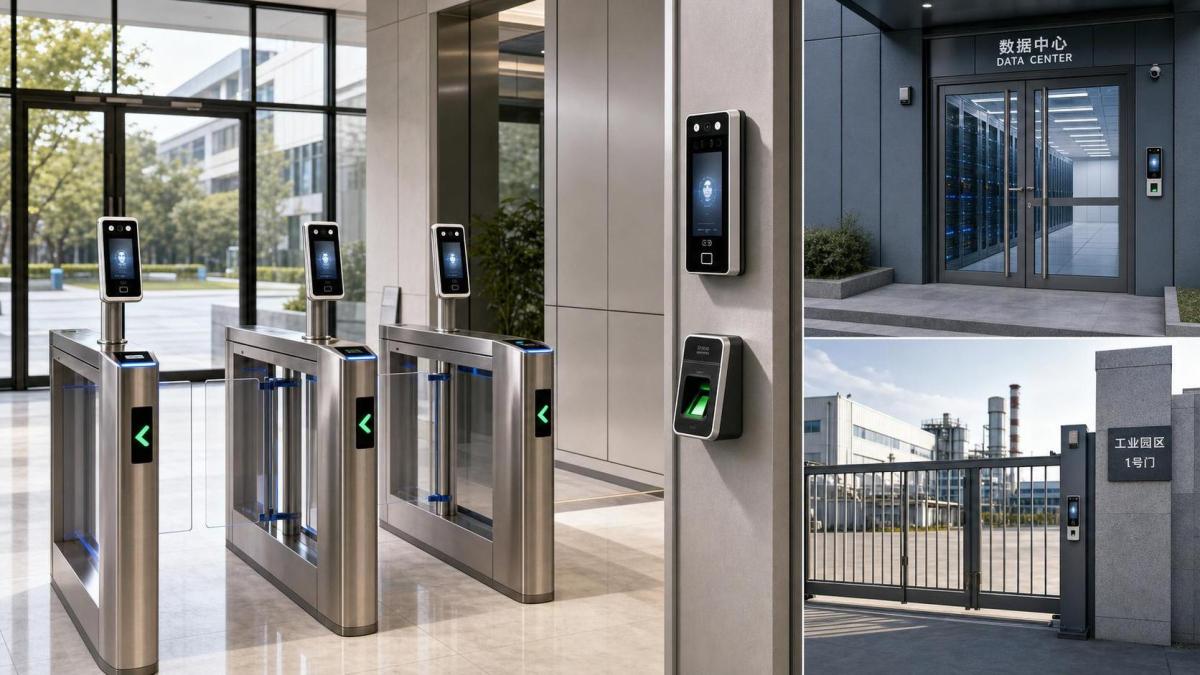
A large biometric security wholesale order is rarely just a hardware purchase.
It affects site security, user flow, compliance exposure, maintenance workload, and future integration options.
That is why price alone is a weak comparison point.
In real deployment, the better question is simple: will this system stay reliable under pressure?
For biometric security wholesale decisions, long-term value usually comes from matching technology to environment.
A facial terminal that works well in a bright office may fail at a dusty logistics gate.
An advanced fingerprint reader may underperform where workers wear gloves or have damaged skin.
SHSS tracks this wider context across smart access, industrial hardware, lighting, and protective systems.
That cross-industry view matters because physical security never operates in isolation.
Access control touches building operations, network policy, workforce behavior, and safety planning.
Before placing a bulk order, compare the details that determine performance after installation, not just during the sales phase.
Is every biometric device suitable for wholesale procurement?
Not really. Two devices may look similar on a spec sheet yet behave very differently in live environments.
The first filter is application fit.
Biometric security wholesale for office towers, data rooms, factories, campuses, and municipal sites should not be compared as one category.
More useful comparisons start with four conditions: traffic volume, lighting quality, user behavior, and risk level.
For example, facial recognition is often preferred for fast throughput and touchless entry.
It works well in commercial buildings, shared offices, and smart city entrances.
Fingerprint systems remain practical where user groups are stable and access records require close traceability.
Iris recognition usually belongs in higher-security environments with stricter identity control.
A sound wholesale evaluation asks whether the chosen modality matches daily reality.
That includes masks, low light, gloves, dust, reflective surfaces, and shift changes.
The most expensive model is not automatically the best option.
The right model is the one that delivers stable recognition with low friction.
A quick comparison helps narrow the field
Before deeper testing, this table highlights what usually deserves immediate attention.
What technical signals tell you a system is worth comparing seriously?
This is where many biometric security wholesale reviews become too shallow.
Published recognition speed is useful, but it is not enough.
A device that unlocks in 0.2 seconds under ideal lab settings may behave differently in a busy corridor.
Look instead at technical signals that remain meaningful during real traffic.
- False acceptance and false rejection rates under documented test conditions.
- Spoof resistance against photos, masks, silicone prints, and screen replay.
- Recognition performance in low light, backlight, and outdoor transitions.
- Template capacity and transaction logs for multi-site scaling.
- Offline operation during network interruptions or cloud downtime.
For higher-risk sites, liveness detection should not be treated as an optional extra.
SHSS often highlights structured light and infrared verification because they improve spoof resistance where physical access truly matters.
That becomes especially relevant for data centers, labs, financial branches, and restricted industrial zones.
Another overlooked point is enclosure durability.
If terminals are installed near loading areas, workshops, or external gates, ingress protection and temperature tolerance matter almost as much as algorithm quality.
When does integration become a bigger issue than the device itself?
Usually earlier than expected.
A biometric security wholesale order may look attractive until integration starts.
Then hidden costs appear through software mapping, access rules, controller compatibility, and enrollment workflows.
This is why bulk buyers should request a clear integration checklist before confirming quantity.
The key question is whether the devices can work with existing access control logic.
That includes door controllers, visitor systems, elevator permissions, attendance data, and emergency unlock rules.
In mixed environments, smart access often intersects with lighting controls, surveillance, and broader building automation.
A supplier that understands only the terminal itself may not support this complexity well.
By contrast, a broader smart hardware perspective is more useful.
That is where SHSS offers a practical lens, since biometric access in modern facilities often sits beside IoT lighting, industrial hardware, and safety systems.
When reviewing integration, ask for these details in writing.
- Supported protocols and documented APIs
- Cloud, edge, or on-premise deployment choices
- Enrollment and credential migration methods
- Firmware update process and rollback options
- Multi-location management and reporting functions
If the answers stay vague, the procurement risk is already visible.
How should compliance and data handling shape the buying decision?
Biometric data is not ordinary operational data.
Once facial templates or fingerprint records are involved, legal exposure becomes part of the hardware decision.
That makes compliance a procurement criterion, not just an IT topic.
In practice, the right biometric security wholesale partner should explain how templates are stored, encrypted, transmitted, and deleted.
It should also clarify whether data stays on device, on local servers, or in the cloud.
For cross-border operations, retention rules and consent workflows become even more important.
SHSS pays close attention to this area because biometric systems now sit at the intersection of physical defense and digital governance.
The supplier does not need to be a law firm.
It does need to provide clear technical and procedural answers.
A few basic checks prevent later disputes.
- Can biometric templates be anonymized or stored locally?
- Are audit logs exportable for internal review?
- Is role-based access available for administrators?
- What happens to stored data after device replacement?
If compliance is treated as a brochure phrase, that should lower confidence quickly.
What hidden costs often distort a biometric security wholesale quote?
The quoted unit price is only one layer of the total buying picture.
More common budget pressure comes from installation complexity, software licensing, replacement parts, and support delays.
This is why a lower upfront quote can become the more expensive choice within a year.
Ask suppliers to separate hardware cost from deployment cost.
Then compare lifecycle items, not just carton pricing.
Lead time deserves equal attention.
A biometric security wholesale supplier may promise volume pricing but struggle with batch consistency or firmware alignment across shipments.
That creates avoidable service headaches during staged installations.
What is the smartest next step before confirming a large order?
Reduce the decision to a controlled shortlist.
Three to five candidates are usually enough for a serious biometric security wholesale comparison.
Then test them against the same operational checklist.
That checklist should include recognition quality, spoof defense, integration readiness, data handling, support terms, and total deployment cost.
If possible, run a limited pilot in the intended environment.
A short live trial often reveals more than a polished demonstration.
Watch where users hesitate, where administrators need workarounds, and where false rejections appear.
Those details shape the real return on a bulk order.
The broader lesson is clear.
Biometric security wholesale works best when hardware, software, compliance, and site conditions are evaluated together.
That is also how SHSS approaches smart security within the wider system of modern industrial and urban infrastructure.
Before placing the order, document the scenario, define pass or fail thresholds, and compare suppliers against the same evidence base.
That step alone usually improves both procurement confidence and deployment results.
Recommended News