
Search News
Industry Portal
Hot Articles
Biometric Lock vs Keypad Lock: Which Fits High-Traffic Entrances?
Time
Click Count
Biometric Lock vs Keypad Lock: Which Fits High-Traffic Entrances?
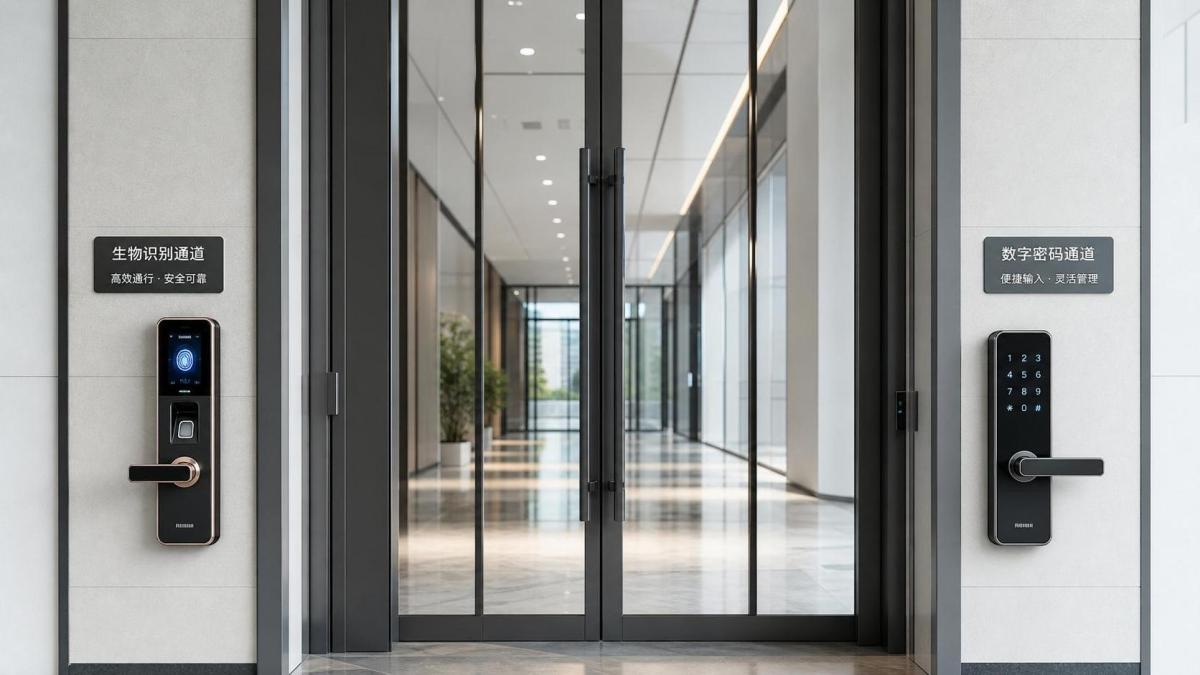
For high-traffic entrances, lock choice shapes more than security. It affects entry speed, staffing pressure, audit visibility, and the daily experience of everyone passing through.
That is why the biometric lock versus keypad lock debate matters. In busy sites, small delays multiply fast, and minor weaknesses become operational risks.
The better option depends on throughput, user turnover, compliance needs, and environmental conditions. There is no universal winner, but there is a better fit for each entrance profile.
In practical terms, a biometric lock delivers identity-based control. A keypad lock delivers code-based convenience. The difference sounds simple, yet the project impact is significant.
This guide compares both options for commercial, industrial, and mixed-use access points. It focuses on real selection criteria, not marketing claims.
What Changes at a High-Traffic Entrance
A lock that works well on a private office door may fail at a main entrance. Traffic intensity changes the decision framework completely.
At busy entry points, five pressures usually dominate:
- Fast passage during peak periods
- Strong control over shared access
- Minimal downtime and support calls
- Clear access records for review
- Reliable performance under repeated use
This is where the biometric lock often gains attention. It ties the credential to the person, which reduces sharing and weak accountability.
A keypad lock, however, still has appeal. It is simple to understand, easy to deploy, and familiar for temporary users.
The real question is not which lock is newer. The question is which system handles constant traffic with fewer operational compromises.
Biometric Lock: Strengths and Trade-Offs
A biometric lock verifies identity using a fingerprint, face, iris, or similar trait. In busy entrances, that creates a more accountable access model.
The biggest advantage is control. People cannot casually lend a fingerprint or face the way they can share a code.
That matters in data rooms, logistics hubs, laboratories, and commercial buildings with rotating contractors. When the user base changes often, shared credentials become a weak point.
A biometric lock also improves traceability. Access logs reflect who entered, not just which code was used.
For incident review, that difference is huge. It shortens investigations and strengthens compliance documentation.
Still, biometric lock performance depends on matching technology and site conditions. Dirty fingers, gloves, intense sunlight, or wet surfaces can reduce consistency in some deployments.
This does not make the biometric lock unsuitable. It means the sensor type must match the environment.
For example, facial recognition may outperform fingerprint readers where staff wear gloves. Fingerprint systems may work well in cleaner office settings with controlled indoor conditions.
Another consideration is privacy governance. A biometric lock involves sensitive data handling, so policy, consent, storage design, and regional compliance must be addressed early.
Where a biometric lock works best
- Main entrances with high employee density
- Restricted industrial areas with shift changes
- Facilities needing named-user audit trails
- Sites with frequent credential abuse concerns
- Entrances linked to broader smart access platforms
Keypad Lock: Strengths and Limits
A keypad lock uses numeric or alphanumeric codes. Its strength is simplicity, especially where fast setup matters more than strict identity control.
In some busy entrances, that simplicity is valuable. Visitors, delivery teams, and temporary workers can be onboarded quickly without enrollment.
A keypad lock also avoids biometric privacy concerns. For some organizations, that makes internal approval easier and deployment faster.
However, high traffic exposes the main weakness of a keypad lock: code sharing. Once a code spreads, control weakens fast.
Even when separate codes are issued, users often exchange them for convenience. In practice, that can turn a controlled door into a loosely managed one.
Wear patterns on frequently used keys may also create risk. In exposed settings, surface wear can reveal common digits over time.
There is also an efficiency issue. At peak times, a forgotten code slows the line more than a familiar biometric lock experience.
So while a keypad lock remains practical, it is usually stronger for moderate-risk zones than for critical high-traffic access points.
Where a keypad lock still makes sense
- Short-term access for visitors or vendors
- Storage rooms with lower compliance pressure
- Retrofit projects with tight budgets
- Sites needing very quick deployment
- Entrances where personal enrollment is impractical
Side-by-Side Comparison for Project Decisions
The biometric lock versus keypad lock choice becomes clearer when evaluated against the pressures of a live entrance.
If the entrance protects people, assets, or sensitive operations, the biometric lock usually provides better long-term control. If convenience and speed of deployment dominate, a keypad lock may still be enough.
Operational Factors That Matter More Than Features
Feature lists can be distracting. Real selection quality comes from matching the lock to daily conditions.
Start with traffic pattern. A biometric lock can shine during scheduled shift flows, especially when the same workforce enters repeatedly.
Next, look at user stability. If the user base changes every week, enrollment workload may offset some biometric lock advantages.
Then assess the environment. Dust, moisture, gloves, direct weather exposure, and cleaning routines all influence lock reliability.
Integration is another strong signal. A biometric lock often brings more value when linked with access software, surveillance events, and attendance workflows.
By contrast, a standalone keypad lock is usually better when the site needs a simple door solution, not a connected security layer.
Finally, compare lifecycle effort, not purchase price alone. Resetting shared codes, handling disputes, and tracking misuse all carry hidden operating cost.
A Practical Selection Framework
To choose between a biometric lock and a keypad lock, use a simple decision path grounded in project reality.
- Define the entrance risk level and business impact.
- Measure peak traffic by minute, not by day.
- Map user types: staff, contractors, visitors, and vendors.
- Review privacy, labor, and regional compliance constraints.
- Check environmental conditions around the opening.
- Estimate admin effort across a full operating year.
- Confirm whether the lock must integrate with wider systems.
When this process is followed, the answer is often clearer than expected. Critical entrances usually favor the biometric lock. Transitional or lower-risk doors often favor the keypad lock.
Final Verdict for High-Traffic Entrances
For most high-traffic entrances, the biometric lock is the stronger strategic choice. It offers tighter control, better accountability, and stronger resistance to shared-credential problems.
That said, the biometric lock only delivers its full value when sensor type, policy design, and user flow are planned well. Poor implementation can erase a good technology advantage.
A keypad lock remains a useful option where deployment speed, low complexity, and temporary access matter most. It is not outdated. It is simply less robust for critical busy entry points.
If the entrance is central to safety, compliance, or asset protection, start with the biometric lock as the default evaluation path. Then validate it against environment, privacy rules, and operational readiness.
A good lock decision should reduce friction while raising control. In high-traffic settings, that balance is usually where the biometric lock stands out most clearly.
Recommended News