
Search News
Industry Portal
Hot Articles
Iris Recognition Accuracy: What Affects False Rejects?
Time
Click Count
For high-security facilities, iris recognition accuracy is never an abstract lab figure. It affects daily throughput, user trust, incident response, and the financial logic behind access control investment.
When false rejects increase, authorized staff may face delays at doors, turnstiles, or restricted zones. In data centers, industrial campuses, laboratories, and smart buildings, that friction can quickly become an operational issue.
That is why the discussion around iris recognition now extends beyond algorithm claims. Real performance depends on capture quality, deployment conditions, user behavior, and the way the whole system is engineered.
Within the broader SHSS view of smart hardware and physical security, iris recognition sits alongside other critical layers of protection. Like high-strength fasteners or PPE, it performs best when precision in design meets discipline in real-world use.
Why false rejects matter more than many teams expect
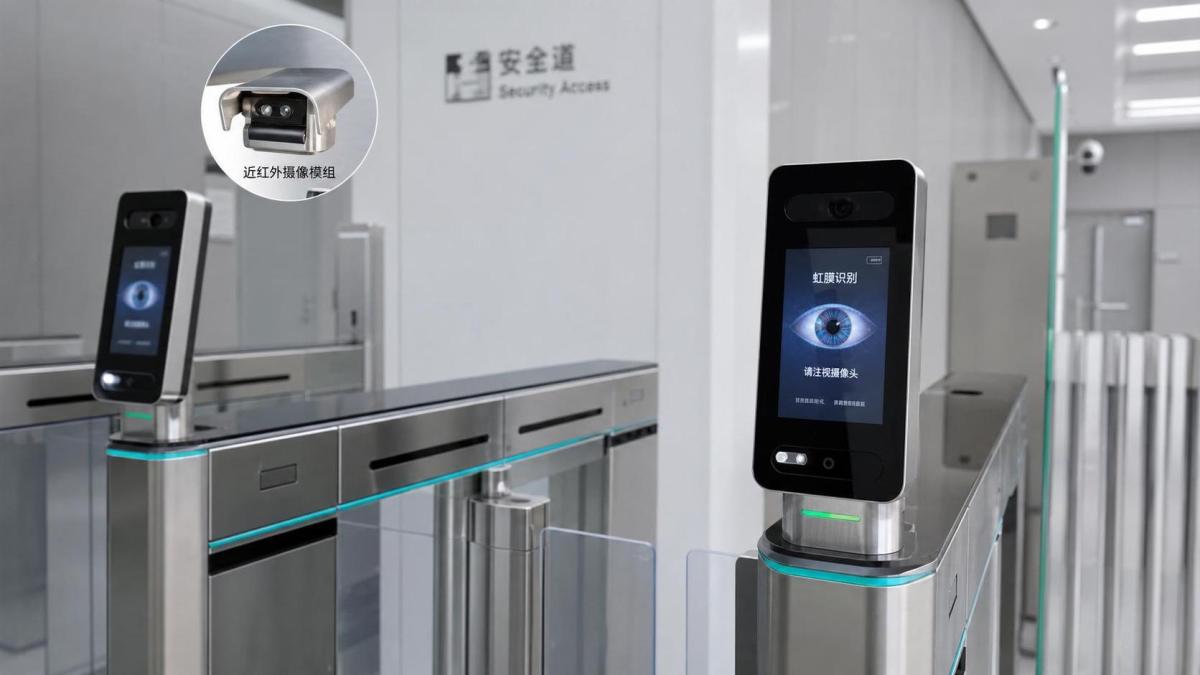
A false reject happens when a legitimate person is denied by the system. In iris recognition, this usually means the enrolled template and the newly captured eye image do not match closely enough.
On paper, one failed attempt may seem minor. In practice, repeated rejects create queues, more guard intervention, more exception handling, and weaker confidence in the biometric program.
The cost is not only inconvenience. Frequent false rejects can push staff toward workarounds, including shared badges, forced doors, or requests to lower matching thresholds too aggressively.
That tradeoff matters because reducing false rejects without discipline may raise false accepts. The goal is not to make iris recognition permissive. The goal is to make it reliably precise under business conditions.
What shapes iris recognition accuracy in the field
The strongest influence is image capture quality. Even advanced iris recognition algorithms depend on a clear, well-framed, well-illuminated iris pattern before matching begins.
If the user stands too far away, turns the head, blinks at capture, or moves too quickly, the system may record an incomplete iris texture. That can raise false rejects immediately.
Lighting also matters. Many systems use near-infrared imaging to reduce dependence on visible light, but difficult environments still interfere. Direct glare, reflective surfaces, or mixed indoor-outdoor lighting can reduce usable images.
Lens contamination is another common problem. Dust, moisture, fingerprints, and industrial particles can weaken the camera’s ability to isolate the iris. In manufacturing or construction-linked sites, this issue is easy to underestimate.
Enrollment quality is equally important. If the original template is captured under rushed conditions, later comparisons inherit that weakness. A poor enrollment often produces long-term matching instability.
Threshold settings also shape outcomes. Tight thresholds strengthen security, yet they can increase false rejects. Loose thresholds improve convenience, yet they may weaken protection. Good deployment means tuning for the actual risk level of each zone.
Common technical and operational causes
- Low-resolution or partially obstructed eye images during authentication.
- Poor enrollment templates captured without proper positioning.
- Incorrect camera height, angle, or user guidance at the portal.
- Environmental dust, vibration, or condensation affecting optics.
- Threshold policies copied from another site without local validation.
- Aging hardware, outdated firmware, or weak liveness detection integration.
The environments where performance changes fastest
Not every facility challenges iris recognition in the same way. A climate-controlled server room behaves very differently from an outdoor logistics gate or a heavy industrial plant.
In smart buildings, traffic peaks can expose usability weaknesses. If people approach readers quickly during shift changes, even a strong system may show higher false reject rates.
In industrial settings, airborne particles, vibration, and PPE interactions require more attention. Safety glasses, face shields, and helmets do not make iris recognition impossible, but they do affect capture design.
Outdoor or semi-outdoor access points face additional stress. Sunlight variation, rain carryover, and temperature swings can influence hardware performance more than algorithm brochures suggest.
This is one reason SHSS treats biometric security as part of a broader hardware ecosystem. Accuracy is not created by software alone. It depends on optics, mechanics, installation discipline, and maintenance routines.
How to interpret accuracy claims without oversimplifying
Many suppliers present impressive accuracy rates, but decision quality improves when those numbers are unpacked. A headline figure rarely explains the exact test population, capture conditions, or threshold policy behind it.
A stronger evaluation compares false reject rate, false accept rate, throughput, retry frequency, and environmental tolerance together. Iris recognition should be judged as a system outcome, not a single metric.
It also helps to ask whether the reported result came from controlled indoor testing or from operating environments closer to the intended site. That distinction often explains why field performance diverges from pilot expectations.
For regulated environments, privacy and compliance should stay in the conversation. Template storage, edge processing, and access logging affect deployment design, especially where biometric data rules are strict.
Useful questions during evaluation
- What false reject rate appears after several months, not just during pilot week?
- How does the iris recognition system perform with dust, glare, or peak traffic?
- What user retry rate is considered normal at each access point?
- How are templates stored, encrypted, updated, and deleted?
- Can threshold settings differ by security zone without harming usability?
Improving results without weakening security
The most effective improvements usually begin before go-live. Good enrollment protocols, trained installers, and realistic site testing prevent many false rejects that later appear to be algorithm failures.
Reader placement should reflect natural human movement. If users must stop abruptly, crouch, or twist to align with the camera, iris recognition accuracy will decline regardless of software quality.
Maintenance deserves equal weight. In harsh environments, cleaning optics and checking calibration should be treated as routine asset care, much like inspecting fasteners, sensors, or protective equipment.
Multimodal design can also help. In selected zones, iris recognition paired with badge credentials, face capture, or supervised fallback workflows can reduce disruption without surrendering control.
Another useful step is analytics. Reviewing retry logs, time-of-day failure clusters, and lane-specific performance often reveals whether the root cause is behavior, environment, or equipment.
A practical decision framework for the next stage
The most reliable view of iris recognition comes from matching the technology to the physical reality of the site. Security goals, traffic flow, environmental exposure, and compliance duties should be assessed together.
In many cases, false rejects are not signs that iris recognition is unsuitable. They are signs that capture conditions, operational design, or policy settings need refinement.
For organizations comparing systems, the next move is usually straightforward: define critical zones, map likely failure points, test with realistic users, and examine lifecycle maintenance as closely as algorithm claims.
That approach supports a more durable decision. It also fits the SHSS perspective that physical security works best when intelligent software, dependable hardware, and disciplined field execution are built as one system.
Where the stakes are high, better questions produce better deployments. Iris recognition accuracy improves not by chasing a marketing number, but by understanding what drives false rejects and managing those factors with precision.
Recommended News