
Search News
Industry Portal
Hot Articles
Iris Recognition vs Face ID for Secure Facilities
Time
Click Count
Iris Recognition vs Face ID for Secure Facilities: Scenario-Based Risk Decisions
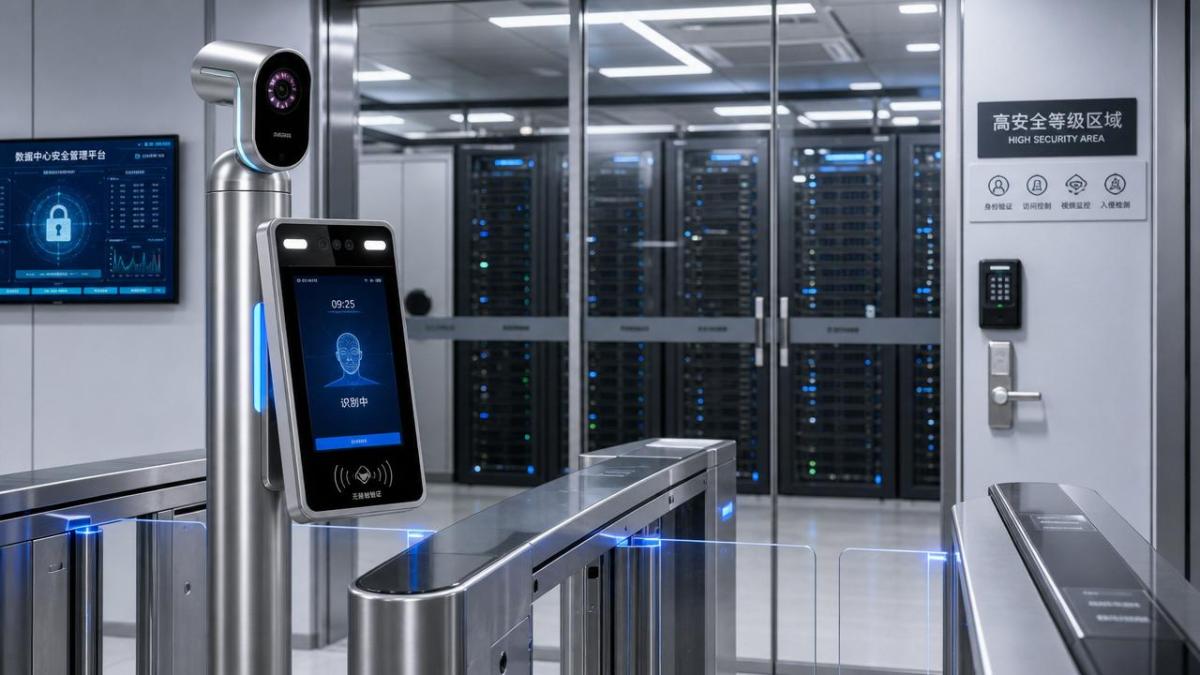
For data centers, laboratories, and critical infrastructure, authentication is measurable risk control, not simple convenience.
Face ID offers speed and familiarity, while iris recognition delivers stronger identity assurance where failure is unacceptable.
The best choice depends on lighting, threat level, privacy rules, throughput, and integration with physical security layers.
Scenario Background: Why Facility Context Changes the Decision
A lobby turnstile, a cleanroom door, and a server cage do not share the same authentication risk.
Facial authentication works well when traffic is high, lighting is stable, and risk tolerance is moderate.
Iris recognition becomes stronger when identity certainty, spoof resistance, and low-light reliability matter more than casual user flow.
Secure facilities often combine physical anchors, edge AI, access logs, alarms, and mechanical barriers.
In that stack, biometrics should reduce uncertainty without creating operational friction or compliance exposure.
Scenario 1: Data Centers and Server Rooms Need High Assurance
Data center access usually involves layered checkpoints, from perimeter gates to rack-level doors.
At the outer lobby, Face ID may support smooth entry for registered personnel and visitors.
At the cage or critical rack, iris recognition is better aligned with zero-trust physical access.
The iris pattern is highly stable and difficult to replicate with ordinary photographs or masks.
Iris recognition also performs well in dim corridors when supported by near-infrared illumination.
Core judgment point: use facial systems for flow, and iris recognition for privileged zones.
Scenario 2: Laboratories and Cleanrooms Require Contactless Precision
Laboratories and cleanrooms often restrict gloves, badges, phones, and contact-based credential handling.
Face ID can be affected by masks, goggles, hoods, shields, or strict gowning procedures.
Iris recognition remains viable when only the eye region is visible and properly aligned.
This makes iris recognition useful for pharmaceutical labs, biosafety areas, and semiconductor environments.
However, camera placement must match standing posture, PPE height variation, and entry vestibule geometry.
Core judgment point: select iris recognition when face coverage is normal, not exceptional.
Scenario 3: Commercial Buildings Prioritize Flow and User Acceptance
Corporate towers, hotels, and campuses often value speed, convenience, and low training burden.
Face ID feels familiar because many people already use similar authentication on mobile devices.
For main entrances, facial authentication may reduce queues during peak arrival periods.
Iris recognition can still protect executive floors, archive rooms, payment centers, and security offices.
A hybrid model prevents overengineering public areas while strengthening sensitive access points.
Core judgment point: match biometric strength to zone classification, not building prestige.
Scenario 4: Industrial Sites Need Resilience Against Harsh Conditions
Factories, warehouses, utilities, and construction compounds add dust, vibration, glare, and PPE complexity.
Face ID may struggle with helmets, respirators, sweat, low sun, or moving queues.
Iris recognition may outperform when protective eyewear allows clear infrared acquisition.
Yet dirty lenses, scratched goggles, or outdoor reflections can reduce capture quality.
Edge devices should include liveness detection, environmental shielding, and fallback credentials.
Core judgment point: test iris recognition and facial systems under real PPE conditions.
Different Scenario Demands: Practical Comparison Table
Accuracy and Spoof Resistance: Where Iris Recognition Leads
The iris contains rich texture formed early in life and remains highly consistent.
That uniqueness gives iris recognition a strong advantage in high-security identity matching.
Modern facial systems use depth sensing, infrared projection, and liveness detection to prevent simple attacks.
Still, facial appearance changes through masks, aging, injuries, lighting, and presentation angle.
Iris recognition is less dependent on full facial geometry and more focused on stable biometric detail.
For facilities facing insider risk, tailgating, or credential sharing, this difference is important.
Deployment Complexity: Face ID Is Simpler, Iris Recognition Needs Tuning
Facial authentication usually offers easier installation and broader user acceptance.
Cameras can capture faces at more flexible distances and angles.
Iris recognition requires better control of distance, eye alignment, illumination, and enrollment quality.
A poor enrollment process can weaken even the best iris recognition algorithm.
Facility teams should pilot devices at the actual door, not only in a meeting room.
Include peak traffic, night shifts, PPE, cleaning routines, and emergency drills in testing.
Privacy and Compliance: Biometric Strength Increases Governance Duties
Both Face ID and iris recognition process sensitive biometric data.
The stronger the identity signal, the stronger the governance obligations become.
GDPR, regional privacy laws, and employment rules may require explicit consent and purpose limitation.
Templates should be encrypted, access-controlled, minimized, and separated from general HR records.
Edge processing can reduce cloud exposure and improve response time at security gates.
Iris recognition deployments should document retention periods, deletion procedures, and fallback alternatives.
Scenario Adaptation Recommendations
- Use Face ID for moderate-risk areas where throughput and convenience dominate.
- Use iris recognition for vaults, cages, labs, control rooms, and regulated zones.
- Apply multi-factor access for critical doors, combining biometrics with badges or PINs.
- Prefer edge matching when latency, privacy, and network resilience are priorities.
- Require liveness detection for both facial systems and iris recognition terminals.
- Plan emergency override without allowing routine bypass of security policy.
Common Misjudgments That Weaken Facility Security
The first mistake is choosing technology by brand familiarity instead of risk classification.
A consumer-style Face ID experience does not automatically meet facility-grade assurance needs.
The second mistake is assuming iris recognition works perfectly without environmental design.
Poor mounting height, reflective glass, and rushed enrollment can create avoidable rejection rates.
The third mistake is ignoring the human workflow around authentication.
If entry is too slow, people may prop doors, tailgate, or pressure guards into overrides.
The fourth mistake is collecting biometric data without clear retention and deletion governance.
Final Decision Path: From Scenario to Secure Deployment
Start with zone classification: public, controlled, restricted, critical, or mission-essential.
Then define required assurance, expected traffic, PPE conditions, lighting, and compliance constraints.
For convenience-led areas, Face ID may be adequate when paired with good liveness detection.
For high-value and high-liability areas, iris recognition provides stronger identity certainty.
The strongest facilities rarely choose one biometric everywhere.
They map Face ID and iris recognition to different doors, risks, and operational realities.
Before procurement, run a live pilot with real users, real lighting, and real access events.
Review false rejection, false acceptance, audit quality, privacy documentation, and emergency procedures.
SHSS supports this decision logic through scenario intelligence across smart access, physical hardware, and safety systems.
For secure facilities, iris recognition is not merely advanced technology; it is a controlled barrier against unacceptable uncertainty.
Recommended News