
Search News
Industry Portal
Hot Articles
What to Check in a Project Supplier Reference Before Vendor Approval
Time
Click Count
Start with the reference scope, not the praise
A polished proposal can hide a weak delivery record. That is why a project supplier reference matters before vendor approval. For business evaluators, the job is not to collect flattering comments. It is to confirm whether the supplier has already performed under conditions that resemble your own project: similar product category, similar lead times, similar compliance load, similar failure consequences.
If the supplier sells industrial tools, access control hardware, fasteners, lighting systems, or PPE, the reference should show what happened after the purchase order was issued, not just how responsive the sales team looked during bidding. Ask for references tied to actual delivered projects, then check whether the project profile matches your use case closely enough to be meaningful.
Check whether the referenced project is genuinely comparable
This is where many approvals go wrong. A supplier may provide a strong reference from a small, low-risk order and use it to support a large, operationally critical project. That is not the same thing.
A useful project supplier reference should let you compare the basics:
- Product family and technical complexity
- Order volume and delivery cadence
- Installation environment or operating conditions
- Whether the item was safety-related, compliance-sensitive, or business-critical
- Market destination, especially if the project crossed borders
If your project involves biometric access equipment for a regulated site, a reference from a basic office door deployment tells you very little. If you are evaluating high-strength hardware for heavy-duty use, a decorative hardware reference is almost useless. The closer the conditions, the more confidence you can place in the reference.
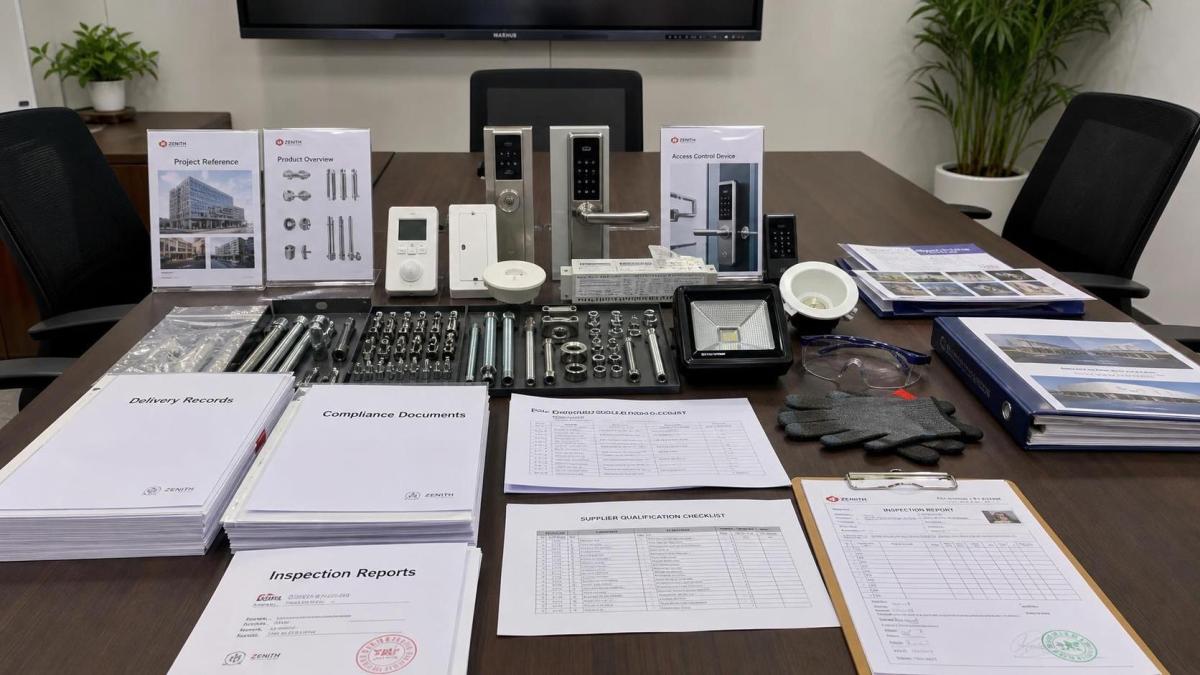
Look past the customer name and into the delivery record
Some reference sheets rely too heavily on recognizable customer logos. That can impress internal stakeholders, but it does not answer the real approval question: did the supplier deliver reliably?
What you want to know is practical:
- Was the initial shipment on time?
- Were there partial deliveries, shortages, or substitutions?
- How often did engineering changes appear after order confirmation?
- Did the supplier hold quality from first batch to repeat orders?
- How did they behave when something went wrong?
A reference that only says “good partner” or “satisfied with service” is too soft to support approval. A better one includes the shape of the work: delivery windows met, documentation complete, corrective actions closed, replacement handling reasonable, communication during disruption usable. Even when the reference is informal, those signals matter more than generic praise.
Verify who issued the reference and how close they were to the project
Not every reference comes from someone who actually managed the supplier. Sometimes it comes from a commercial contact who was barely involved after onboarding. That weakens its value.
The strongest references come from people who can speak to execution: procurement leads, quality managers, project managers, plant buyers, engineering coordinators, site delivery owners. If the reference is written, check the signer’s role. If you are allowed to call, ask questions that only a real project stakeholder could answer. For example: what was the hardest part of the supply program, what happened during nonconformance, and whether repeat business followed the first order.
A hesitant answer is not always a red flag. A vague answer usually is.
Match the reference to the risk profile of the item
All vendor references are not equal because all purchased items are not equal. A consumable accessory and a failure-sensitive component should not be approved with the same level of evidence.
Where the item protects people, secures facilities, or carries structural consequences, the reference needs to tell you more than “we delivered.” It should indicate whether the supplier could operate under tighter controls such as traceability, lot control, document retention, field complaint handling, or installation support.
That is especially relevant in categories like biometric security devices, high-strength fasteners, industrial power tools used in demanding environments, smart lighting tied to control systems, and protective gear. The approval threshold rises when downtime, injury exposure, or access failure would carry real cost.
Review quality history in a way that can be tested
A reference should help you judge consistency, not just capability. Many suppliers can produce one acceptable batch. Fewer can hold performance over time.
Useful signs include repeated orders, stable specifications across lots, low dispute frequency, and a clear method for dealing with defects. If the supplier reference mentions quality issues, that is not automatically negative. What matters is whether the issue was isolated, how root cause was handled, whether containment was fast, and whether the same problem came back later.
Be careful with references that sound perfect but contain no detail. In real supply relationships, small issues happen. A reference with believable detail about problem handling often gives you more confidence than one that pretends nothing ever went wrong.
Check the compliance layer that sits behind the project
For many approvals, the supplier’s commercial performance is only half the picture. The other half is whether they can support the paperwork, controls, and accountability your market requires.
The reference itself will not prove compliance, but it can reveal whether the supplier has worked in comparable regulatory conditions. Your checks should follow the product and market involved. A few examples:
This is where many teams make a bad shortcut. They treat a supplier reference as a substitute for technical and compliance review. It is not. It tells you whether the supplier has operated in the right kind of environment; it does not replace the document check itself.
Pay attention to change control and engineering discipline
A vendor can hit price and lead time targets and still create risk if product changes are poorly controlled. In hardware and security-related categories, small changes in material, firmware, interface behavior, or component source can trigger field problems later.
Your reference review should try to uncover whether the supplier notified customers properly when changes affected fit, function, compatibility, or documentation. Ask whether revised drawings, firmware versions, packaging labels, or approved component lists were managed cleanly. A supplier that “improves” product quietly is hard to manage, especially in repeat programs.
Test the after-sales reality, not just the pre-sales promise
The reference should tell you what support looked like after installation or deployment. This becomes critical when the product is integrated into operations and cannot be swapped casually.
Ask practical questions. Were spare parts available? Was technical support reachable? Did field failures trigger a structured response or just email delays? For digital or connected systems, did software or firmware support remain usable after handover? For installed hardware, was warranty handling clear enough for site teams to execute without commercial arguments?
A strong supplier reference often includes one unglamorous but decisive detail: when pressure hit, the supplier stayed engaged.
Watch for references that are technically true but commercially misleading
This happens more often than people admit. The supplier may have supplied into a project, but only through a distributor, only for a minor package, or only as a backup vendor during shortage conditions. The reference is not fake, but it may overstate the supplier’s real responsibility.
Check these points before you rely on the reference:
- Was the supplier the direct contracting party or a secondary source?
- Did they provide the full solution or only one component?
- Were they responsible for design input, documentation, and issue resolution?
- Was the referenced project completed successfully, or did scope change before full delivery?
These details change the weight you should assign to the reference.
Use a simple internal scoring view before approval
You do not need a complicated model, but you do need discipline. After reviewing the project supplier reference, score it against the actual approval risk. A short internal table is usually enough.
What to do when the reference is incomplete
Do not reject automatically, but do not approve casually either. An incomplete reference usually means one of three things: the supplier is new to your kind of project, the reference owner is restricted in what they can disclose, or the supplier has not organized its customer evidence well. Those are different situations and should not be treated as one.
The next step should match the gap. If similarity is weak, request a trial order or tighter first-lot controls. If execution detail is missing, ask for a live reference conversation or supporting delivery records. If compliance fit is the concern, move straight into document review for the exact product and target market instead of debating the reference in the abstract.
A practical approval sequence
The cleanest approach is to review the reference in this order: similarity, delivery record, quality history, compliance environment, then post-sale support. That sequence keeps you from being distracted by a famous customer name or a polished testimonial.
When a project supplier reference survives that sequence, it becomes useful evidence for vendor approval. When it fails, the failure usually tells you exactly what to do next: lower the approval scope, add controls, request more proof, or stop the process before the contract creates a much bigger problem.
Recommended News