
Search News
Industry Portal
Hot Articles
How to Choose PPE Equipment for High-Dust Tasks
Time
Click Count
How do you choose PPE equipment for high-dust tasks without overbuying or underprotecting?
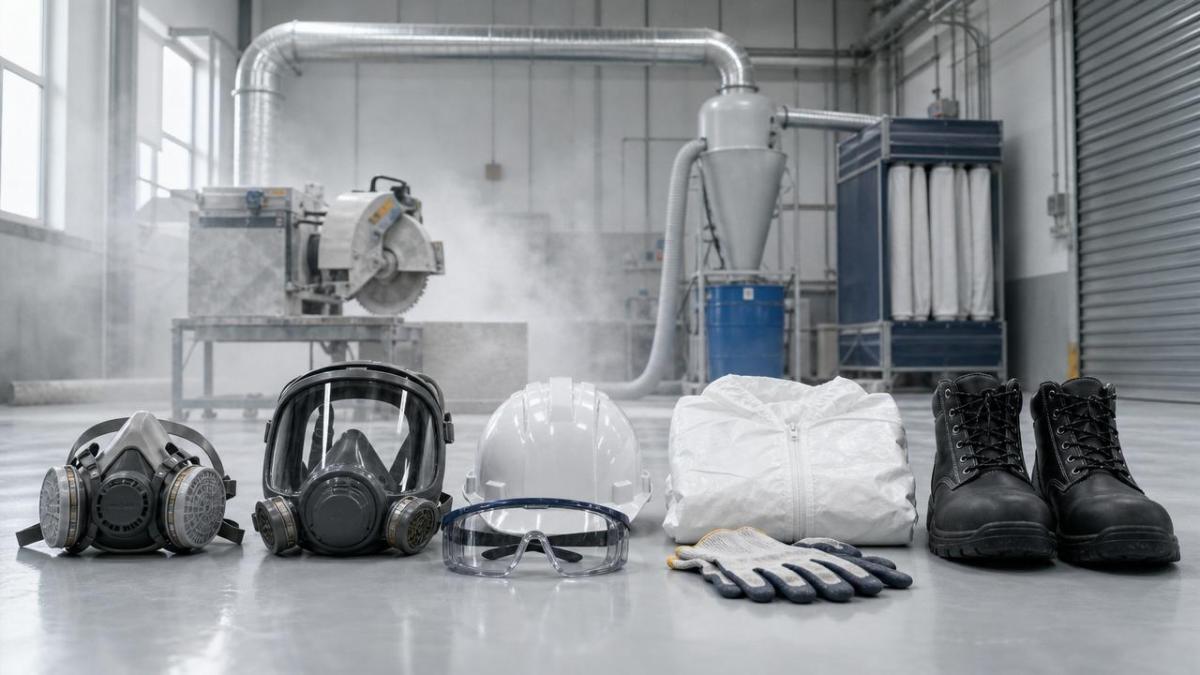
Choosing PPE equipment for dusty work is rarely as simple as picking a mask from a catalog.
The real issue is exposure level, dust type, task duration, fit, and how the gear performs on an active site.
Fine silica from cutting concrete creates very different risks than coarse nuisance dust from packaging or sweeping.
That is why PPE equipment should be matched to the task, not chosen by habit.
In construction, fabrication, mining support, warehousing, and plant maintenance, high-dust work often overlaps with noise, impact, and visibility hazards.
A respirator that filters well but fogs eye protection may reduce compliance during long shifts.
A disposable option may look cheaper, yet fail in humid or abrasive conditions.
SHSS often frames PPE as the last physical armor in industrial systems.
That perspective matters because dust protection is linked to tools, ventilation, lighting, and safe operating discipline.
The best PPE equipment choice protects breathing, supports movement, and remains usable under real production pressure.
What counts as a high-dust task, and when does basic protection stop being enough?
A high-dust task is any activity that releases enough airborne particles to create repeated inhalation risk or visible contamination.
Typical examples include grinding, dry cutting, abrasive blasting support, demolition, cement mixing, bulk material transfer, and powder handling.
The danger rises when particles are fine, respirable, and suspended for long periods.
This is where basic face coverings stop being appropriate PPE equipment.
A practical way to judge the task is to ask a few questions.
- Is the dust generated continuously or only briefly?
- Does the dust contain silica, metal, wood, chemical residue, or mixed contaminants?
- Is the work done indoors, in confined zones, or in poorly ventilated areas?
- Will the user also wear goggles, helmets, hearing protection, or face shields?
If several answers point to sustained exposure, higher-grade respiratory PPE equipment is usually required.
In practice, sites often underestimate dust because workers become used to seeing it every day.
That is exactly when long-term respiratory harm becomes easier to miss.
Which parts of PPE equipment matter most when dust is the main hazard?
Respiratory protection is the center of the decision, but it should not be the only one.
High-dust tasks often require a system, not a single item.
The key components usually include the following.
- Respirators: disposable, half-face reusable, full-face, or powered air-purifying options.
- Filters: selected by particle hazard, resistance level, and replacement interval.
- Eye protection: sealed goggles or full-face designs to control dust ingress.
- Protective clothing: coveralls or dust-resistant garments that reduce contamination transfer.
- Gloves and boots: useful where dust is mixed with sharp edges, slurry, or chemical residue.
For many sites, the biggest mistake is judging PPE equipment by filtration claims alone.
A poor face seal can cancel out the benefit of a high-rated filter.
Comfort also matters more than many expect.
When breathing resistance is high, heat builds up, or straps cause pressure points, users adjust gear or remove it early.
Well-chosen PPE equipment should keep protection stable throughout the full work cycle.
How should you compare disposable masks, reusable respirators, and full-face options?
This is usually the turning point in selection, because the wrong format drives both cost and non-compliance.
A quick comparison helps separate suitable PPE equipment from familiar but weak choices.
In many dust-intensive operations, reusable respirators become the practical middle ground.
They often balance performance, service life, and total ownership cost better than constant disposable replacement.
However, if dust also causes eye irritation or visibility issues, full-face PPE equipment may be worth the extra burden.
What should you check before approving PPE equipment for site use?
A product that looks compliant on paper may still fail in daily use.
A stronger approval process usually includes field-based checks, not just specification review.
Start with hazard and exposure reality
Confirm particle type, concentration pattern, task duration, and whether dust combines with vapors, sparks, or heat.
This step determines whether basic particulate PPE equipment is enough.
Review fit, seal, and compatibility
Check whether the respirator works with hard hats, goggles, hearing protection, and communication needs.
Compatibility failures are one of the most common hidden reasons for poor use.
Test durability under real site conditions
Dusty environments often include vibration, sweat, rough handling, and repeated donning cycles.
PPE equipment should survive those conditions without strap failure, valve damage, or lens distortion.
Plan cleaning and replacement rules
Reusable systems only deliver value when storage, sanitation, and filter replacement are clearly defined.
In SHSS coverage of industrial systems, this kind of disciplined lifecycle thinking appears across tools, lighting, fasteners, and PPE equipment alike.
Where do dust-protection mistakes usually happen?
Most mistakes are not dramatic.
They are routine decisions that slowly weaken protection.
- Using one type of PPE equipment for every dust task regardless of material.
- Assuming visible dust is the only risk and ignoring fine respirable particles.
- Choosing low-cost disposables for long, wet, or high-heat work cycles.
- Skipping fit checks because the model is already approved elsewhere.
- Treating replacement filters as an afterthought in budget planning.
- Forgetting that poor lighting makes contamination, seal gaps, and wear damage harder to detect.
That last point is often overlooked.
Clear illumination improves inspection of seals, cartridges, and garment contamination before and after use.
In real facilities, dust control works best when PPE equipment is supported by extraction, cleaner workflows, and visible inspection routines.
How can you make PPE equipment selection more consistent over time?
A consistent approach usually beats one-off buying decisions.
The goal is to build a repeatable standard that keeps protection aligned with changing tasks.
A practical framework is simple.
- List dust-generating tasks by frequency, duration, and material type.
- Assign approved PPE equipment by exposure category, not by department habit.
- Document fit-testing, cleaning, and filter replacement intervals.
- Review user feedback on heat, fogging, communication, and wear time.
- Recheck the standard when tools, materials, or ventilation change.
This matters even more in advanced manufacturing and smart-city infrastructure projects, where operations are faster and task interfaces are tighter.
The right PPE equipment should protect health without slowing the flow of work more than necessary.
If the next step is unclear, begin by auditing the dustiest three tasks on site.
Compare current gear against actual exposure, compatibility, and replacement discipline.
That process usually reveals whether the issue is product choice, task mismatch, or weak implementation.
Good PPE equipment decisions are rarely about buying the most gear.
They are about matching the last line of defense to the real dust risk, every single time.
Recommended News