
Search News
Industry Portal
Hot Articles
Zigbee IoT for Smart Street Lighting: Cost and Coverage Checks
Time
Click Count
For smart street lighting upgrades, Zigbee IoT can balance wireless control, energy savings, and scalable urban deployment.
Before budgets or tender specifications move forward, coverage, gateway density, cybersecurity, maintenance access, and lifecycle savings require disciplined checks.
This guide explains practical cost and coverage checks for Zigbee IoT streetlight projects across roads, campuses, logistics parks, and mixed smart-city zones.
Zigbee IoT Cost and Coverage Decisions Start with the Street Scene
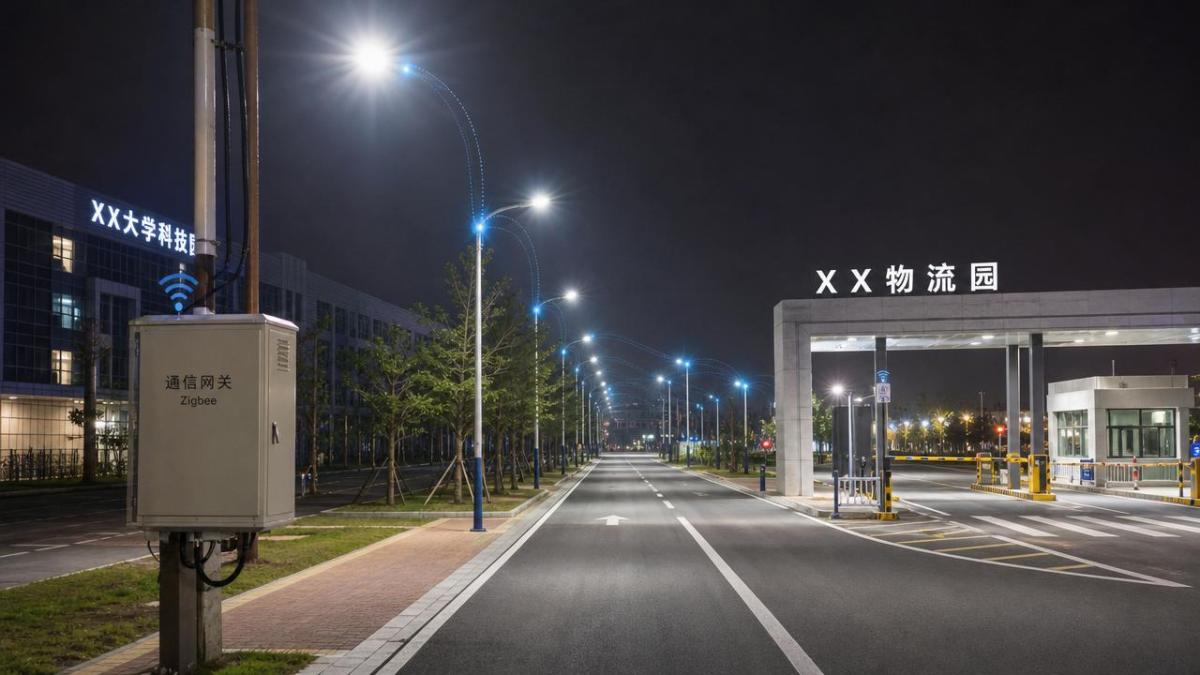
Zigbee IoT is not selected only because it is wireless. It is selected when node density, control frequency, and energy goals fit the scene.
A highway interchange, a residential road, and an industrial yard place different pressure on mesh routing and gateway placement.
The first check is simple: identify how many lights must communicate, how often, and under what obstruction conditions.
Zigbee IoT performs best when many powered luminaires can form a stable mesh with predictable spacing.
It becomes less attractive when poles are widely separated, terrain is irregular, or electrical cabinets are difficult to access.
Scenario Background: Why One Coverage Rule Cannot Fit Every Road
Street lighting networks are physical systems first. Poles, cabinets, trees, bridges, vehicles, and weather shape wireless reliability.
Zigbee IoT uses short-range, low-power communication and mesh forwarding. That makes placement logic more important than headline range claims.
In dense streets, each luminaire can relay signals to nearby devices. In sparse areas, one broken route may isolate several poles.
Cost checks also change by scene. Some sites save through dimming schedules, while others save through fault detection and fewer night patrols.
A credible Zigbee IoT evaluation connects radio coverage, control strategy, maintenance workflow, and financial payback in one model.
Urban Arterial Roads: Check Mesh Density and Traffic Interference
Urban arterial roads often suit Zigbee IoT because pole spacing is regular and luminaires are continuously powered.
The key judgment is whether each node can see enough neighboring nodes after accounting for trees, signage, buses, and seasonal foliage.
Coverage planning should not rely on a single straight-line distance. Test both sides of the road and major intersections.
For arterial roads, Zigbee IoT gateways should usually connect near power cabinets, traffic controllers, or municipal fiber access points.
Cost evaluation should include adaptive dimming, remote fault alarms, lower truck rolls, and shorter outage response cycles.
Residential Streets: Check Comfort, Safety, and Low-Cost Scaling
Residential streets require stable light levels, low glare, and reliable evening schedules rather than frequent real-time commands.
Zigbee IoT can work well here because mesh density is usually adequate and control messages are relatively light.
The main risk is assuming every pole has identical electrical quality. Older neighborhoods may contain mixed circuits and aging cabinets.
A practical check is to map feeder circuits before placing gateways. Network zones should follow electrical maintenance zones when possible.
In residential areas, Zigbee IoT savings often come from scheduled dimming, faster fault discovery, and reduced manual inspection.
Industrial Parks and Logistics Yards: Check Metal Obstruction and Uptime
Industrial parks, ports, and logistics yards can challenge Zigbee IoT because large metal structures disturb wireless paths.
Containers, cranes, high racks, trucks, and temporary storage zones may alter coverage every week.
The core judgment is whether the mesh remains stable during peak operations, not only during a daytime survey.
Coverage tests should include night shifts, loaded yards, and rainy conditions when reflective surfaces and vehicle movement increase uncertainty.
Zigbee IoT may still be appropriate if gateway redundancy is planned and critical light groups have alternative routing paths.
Cost checks should value operational safety, camera visibility, perimeter illumination, and reduced maintenance exposure in high-traffic zones.
Campuses and Commercial Districts: Check Integration with Sensors
Campuses, business parks, hospitals, and retail districts often need more than switching and dimming.
They may combine motion sensors, ambient light sensors, emergency routes, parking guidance, and security camera coordination.
Zigbee IoT is attractive when lighting nodes become part of a wider low-power sensing layer.
The judgment point is data volume. Zigbee IoT fits periodic status and control, not high-bandwidth video transmission.
For commercial areas, confirm whether the lighting management platform can exchange data with access control, BMS, and energy dashboards.
Security rules also matter. Device identity, encryption, commissioning control, and firmware management should be included in procurement language.
Coverage Checks That Should Appear Before Tender Approval
A Zigbee IoT plan should include a coverage map, not only a device count and a gateway price.
The map should show pole positions, gateway candidates, expected hops, weak zones, and environmental obstacles.
- Confirm pole spacing, mounting height, and luminaire enclosure material.
- Identify trees, bridges, tunnels, metal barriers, and dense building corners.
- Estimate hop count from edge nodes to gateways.
- Reserve gateway capacity for future streetlight and sensor additions.
- Test packet delivery under normal, peak, and poor-weather conditions.
Zigbee IoT coverage should be validated through pilot nodes installed at real mounting positions.
Desktop simulation is useful, but it cannot fully predict cabinets, vegetation, parked trucks, or construction changes.
Cost Checks: Compare Initial Budget with Lifecycle Value
The lowest device price rarely creates the lowest streetlight lifecycle cost.
A proper Zigbee IoT cost model separates hardware, installation, commissioning, platform fees, maintenance, energy savings, and upgrade reserves.
Gateway density has a direct financial impact. Too few gateways increase instability. Too many gateways raise capital and service costs.
Energy savings depend on dimming policy, lamp power, traffic patterns, and local lighting standards.
Maintenance savings depend on whether fault reports are trusted enough to replace routine manual inspection.
Zigbee IoT payback becomes clearer when the model includes avoided outages, fewer emergency visits, and better asset records.
Scenario Adaptation Advice for Better Project Fit
Zigbee IoT works best when the deployment plan respects both lighting engineering and wireless networking.
The following actions help align street scenes with technical and financial expectations.
- Divide the project into coverage zones matching roads, circuits, and maintenance responsibility.
- Run a pilot with real poles, real cabinets, and real night operating conditions.
- Set gateway redundancy targets for critical road sections and safety-sensitive areas.
- Define dimming rules before calculating energy savings.
- Require secure commissioning, encrypted communication, and controlled firmware updates.
- Keep spare gateway capacity for future sensors, signs, or emergency devices.
For long corridors with limited node density, Zigbee IoT may need hybrid backhaul support or more gateways.
For dense districts, the bigger challenge may be platform governance rather than wireless coverage.
Common Misjudgments That Distort Zigbee IoT Results
A common mistake is treating manufacturer range as guaranteed outdoor coverage.
Real coverage changes with mounting angle, enclosure design, cabinet location, traffic, and seasonal vegetation.
Another mistake is ignoring commissioning labor. Thousands of nodes require labeling, binding, testing, and asset registration.
Some projects also understate cybersecurity. Zigbee IoT devices control public infrastructure and must not rely on default credentials.
Battery assumptions can also mislead when sensors are added. Powered luminaires and battery devices behave differently inside one mesh.
Finally, energy savings should not be copied from another city. Traffic rhythm, safety policy, and lamp baseline change the result.
Practical Next Steps for a Defensible Deployment Plan
Start with a street-level inventory: pole spacing, lamp wattage, cabinet access, power circuits, obstruction points, and maintenance history.
Then build a Zigbee IoT pilot zone that includes easy, average, and difficult coverage conditions.
Measure packet reliability, command latency, gateway load, fault reporting accuracy, and dimming impact over several operating cycles.
Use the results to refine gateway density, procurement specifications, installation workflow, and service-level expectations.
A strong Zigbee IoT decision is never based on wireless claims alone. It is based on scene fit, verified coverage, and lifecycle economics.
With disciplined checks, smart street lighting can become a stable optical infrastructure layer for safer, more efficient urban operations.
Recommended News