
Search News
Industry Portal
Hot Articles
High-Rate Batteries for Robotics: How to Balance Power, Heat, and Cycle Life
Time
Click Count
High-Rate Batteries for Robotics: How to Balance Power, Heat, and Cycle Life
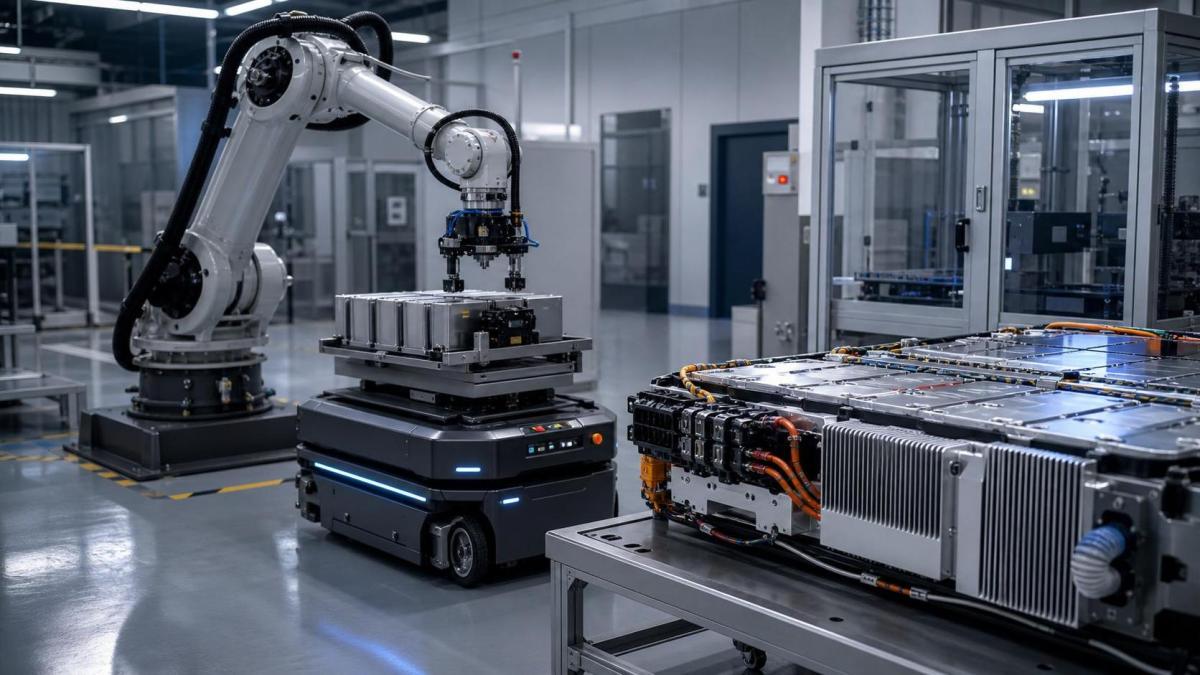
In robotics, battery selection is rarely about the highest discharge number on a datasheet.
The real question is how high-rate batteries for robotics behave under repeated starts, stops, lifting loads, and long idle windows.
That balance becomes more important in industrial tools, mobile robots, smart inspection devices, and security hardware.
A pack that delivers excellent burst power may still fail the system if heat rises too fast or cycle life collapses.
This is why high-rate batteries for robotics must be evaluated as part of the whole power architecture.
Motor demand, controller limits, ambient temperature, charge profile, and duty cycle all matter.
From a procurement and risk view, the goal is stable output with acceptable thermal stress and predictable service intervals.
Why High-Rate Batteries for Robotics Are Different
Many robot platforms draw current in sharp pulses rather than smooth, constant loads.
A mobile robot accelerating from rest can demand several times its average current within milliseconds.
A robotic arm gripping dense parts creates another short but severe load event.
That profile pushes cells harder than nominal runtime figures suggest.
High-rate batteries for robotics are therefore judged by more than amp-hours.
Internal resistance, voltage sag, thermal rise, regenerative acceptance, and aging under pulse current become decisive.
In practice, a smaller pack with lower resistance may outperform a larger pack with weaker rate capability.
Key Performance Targets
- Peak discharge without unacceptable voltage drop
- Continuous current with controlled case and core temperature
- Adequate cycle life under the real duty pattern
- Safe charging across expected ambient conditions
- Mechanical robustness against vibration and shock
Power Starts with the Duty Cycle, Not the Cell Brochure
A common mistake is selecting high-rate batteries for robotics from catalog C-rate figures alone.
Those values often assume specific temperatures, fresh cells, and short test windows.
Real robot loads are messier.
They include startup spikes, stall risk, regenerative braking, standby drain, and partial charging behavior.
A better method is to map current over time and compare average, RMS, and peak values.
This quickly reveals whether the battery is being sized for energy, for power, or for both.
What to Measure First
- Peak motor current during acceleration and load pickup
- Average current over a full mission cycle
- RMS current for thermal stress estimation
- Lowest acceptable DC bus voltage at the controller
- Energy recovered during braking or descending motion
Once these numbers are known, battery comparison becomes much more defensible.
Heat Is Usually the Real Limiting Factor
More obvious power issues show up fast.
Thermal problems often take longer, then damage the pack quietly.
In high-rate batteries for robotics, heat mainly comes from resistive loss, expressed as I²R.
That means a moderate current increase can create a much larger temperature increase.
This is especially relevant in compact robots with sealed housings or poor airflow.
Once temperature stays elevated, impedance rises, aging accelerates, and usable power falls further.
That feedback loop is where many battery programs fail.
Thermal Control Priorities
- Use low-resistance cells matched to the actual pulse profile
- Reduce connector and busbar losses
- Create thermal paths from cell core to enclosure
- Prevent local hot spots near center cells
- Apply BMS derating before critical temperatures are reached
For technical evaluation, pack-level thermal uniformity matters as much as peak surface temperature.
Cycle Life Depends on How Power Is Delivered
A battery may meet runtime targets and still produce poor total cost of ownership.
The reason is simple.
High-rate batteries for robotics usually age faster when high current combines with heat and deep cycling.
Frequent fast charging can add another penalty.
Cycle life should therefore be evaluated under realistic depth of discharge, charge windows, and load pulses.
Vendor cycle claims based on mild lab conditions are useful, but not sufficient.
Three Drivers of Early Degradation
- High average temperature during operation or charging
- Repeated high-current events near low state of charge
- Extended time at full charge between missions
This also explains why operational policy affects battery life almost as much as chemistry choice.
Chemistry and Format Choices
Not every lithium system serves robotics equally well.
For high-rate batteries for robotics, common tradeoffs appear between NMC, LFP, and specialized power cells.
NMC often offers higher energy density and compact pack size.
LFP usually offers better thermal stability and long cycle life, though at lower nominal voltage and higher volume.
Power-optimized cylindrical cells may handle pulses very well, but pack assembly becomes more complex.
Pouch formats can improve packaging efficiency, yet demand careful swelling and compression management.
Fast Comparison Table
The BMS Is Part of Battery Performance
Battery quality is not defined by cells alone.
For high-rate batteries for robotics, the battery management system determines how safely power can be used.
A weak BMS may trip during valid peaks or miss damaging thermal gradients inside the pack.
A better BMS uses current, voltage, and temperature together, then applies intelligent limits instead of crude shutdowns.
That matters even more where uptime and mission continuity are operational priorities.
BMS Features Worth Checking
- Per-cell voltage monitoring with reliable balancing
- Multiple temperature sensing points
- Event logging for overcurrent and overheating
- Support for regenerative current events
- Communication with the robot controller over standard interfaces
Testing High-Rate Batteries for Robotics the Right Way
Bench tests should reflect field behavior as closely as possible.
That means dynamic profiles, not just constant discharge.
It also means testing at hot and cold ambient conditions.
A battery that performs well at 25 degrees Celsius may behave very differently in a warehouse, outdoor yard, or sealed inspection unit.
Where applicable, test methods should align with transport, safety, and product compliance requirements.
UN 38.3, IEC-related pack safety requirements, and application-specific electrical standards should be part of the review process.
Practical Evaluation Checklist
- Run pulse discharge tests that mirror motion profiles
- Capture voltage sag at the controller input
- Track pack temperature spread, not only average temperature
- Cycle at realistic depth of discharge and rest periods
- Test charging after warm operation, not only from room temperature
A More Reliable Selection Framework
A solid choice usually comes from ranking risk, not chasing the most aggressive specification.
For high-rate batteries for robotics, five questions help narrow the field.
- What are the true peak and RMS current demands?
- How much temperature rise is acceptable in the enclosure?
- What service life is required before capacity loss becomes costly?
- How fast must the system recharge between missions?
- Which compliance and safety margins are mandatory?
When these answers are explicit, battery selection becomes a system engineering decision instead of a component purchase.
That is usually the difference between impressive prototype performance and dependable fleet operation.
Final Takeaway
The best high-rate batteries for robotics are not simply the ones with the highest peak rating.
They are the ones that deliver repeatable power, controlled heat, safe charging, and acceptable cycle life under the robot’s real workload.
In industrial and smart hardware settings, that balance directly affects uptime, maintenance cost, and operational risk.
Start with duty cycle data, verify thermal behavior early, and validate cycle life under realistic conditions.
That approach leads to better battery decisions and more resilient robotic platforms.
Recommended News