
The lowest supplier quote does not always deliver the lowest total cost. Freight, duties, maintenance, and downtime can quickly outweigh apparently attractive upfront savings.
For procurement teams sourcing industrial tools, fasteners, security systems, smart lighting, or PPE, the strongest comparison measures the cost of delivering a defined operational outcome.
This industrial product sourcing guide explains how to compare landed costs, operating expenses, expected service life, and supplier risk using consistent assumptions and verifiable evidence.
Start by confirming that competing products meet the same requirements. Then compare their costs over the same period, including installation, support, replacement, and disposal.
What belongs in a total cost comparison?
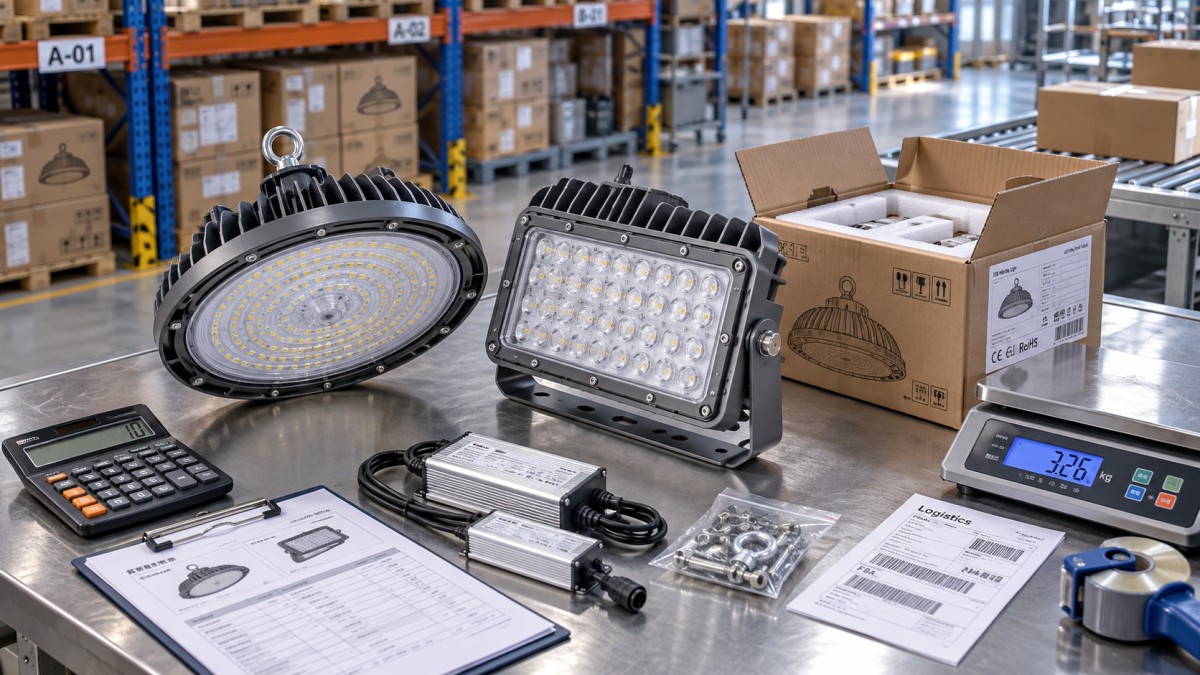
Total cost of ownership combines acquisition and lifecycle expenses. Landed cost covers getting goods to the agreed destination; it does not capture every subsequent expense.
Use the following structure as your starting point, adapting individual categories to the product, purchasing arrangement, destination market, and expected conditions of use.
A practical formula is: total ownership cost equals landed acquisition cost plus implementation, operation, maintenance, failures, replacement, and disposal costs, minus recoverable residual value.
For purchases spanning several years, compare discounted cash flows when payment timing materially affects the decision. Apply your finance team’s approved discount rate consistently.
Keep cash requirements visible separately. A refundable deposit or recoverable import tax can affect working capital without becoming a permanent expense in the model.
Are suppliers quoting the same usable product?
Price comparisons fail when specifications differ. Before evaluating costs, define mandatory performance, environmental conditions, required documentation, compatibility, and the acceptance criteria for each product.
For industrial tools, compare the complete working configuration: tool body, batteries, charger, attachments, and expected duty cycle. Bare-tool prices rarely represent equivalent purchasing scope.
For fasteners, specify dimensions, material grade, coating, mechanical properties, traceability, and applicable testing. Similar appearance does not establish equivalent strength or corrosion performance.
For security systems, define reader quantities, controllers, installation, software licenses, integrations, and data handling requirements. Confirm which functions require recurring payments or additional infrastructure.
For lighting, compare delivered illumination, operating hours, controls, and installation conditions. For PPE, confirm that protection ratings and fit meet the actual workplace hazard.
Create a compliance gate before scoring prices. Products that cannot satisfy mandatory safety, technical, or legal requirements should remain outside the approved commercial comparison.
How do you calculate landed cost without missing charges?
Ask every supplier to identify the Incoterms rule, named place, and version used. These details determine how transport responsibilities, costs, and shipment risks are allocated.
An EXW quotation and a DDP quotation include different responsibilities. Rebuild both into the same destination cost before drawing conclusions about which supplier offers savings.
Confirm who handles export clearance, import clearance, unloading, insurance, and final delivery. Incoterms alone do not determine payment terms, ownership transfer, or product conformity.
Use the destination country’s tariff classification, origin rules, and customs valuation requirements to estimate duties. Verify uncertain classifications with a qualified broker before approval.
Separate recoverable taxes from nonrecoverable expenses according to local rules and your company’s tax position. Include any meaningful financing cost associated with delayed recovery.
Validate freight using packed dimensions, gross weight, shipment frequency, and realistic shipment sizes. Low unit prices can disappear when minimum orders increase storage requirements.
Also account for inspection fees, port handling, brokerage, possible storage charges, and inland transport. Record exclusions explicitly so missing information never silently becomes zero.
Which operating costs matter most for each product category?
Focus analytical effort on the expenses most likely to change the decision. The dominant cost driver varies considerably between consumable products and installed equipment.
- Power tools: Compare battery replacement, charger compatibility, consumables, repair turnaround, and productivity under the intended duty cycle. Shared battery platforms can reduce duplicate purchases.
- Fasteners: Assess inspection, installation labor, coating performance, rejection rates, and rework. A small component price difference can become insignificant beside an assembly defect.
- Biometric security: Include software renewals, integration work, updates, credential administration, backup power, and support. Check data retention controls and responsibilities for handling biometric information.
- Smart lighting: Model electricity, controls, cleaning, driver replacement, and maintenance access. Use realistic operating hours and local tariffs rather than headline efficiency claims alone.
- PPE: Compare cost per protected shift or approved use, including fit testing, cleaning, filters, storage, and replacement intervals established by applicable instructions and conditions.
Do not treat advertised service life as guaranteed field performance. Request the test conditions and determine whether temperature, loading, moisture, or usage patterns differ.
Likewise, warranty duration does not establish useful life. A replacement component may be covered while removal, transport, installation, and production losses remain your responsibility.
What does a realistic supplier comparison look like?
Consider an illustrative purchase of 100 industrial LED luminaires evaluated over five years. Both options meet the same verified illumination, environmental, and installation requirements.
Assume 4,000 operating hours annually and electricity at $0.15 per kilowatt-hour. Supplier A’s fixtures consume 100 watts each; Supplier B’s consume 80 watts each.
Electricity cost equals fixture quantity multiplied by kilowatts per fixture, annual operating hours, years, and electricity price. Apply any controls savings consistently across comparable options.
Supplier B costs $2,000 more at purchase but saves $6,000 over five years in this example. Its additional landed acquisition cost is only $1,500.
Annual electricity savings equal $1,200, producing an energy-only simple payback of approximately 1.25 years on that additional landed cost. Maintenance savings improve the result.
These figures are illustrative assumptions, not market benchmarks. The example excludes discounting, tax effects, escalation, and disposal; actual comparisons should include them where material.
Most importantly, confirm equivalent lighting performance before crediting lower wattage as savings. A lower-power fixture that fails the illumination requirement is not an acceptable alternative.
How should procurement account for supplier risk and downtime?
Supplier risk affects cost through inconsistent quality, delayed shipments, unavailable spare parts, or support failures. Assess these exposures using evidence relevant to your order.
Request delivery history, documented quality controls, corrective action examples, and references for comparable applications. For critical purchases, consider an audit or controlled pilot order.
Where credible data exists, estimate expected disruption cost as event probability multiplied by financial impact. Clearly label estimates and avoid implying precision beyond available evidence.
For example, a 10% annual probability of a $20,000 disruption creates an estimated annual exposure of $2,000. Show severe disruption scenarios separately as well.
Estimate downtime using lost contribution margin or another finance-approved method, plus unavoidable incremental expenses. Using total lost revenue can overstate the actual financial impact.
Avoid counting the same loss twice across maintenance allowances, replacement budgets, and disruption estimates. Safety and mandatory compliance remain acceptance conditions regardless of modeled savings.
Examine practical recovery options: local spares, alternative suppliers, repair capacity, and contractual response times. A written warranty has limited value without a workable claims process.
Which assumptions should you challenge before awarding the order?
A total cost model is only as reliable as its assumptions. Identify the variables that could change supplier ranking and test them before approval.
- Set one comparison basis. Use the same quantity, destination, operating schedule, evaluation period, currency date, and required output for every offer.
- Identify evidence quality. Distinguish contractual commitments, independent test results, supplier estimates, internal experience, and assumptions requiring further verification.
- Run realistic scenarios. Test lower utilization, higher freight rates, shorter service life, delayed delivery, and changes in energy or exchange rates.
- Find the decision threshold. Calculate when savings disappear, such as the operating hours required for an efficient product to recover its additional cost.
- Confirm ownership. Assign responsibility for technical approval, import assumptions, maintenance estimates, financial review, and closure of outstanding supplier questions.
If small changes reverse the preferred supplier, the decision needs stronger evidence. A sample trial, freight quotation, or service commitment may resolve the uncertainty.
Payment terms also deserve scrutiny. Compare deposits, milestone payments, credit periods, and currency exposure using a consistent financing approach without duplicating existing capital charges.
Choose the supplier with the strongest verified economic case
The purpose of an industrial product sourcing guide is to support defensible purchasing decisions. The best offer combines acceptable performance with the lowest credible lifecycle cost.
Before issuing a purchase order, retain a comparison showing included costs, exclusions, evidence, sensitivity results, and contractual commitments. This makes later supplier reviews more useful.
Choose a higher-priced option when verified operating savings or reduced disruption justify it. Choose the cheaper option when equivalent performance and realistic assumptions support the saving.
After delivery, compare actual freight, failures, energy use, and maintenance against estimates. Feeding those results into future sourcing decisions makes each purchasing cycle more accurate.