
Search News
Industry Portal
Hot Articles
How to Size a BLDC Motor for Torque, Speed, and Battery Life
Time
Click Count
Choosing the right BLDC motor is rarely a simple matter of matching a headline torque value or a target RPM.
In real equipment, motor sizing shapes runtime, thermal behavior, control stability, and the overall efficiency of the powertrain.
That is why BLDC motor selection matters across industrial tools, mobile platforms, smart hardware, and battery-powered field systems.
Within the SHSS view of modern hardware, brushless drive systems are not isolated components.
They sit at the junction of mechanical load, electronic control, battery design, and practical reliability.
What sizing a BLDC motor really means
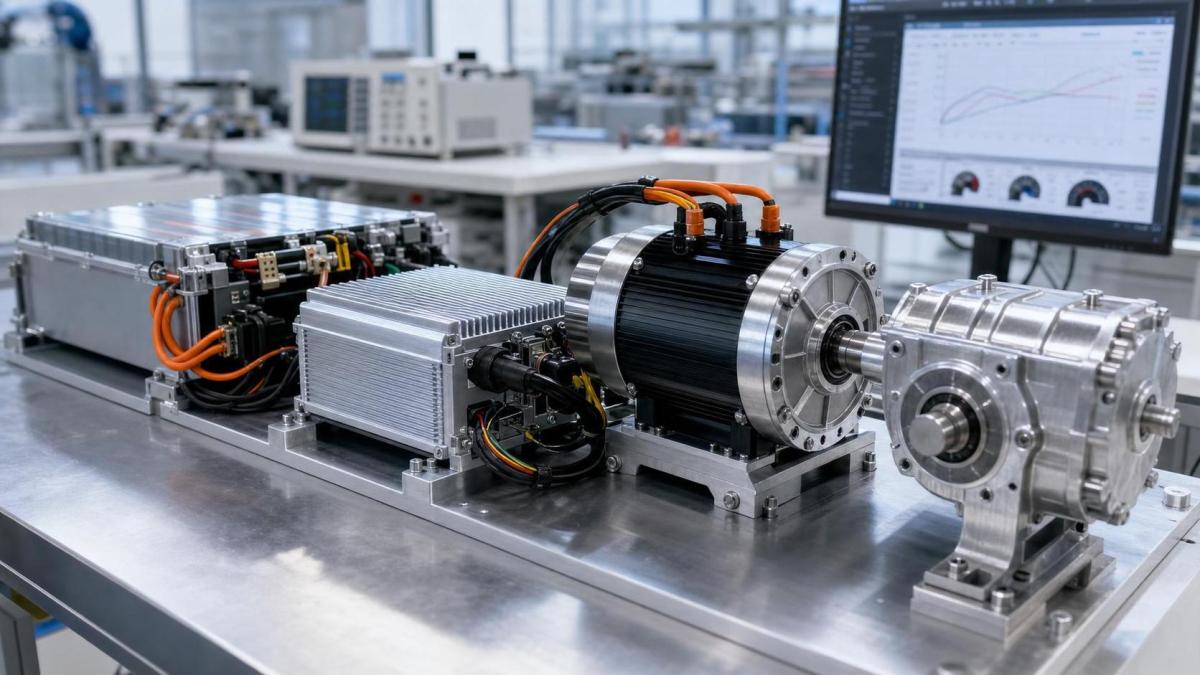
A useful sizing exercise starts with the load, not the catalog.
The question is not just which BLDC motor can spin fast.
The better question is which motor can deliver the required torque, at the required speed, for the required duty cycle, from the available battery.
This is especially relevant in compact systems.
A handheld brushless tool, an automated access device, or a mobile inspection unit may all face strict space and thermal limits.
In practice, sizing a BLDC motor means balancing five variables together.
- Peak torque needed during startup, acceleration, or stall-prone events.
- Continuous torque needed during normal operation.
- Operating speed range, including base speed and loaded speed.
- Battery voltage, current limits, and expected runtime.
- Heat rejection, enclosure limits, and real duty cycle.
If one of these is ignored, the result often looks acceptable on paper and weak in the field.
Torque and speed must be read together
Torque and speed are often treated like separate targets, but a BLDC motor delivers them through the same power equation.
Mechanical power rises when either torque or speed rises.
That is why a motor that looks strong at low RPM may struggle at the application’s actual operating point.
For example, a fastening tool needs short bursts of high torque.
A blower, pump, or cooling subsystem usually needs steadier speed under lighter torque.
A smart gate actuator may need both.
It must overcome inertia quickly, then move smoothly, then hold position without overheating.
Useful starting data
Before comparing motor options, build a simple load profile.
- Required load torque at normal operation.
- Breakaway or startup torque.
- Target speed under load.
- Acceleration time.
- Gear ratio, if present.
- Expected overload events and duration.
These inputs reveal whether the BLDC motor needs high peak current capability, wide speed range, or stronger continuous thermal performance.
Battery life is decided upstream
Battery runtime is often discussed after motor selection, but that is usually too late.
A poorly sized BLDC motor can drain a good battery pack faster than expected.
The reason is simple.
When the motor works far from its efficient operating zone, it converts more electrical input into heat instead of usable shaft output.
Battery life depends on more than amp-hour capacity.
It also depends on voltage architecture, current spikes, controller strategy, and how often the system operates near peak load.
For cordless equipment, this connection is critical.
In SHSS-tracked industrial brushless tools, high power density only works when the battery, inverter, and BLDC motor are sized as one system.
Why thermal behavior deserves equal weight
Many sizing errors appear first as thermal problems.
The motor may hit torque targets in a short bench test, then lose stability in continuous operation.
Copper losses, iron losses, switching losses, and ambient heat all matter.
So does enclosure design.
A sealed outdoor device, a dense hand tool, and a protected access terminal each reject heat differently.
This is one reason the same BLDC motor can perform very differently across applications.
Thermal checkpoints during evaluation
- Continuous current rating at expected ambient temperature.
- Winding insulation class and thermal headroom.
- Housing material and heat transfer path.
- Duty cycle with realistic pauses, not idealized cycles.
- Controller limits that may cut performance before the motor does.
A motor that survives peak torque briefly is not necessarily a well-sized motor.
A properly sized BLDC motor stays within thermal limits while preserving output consistency.
Application context changes the answer
Sizing logic should reflect the job the machine performs.
There is no universal best BLDC motor.
What works for a high-speed spindle may be wrong for a door operator or a compact mobile platform.
Common scenarios across smart hardware
Industrial tools often prioritize burst torque, rapid response, and low weight.
Battery stress during repetitive starts becomes a key sizing factor.
Smart security hardware may prioritize quiet motion, compact packaging, and reliable holding behavior.
Here, acoustic performance and thermal control may outweigh top-end speed.
Automated lighting mechanics, shutters, and small actuators often need long life under moderate loads.
Efficiency at partial load becomes more important than headline peak power.
This wider view reflects the SHSS perspective on connected infrastructure.
The motor is one part of a chain that includes mechanics, sensing, control, and lifetime cost.
A practical method for comparing candidates
When several motor options appear close, a structured comparison prevents expensive oversights.
A useful review usually includes the following checks.
- Map actual operating points against the motor efficiency curve.
- Separate peak torque demand from continuous torque demand.
- Check whether rated voltage aligns with battery architecture.
- Confirm controller current limits and field-weakening behavior.
- Estimate runtime using loaded current, not nominal catalog current.
- Validate thermal rise under realistic ambient and enclosure conditions.
- Review gearbox effects, because gearing can rescue or ruin a sizing decision.
This approach usually reveals whether a smaller BLDC motor can meet the target with better gearing, or whether extra motor margin is worth the battery penalty.
What to decide before moving forward
Good motor sizing is not about choosing the biggest safe option.
It is about choosing the BLDC motor that fits the real operating envelope with the least compromise.
That means translating application needs into a short list of measurable requirements.
Start with load torque, loaded speed, duty cycle, battery limits, and thermal constraints.
Then compare candidate motors as part of the full electromechanical system, not as isolated parts.
For teams evaluating next-generation tools, smart access products, or mobile industrial hardware, that discipline usually leads to clearer trade-offs and fewer redesign cycles.
The next useful step is to build a real duty profile, test two or three candidate operating points, and review battery, controller, and thermal data together before locking the design.
Recommended News