
Search News
Industry Portal
Hot Articles
Shenzhen Data Voucher Policy Opens New Path for BLDC Tool Training Data
Time
Click Count
On June 15, 2026, Shenzhen’s municipal data authority released the 2026 application guide for a special AI corpus voucher fund, signaling direct policy support for industrial data sharing in tool-related AI hardware. For Brushless Li-ion Tools manufacturers, the key point is that opening qualified edge-control datasets covering areas such as motor control and battery thermal management to Shenzhen’s public data platform can bring rewards of up to RMB 1 million, making this a development worth watching for manufacturers, AI model teams, and industrial data management functions across the BLDC tool value chain.
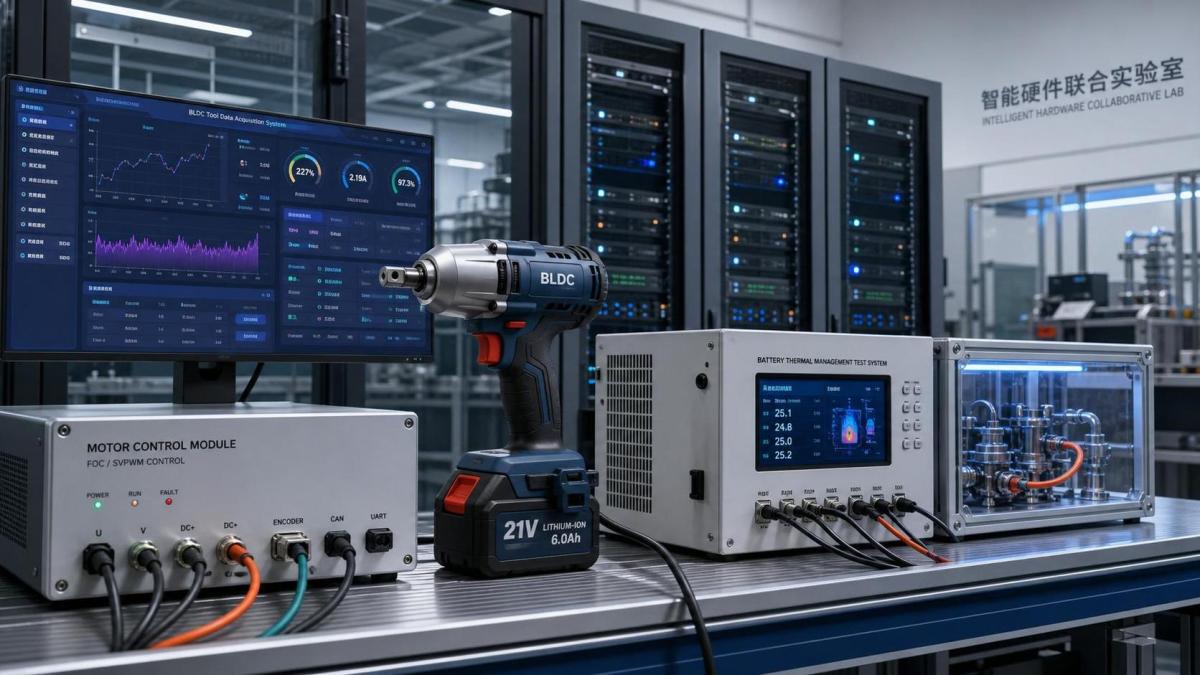
What the New Shenzhen Guide Confirms
The confirmed policy fact is that Shenzhen’s municipal data authority issued the 2026 Application Guide for Special AI Corpus Voucher Funds on June 15. The guide explicitly supports tool-focused AI hardware companies in opening industrial corpus data related to motor control and battery thermal management.
The policy also states that Brushless Li-ion Tools manufacturers may receive incentives of up to RMB 1 million if they open edge-control corpus data to the Shenzhen public data platform, provided that the data meets the ISO/IEC 23053 standard referenced in the input information.
The event summary further indicates that this policy is expected to accelerate the construction of an internationally compatible AI model training ecosystem for Chinese BLDC tool manufacturers.
Why Different Industry Roles May Pay Attention
Manufacturers now face a more concrete data-sharing decision
From an industry perspective, the most direct impact falls on Brushless Li-ion Tools manufacturers. The policy connects industrial operating data with a specific funding mechanism, which means the issue is no longer only whether companies collect control and thermal data internally, but whether they are prepared to organize, standardize, and open part of that data under the required framework.
The business impact is likely to center on data governance, edge-control record quality, internal compliance review, and the readiness of engineering teams to map existing datasets to the referenced standard.
AI model and embedded development teams gain a clearer policy signal
For teams working on AI models, embedded control, or intelligent hardware functions, the policy matters because it elevates industrial corpus data from an internal engineering asset to a recognized part of model-training infrastructure. Analysis shows that this may influence how companies prioritize data labeling, dataset maintenance, and cross-team coordination between firmware, battery, and motor-control functions.
What deserves closer attention is not only access to incentives, but whether internal data structures are suitable for repeatable training use under a public-platform submission path.
Platform and service participants may see new demand around standardization
Supply-chain service providers, industrial digital service firms, and data-processing partners may also be affected indirectly. Observably, once incentives are attached to compliant dataset opening, demand may shift toward services that help manufacturers prepare data records, align with standard requirements, and improve submission readiness.
The relevant business link here is less about product sales and more about data processing, documentation, technical validation, and communication between manufacturers and public-platform requirements.
What Companies Should Track Next
Watch how official wording is implemented in practice
Companies should distinguish between the policy signal and actual operational requirements. The guide confirms support and an incentive ceiling, but in practical terms, manufacturers will need to keep tracking how the relevant standards, submission conditions, and review expectations are interpreted in implementation.
Review whether existing datasets are truly submission-ready
For tool makers already collecting motor-control or battery thermal data, the immediate practical question is whether those records can be treated as usable edge-control corpus data rather than only internal engineering logs. This affects documentation completeness, data consistency, and internal preparation cycles.
Align technical, legal, and platform-facing teams early
Because the policy concerns opening data to a public platform, the issue is not purely technical. Companies should pay attention to coordination across R&D, data management, and external communication functions so that any future submission work does not stall on internal ownership, documentation, or process gaps.
Separate funding opportunity from broader ecosystem positioning
Analysis shows that the incentive amount is important, but it should not be the only lens. For some companies, the more strategic issue is whether participation helps them align with an internationally compatible AI training ecosystem for BLDC tools, as described in the event summary.
How This Signal Should Be Read at This Stage
Observably, this development is more than a simple funding notice, because it ties industrial tool data, AI training needs, and public-platform access into one policy framework. At the same time, it should not yet be read as proof of broad-based industry transformation, since the input information confirms the direction of support but does not provide implementation outcomes, participation figures, or adoption results.
It is more appropriate to understand this as a policy-backed signal that industrial data openness in the BLDC tool segment is gaining clearer institutional recognition. For the industry, the main reason to keep watching is whether this support leads to repeatable data-sharing practices that companies are willing and able to adopt.
What This Means for the Near Term
In practical terms, the Shenzhen policy highlights that industrial corpus data in areas such as motor control and battery thermal management is moving closer to the center of AI hardware competitiveness for Brushless Li-ion Tools. The confirmed fact is the presence of a defined support mechanism and a reward ceiling; the broader industry consequence remains a matter for continued observation.
For now, this is best understood as a meaningful near-term policy signal with possible long-term ecosystem implications, rather than a completed market outcome.
Basis of This Article
This article is generated from the user-provided news title, event date, and event summary. The confirmed information used here is limited to the June 15, 2026 release of Shenzhen’s special AI corpus voucher application guide, its stated support for industrial corpus data in tool-related AI hardware, the eligibility of qualifying Brushless Li-ion Tools edge-control datasets for rewards up to RMB 1 million, and the summary judgment that the policy may accelerate an internationally compatible AI model training ecosystem for Chinese BLDC tool manufacturers.
For this type of development, source categories that are usually relevant include official government notices, company announcements, industry association materials, authoritative media reports, and standard-organization documents. A specific official source link was not provided in the input, so further verification remains necessary. Follow-up attention should focus on subsequent official clarification, implementation details, and how companies respond in actual data-opening practice.
Recommended News