
Search News
Industry Portal
Hot Articles
Industrial Brushless Tools: How to Compare Runtime, Torque, and Maintenance
Time
Click Count
Selecting industrial brushless tools for high-demand work is not a matter of reading amp-hour labels or peak torque headlines alone. The better comparison looks at what happens under real load, across repeated cycles, and through months of field use.
That is why runtime, usable torque, and maintenance have become the three metrics that shape serious evaluation. In construction, assembly, infrastructure service, and smart-city maintenance, tool performance now affects productivity, safety margins, and total ownership cost at the same time.
Within the broader SHSS view of modern hardware ecosystems, industrial brushless tools sit beside fasteners, protective gear, lighting, and access systems as part of one operational chain. A weak link at the tool level can slow installation, damage components, or increase worker exposure.
Why industrial brushless tools are under closer review
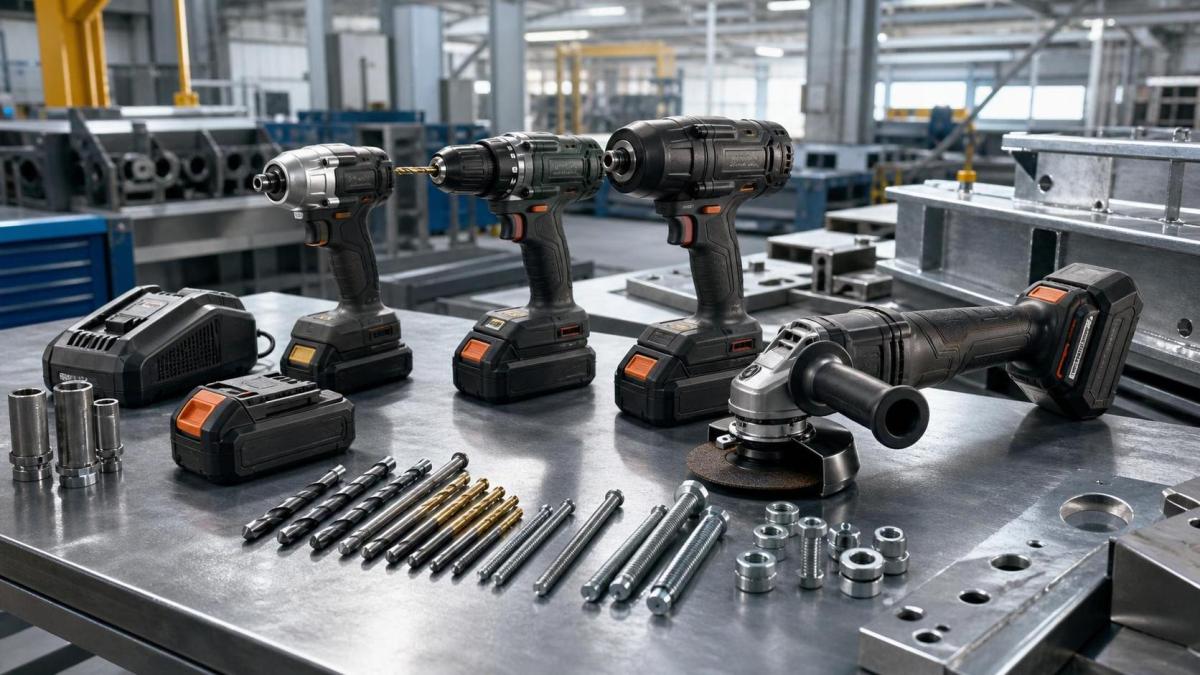
Brushless motor platforms have moved from premium options to baseline expectations in many industrial categories. Drills, impact drivers, grinders, and fastening tools are now expected to deliver higher power density with lower wear than brushed alternatives.
The shift matters because job conditions have changed. Crews work across longer shifts, tighter installation windows, and more mixed-material environments. Tools must handle anchors, structural fasteners, cable trays, sheet metal, and service access hardware without frequent swapping or unplanned stoppage.
Battery chemistry has improved, but battery size alone does not explain field performance. Electronic control, thermal protection, motor efficiency, gearbox design, and trigger response all influence whether industrial brushless tools stay productive in actual use.
This is also why headline specifications often mislead. Peak values are useful for marketing snapshots, yet technical evaluation depends on sustained output, thermal stability, and repeatability from the first cycle to the last battery pack of the shift.
A practical way to understand runtime
Runtime is not simply how long a battery lasts in ideal conditions. It is the amount of productive work completed before performance drops below an acceptable threshold.
For industrial brushless tools, that threshold may appear as reduced fastening speed, visible heat buildup, lower blow rate, or electronic power limiting. In other words, the battery can still show charge while usable output has already fallen.
What should be measured
A meaningful runtime test needs a defined task, a defined material, and a defined duty cycle. Counting free-spin minutes tells very little about tool suitability.
- Count completed fastenings, cuts, or drilled holes per charge.
- Record output consistency from full charge to low charge.
- Note surface temperature of battery, motor housing, and gear case.
- Check whether power reduction appears before battery depletion.
- Compare pack recovery time and charger turnaround in shift planning.
Runtime also depends on accessory selection. A dull bit, incorrect socket fit, or low-quality abrasive disc increases current draw and distorts comparisons. When evaluating industrial brushless tools, consumables must be standardized.
Why load profile matters
A tool used for short, intermittent fastening behaves differently from one driving long anchors into dense substrate. High-pulse applications often favor electronic efficiency, while continuous cutting reveals thermal design weaknesses much faster.
This is especially relevant in mixed fleets serving construction, equipment assembly, utilities, and facility security upgrades. One platform may look efficient in light fastening yet lose advantage in steel drilling or repeated overhead work.
Torque should be judged as usable output, not just a peak number
Torque is the most abused comparison point in tool selection. Published figures may reflect breakaway torque, nut-busting torque, fastening torque, or short-duration peaks captured under different test methods.
Usable torque is more important. It refers to the output that can be repeatedly applied with control, acceptable heat, and minimal damage risk to the fastener, joint, or substrate.
In practice, torque evaluation should match the application. Structural fastening needs different judgment from cabinet installation, access control mounting, or LED infrastructure service. More torque is not always better if reaction force, bit slip, or joint damage increases.
Where torque comparison often goes wrong
One common mistake is comparing different tool classes as if they perform the same job. Another is ignoring speed under load. A tool may reach a strong torque figure but complete each cycle more slowly, reducing total throughput.
A better approach is to pair torque with task completion rate, fastening consistency, and operator control. For industrial brushless tools, the best unit is often the one that keeps joints within tolerance while reducing rework.
Maintenance is where lifecycle cost becomes visible
Brushless architecture reduces brush wear, but it does not eliminate maintenance. Gearboxes, switches, chucks, bearings, cooling paths, battery interfaces, and electronic boards still age under vibration, dust, and heat.
This matters in environments where industrial brushless tools are used alongside heavy-duty fasteners, outdoor lighting systems, metal framing, or protective installations. Downtime does not only delay one task. It can disrupt the sequence of an entire site or service route.
Maintenance points worth checking early
- Battery connector wear after repeated pack changes.
- Housing sealing against conductive dust and moisture.
- Gear train noise growth over time.
- Trigger and mode selector durability under glove use.
- Availability of spare parts, diagnostics, and service intervals.
Maintenance evaluation should also include the battery ecosystem. Cell balancing quality, pack temperature management, charger communication, and fleet-level compatibility often determine whether the tool platform remains reliable after the first procurement cycle.
From an SHSS perspective, this broader systems view matters. Hardware categories are increasingly connected by uptime logic. A failed fastening tool can delay smart access installation, lighting retrofit schedules, or field repairs that depend on coordinated equipment availability.
Comparing tools by scenario instead of by brochure
Industrial brushless tools should be compared inside the work patterns they will actually face. Scenario-based assessment usually reveals more than isolated specification sheets.
For example, metal fabrication tasks emphasize sustained drilling speed and heat control. Smart-building retrofits often prioritize compact form, overhead comfort, and precise fastening near finished surfaces. Infrastructure maintenance may place more weight on battery swap efficiency and weather resistance.
The same logic applies when working around high-strength fasteners or sensitive mounted systems. Excess vibration can affect fixture quality, while poor balance can increase fatigue in elevated or confined work zones.
A concise field comparison framework
- Define three core tasks that represent most working hours.
- Use identical materials, accessories, and environmental conditions.
- Measure completed work per charge, not battery duration alone.
- Track torque control, rework rate, and thermal throttling.
- Include serviceability, spare access, and charger logistics.
This framework helps separate true platform strength from isolated marketing claims. It also creates a clearer basis for comparing premium and mid-tier industrial brushless tools on lifecycle value rather than purchase price alone.
What to examine before the next decision
A useful next step is to build an internal scorecard centered on runtime under real duty, usable torque in target applications, and maintenance burden over time. Those three categories usually expose the gap between nominal performance and operational value.
It also helps to review tool selection alongside adjacent hardware realities. Fastener grade, installation accuracy, PPE requirements, site access conditions, and service window length all influence what the right industrial brushless tools look like in context.
The most reliable decisions rarely come from a single specification sheet. They come from structured comparison, repeated task testing, and a clear view of how tool behavior affects the larger hardware and safety chain. That is where the strongest evaluation standard begins.
Recommended News