
Search News
Industry Portal
Hot Articles
High-Rate Batteries: What Drives Cost, Runtime, and Cycle Value?
Time
Click Count
Why do high-rate batteries deserve closer cost scrutiny?
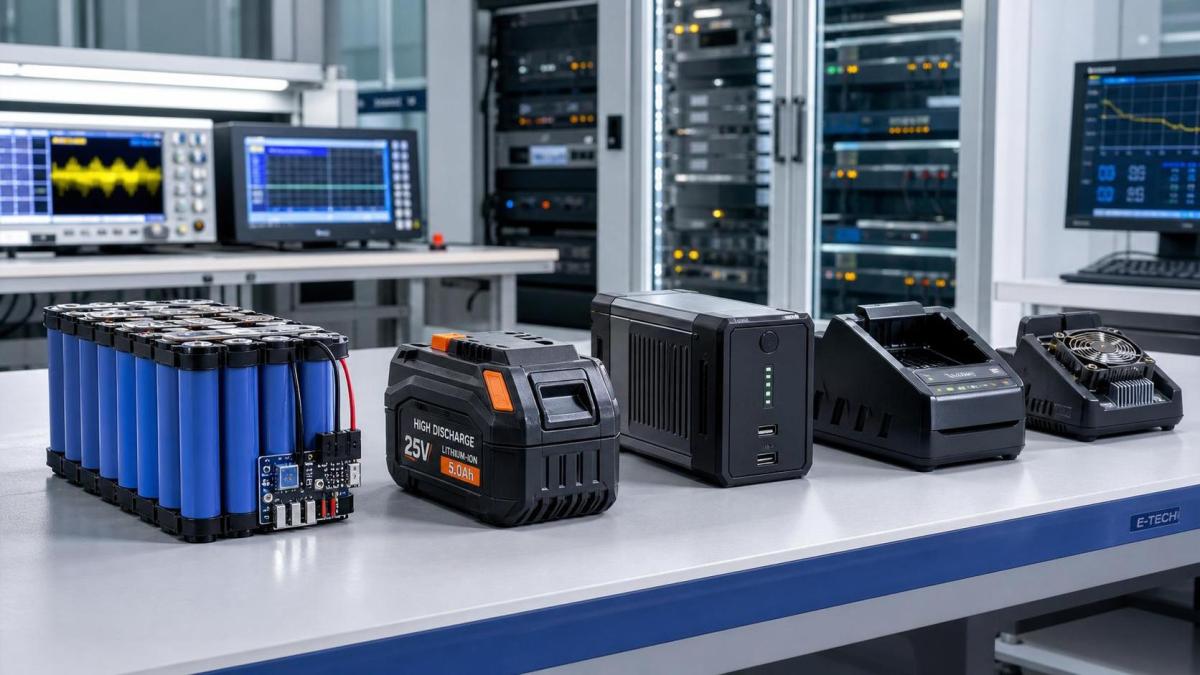
High-rate batteries are often compared by price first. That is understandable, but it is rarely the right starting point.
In real equipment, value comes from discharge capability, usable runtime, heat control, charging speed, and cycle stability working together.
That matters across industrial brushless tools, biometric security devices, smart lighting backups, and mobile protective systems with embedded electronics.
A pack that looks cheaper on paper can become expensive through overheating, early replacement, weak peak power, or unstable field performance.
SHSS follows this topic closely because smart hardware depends on physical reliability. Batteries are not accessories here. They shape whether the hardware performs as designed.
A high-torque BLDC tool, for example, needs current bursts without voltage sag. A biometric terminal needs stable output during constant uptime and fast recognition cycles.
So the practical question is not, “What does the battery cost today?” It is, “What operating result does this battery buy over its full service life?”
What exactly makes a battery “high-rate,” and where does that matter most?
A high-rate battery is designed to deliver high current safely and repeatedly. The key is not only capacity, but how fast that energy can be released.
In purchasing discussions, this is often reduced to C-rate. That helps, but it is only one part of the picture.
The more useful view combines five elements:
- Peak discharge current under load
- Voltage stability during bursts
- Thermal rise across repeated cycles
- Recharge speed without abnormal degradation
- Cycle life at real operating depth
This is why high-rate batteries are common in tools, access control backup packs, robotics, inspection devices, and emergency lighting modules.
In industrial power tools, high-rate batteries support torque spikes during drilling, fastening, and cutting. Weak current delivery immediately shows up as poor output.
In security systems, the load profile looks different. Current is lower, but stable runtime and dependable recharge behavior matter more than marketing peak figures.
For smart city hardware, especially edge-connected lighting or field terminals, temperature variation becomes a decisive factor. A lab rating means little if summer cabinets run hot.
Why can two high-rate batteries with similar specs show very different runtime and cycle value?
Because the label rarely tells the full story. Similar nominal voltage and amp-hour ratings do not guarantee similar performance in the field.
Cell chemistry is one reason. NMC, LFP, and specialized power cells each balance energy density, discharge strength, safety, and lifespan differently.
Pack architecture is another reason. Busbar design, cell matching, thermal paths, BMS calibration, and connector resistance all affect delivered runtime.
In practice, a lower-cost pack may lose effective runtime because voltage drops too early under load. Operators then recharge sooner, even though nominal capacity looks acceptable.
Cycle value also depends on operating depth. A battery rated for many cycles at shallow discharge can age quickly in heavy-duty use.
That is especially relevant in brushless tools and mobile hardware. Frequent bursts, rapid charging, and hot environments can accelerate resistance growth.
The table below helps frame common comparisons more realistically.
A useful buying habit is to ask for performance data at the intended load profile, not just the standard datasheet headline.
How should cost be evaluated beyond unit price?
The most reliable method is to think in cost per delivered work cycle, not cost per pack.
For a fastening tool, that may mean cost per fastening cycle or shift. For a security terminal, it may mean cost per uptime year.
For smart lighting or field equipment, it may mean cost per stable backup event across seasonal temperature swings.
A complete battery cost review usually includes:
- Purchase price and freight classification
- Charger compatibility and charging time
- Expected runtime under real duty cycles
- Replacement interval and warranty exposure
- Downtime cost from thermal shutdown or weak output
- Compliance, transport, and recycling burden
This broader lens is common in sectors tracked by SHSS. The battery decision often influences the credibility of the full hardware system.
For example, in biometric access devices, an underspecified battery can damage trust even when the sensor and algorithm are excellent.
In high-output tools, cheap packs can increase hidden labor cost through extra swaps, cooling breaks, and shorter service intervals.
When comparing high-rate batteries, it is usually smarter to build a three-year operating model than to chase the lowest initial quote.
Which selection mistakes create the biggest risk later?
The biggest mistake is buying a battery by nominal capacity alone. High-rate batteries succeed or fail under load, not at rest.
Another common mistake is treating all application profiles as similar. A handheld BLDC tool and a standby access terminal do not stress cells in the same way.
There is also a tendency to overlook pack integration. BMS logic, enclosure ventilation, and charger behavior can shorten life even when the cells are good.
The following warning signs deserve attention during evaluation:
- Cycle claims without stated temperature or discharge depth
- Peak current claims without continuous current data
- No thermal test record for enclosed equipment
- Limited traceability for cells and pack assembly
- Warranty terms that exclude expected high-load use
For international projects, certification and logistics should not be left until the final stage. They can alter landed cost and project timing significantly.
A battery may look technically suitable, yet still be commercially weak if transport restrictions or replacement lead times are poorly managed.
What is a practical way to compare high-rate batteries before committing?
A practical comparison starts with the duty profile. Define current peaks, average load, runtime target, recharge window, and ambient temperature.
Then ask each supplier to map performance against that exact scenario. This quickly separates generic claims from application-ready options.
If the battery will support tools, security hardware, or connected field devices, it helps to compare these points side by side:
- Usable runtime at operating load, not nominal capacity only
- Voltage sag during peak demand
- Temperature rise after repeated discharge cycles
- Fast-charge impact on service life
- Lead time consistency and pack traceability
- Replacement cost over the intended service horizon
In many cases, a pilot batch reveals more than a long presentation. High-rate batteries should prove themselves in the same rhythm as the final equipment.
That approach fits the SHSS view of smart hardware: physical performance, safety margin, and operational continuity should be evaluated as one system.
If the next decision is still open, start by ranking the non-negotiables. Usually those are power delivery, heat tolerance, cycle value, and replacement certainty.
Once those are clear, comparing high-rate batteries becomes less about guesswork and more about measurable business risk.
Recommended News