
Search News
Industry Portal
Hot Articles
How to Compare Physical Security Systems for Multi-Site Risk Control
Time
Click Count
Choosing among physical security systems for dispersed facilities now shapes far more than site protection. It affects compliance exposure, downtime risk, workforce safety, and how consistently operations run across warehouses, offices, plants, campuses, and urban infrastructure.
That is why comparison should move beyond equipment lists. A useful review looks at how access control, surveillance, lighting, hardware integrity, and incident response work together under real multi-site conditions.
What comparison really means in a multi-site environment
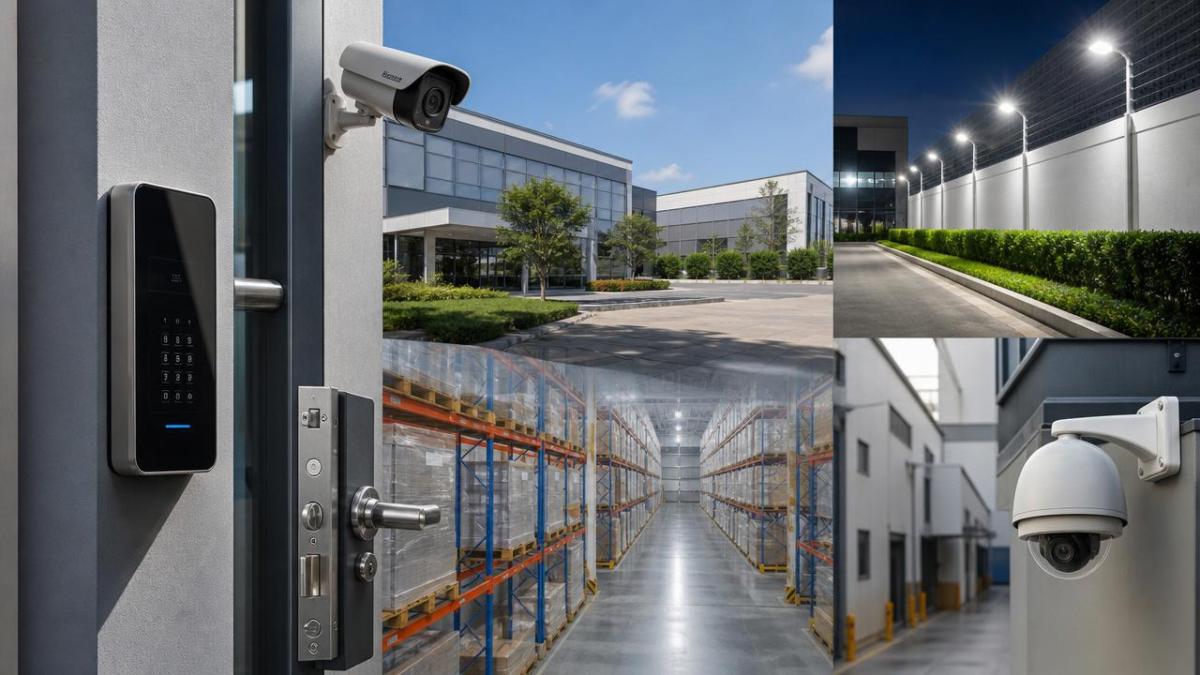
Physical security systems are often discussed as cameras, locks, badges, alarms, and guards. In practice, they are a risk-control framework connecting physical barriers, identity verification, monitoring, and response procedures.
A single-site review can focus on local needs. Multi-site risk control is different. It must account for unequal site maturity, varying threat patterns, changing regulations, and different business consequences when one location fails.
The strongest physical security systems are not always the most complex. They are the ones that stay reliable across many environments, from data-sensitive buildings to industrial spaces exposed to vibration, dust, darkness, and weather.
This broader view is increasingly relevant in AIoT-driven industries. Security no longer stands apart from smart lighting, edge analytics, hardware durability, and controlled access to critical assets.
Why the market is paying closer attention
Organizations now operate with thinner tolerance for interruption. A failed reader at one site can slow shift changes. A blind camera zone can affect investigations. Weak perimeter lighting can reduce both safety and detection quality.
At the same time, regulatory pressure has increased. Biometric deployments raise questions about consent, storage, retention, and cross-border data handling. Video systems create similar concerns around governance and access rights.
There is also a hardware reality. A sophisticated platform loses value when door assemblies, mounting points, enclosures, or fastening components fail under daily stress. In industrial settings, physical resilience is part of security performance.
This is where the SHSS perspective is useful. It treats security as part of a wider ecosystem that includes biometric control, high-strength hardware, smart lighting, and the last lines of human protection.
The core dimensions worth comparing first
A productive comparison starts with a small set of decision dimensions. These reveal whether two physical security systems are merely similar on paper or materially different in risk-control value.
These dimensions keep the discussion grounded. They also help compare traditional systems with newer AI-enhanced physical security systems without being distracted by isolated product claims.
How site context changes the right answer
The best system for a city office may be a poor fit for a fabrication plant or logistics yard. Multi-site decisions improve when locations are grouped by risk profile, not just by geography.
Administrative and commercial buildings
These locations usually prioritize visitor management, data privacy, elevator access, and after-hours monitoring. Biometric verification may be justified in restricted zones, but governance controls become central.
Industrial and manufacturing sites
Harsh conditions matter more here. Dust, vibration, gloves, shift turnover, vehicle movement, and maintenance traffic can reduce the effectiveness of fragile devices or poorly mounted components.
In these spaces, strong physical security systems depend on durable hardware, reliable access points, resilient fasteners, and lighting that preserves camera visibility without inflating energy use.
Critical infrastructure and urban assets
Remote substations, transport nodes, and smart-city installations need low-touch supervision. Here, integrated surveillance, tamper alarms, edge analytics, and smart LED lighting often create better coverage than standalone devices.
What to examine beyond the headline features
Many reviews stop at resolution, reader speed, or dashboard appearance. Those details matter, but they rarely tell the whole story of long-term control quality.
- Check failure modes, not just normal operation. Ask what happens during power loss, network interruption, forced entry, or sensor obstruction.
- Review enrollment and revocation speed. Multi-site operations need rapid credential changes for contractors, temporary access, and role transitions.
- Measure evidence usability. Video retrieval, event logs, and audit exports should support investigations without long manual effort.
- Inspect field durability. Hardware quality, mounting security, corrosion resistance, and enclosure integrity often decide actual lifespan.
- Compare maintenance burden. Physical security systems that require constant calibration or specialized servicing may create hidden operating costs.
In other words, the right comparison balances software intelligence with physical dependability. That combination mirrors a broader SHSS principle: unbreachability depends on both sensing and structure.
Integration often determines the real business value
A fragmented stack can look capable while producing slow decisions. One system handles doors, another stores video, another controls lighting, and incident review becomes a manual puzzle.
Integrated physical security systems reduce that friction. A denied biometric event can trigger nearby video, increase illumination, create an audit entry, and notify the right team within seconds.
This is especially important across multiple sites. Central visibility should not erase local control, but it should allow consistent policy, faster benchmarking, and clearer exception handling.
Smart lighting also deserves more attention than it usually receives. Better illumination design improves camera performance, supports safer movement, and can lower energy costs when paired with occupancy and ambient sensing.
A practical way to compare options
A useful evaluation process does not need to be complicated. It needs to be consistent across sites and focused on risk outcomes rather than isolated specifications.
Build a site tier model
Separate locations by asset criticality, traffic volume, threat exposure, and compliance sensitivity. Then compare physical security systems against each tier, not against an average site.
Score operational scenarios
Use scenarios such as shift start congestion, unauthorized tailgating, perimeter intrusion, emergency lockdown, and audit retrieval. This exposes practical differences very quickly.
Test lifecycle economics
Do not compare only purchase price. Include installation quality, expected replacement cycles, energy use, service visits, software updates, and the cost of weak incident evidence.
Validate compliance early
Biometric and video tools should be reviewed for privacy controls before rollout planning. Governance designed late usually becomes expensive and politically difficult.
Where to go next with the comparison
The most effective next step is to create a comparison matrix that reflects actual operational conditions. Include identity methods, surveillance quality, hardware resilience, lighting support, governance controls, and maintenance assumptions.
Then review which physical security systems stay dependable when conditions become less ideal. That is usually where the strongest options separate themselves from attractive but fragile ones.
For organizations tracking broader smart hardware trends, the better lens is not only security technology. It is how physical barriers, biometric assurance, durable components, and intelligent illumination combine to protect continuity at scale.
A disciplined comparison today creates a clearer roadmap for phased upgrades, better governance, and stronger site resilience tomorrow.
Recommended News