
Search News
Industry Portal
Hot Articles
Physical Security Systems in 2026: Upgrade Priorities for Access Control and Surveillance
Time
Click Count
Physical security systems are entering a different upgrade cycle
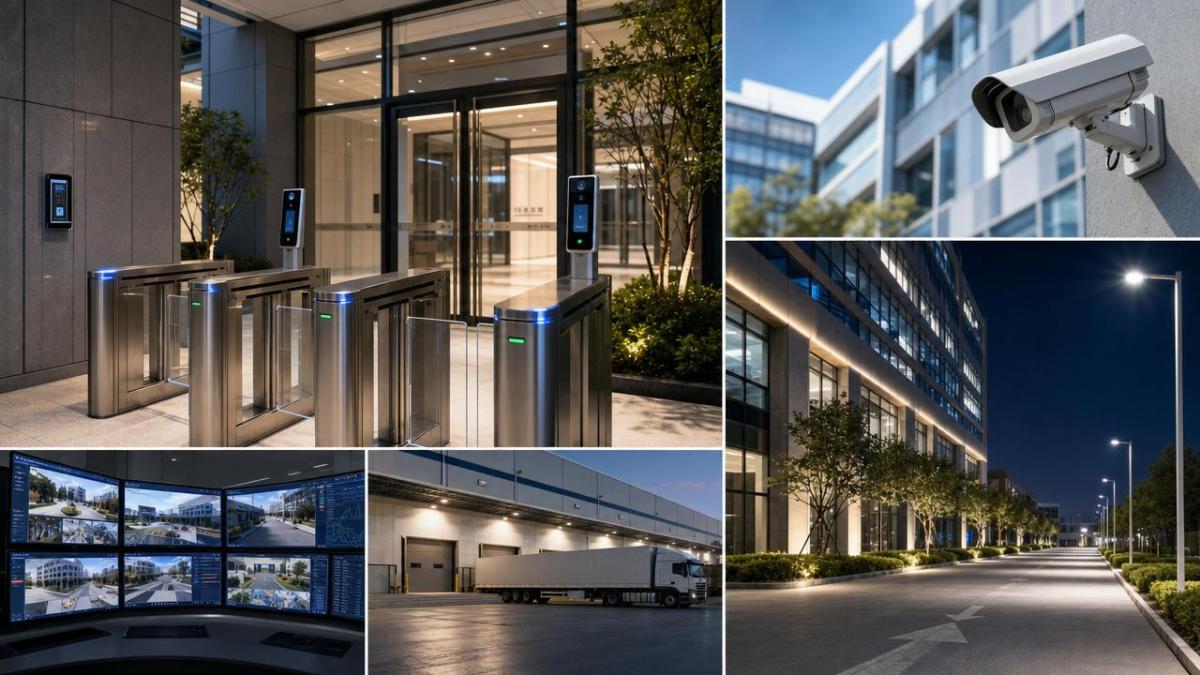
In 2026, physical security systems are being evaluated less as isolated hardware and more as operating infrastructure.
That shift is most visible in access control and surveillance, where resilience, compliance, and building intelligence now converge.
A few years ago, many upgrades focused on replacing aging cameras, readers, and locks.
Now the stronger signal is integration quality.
Can physical security systems verify identity faster, reduce nuisance alerts, and support audits without creating daily friction?
That question matters across commercial buildings, logistics campuses, industrial sites, healthcare environments, and smart city assets.
SHSS has tracked this change through a wider lens.
Physical boundaries no longer stand apart from tools, lighting, hardware durability, or worker protection.
The strongest security posture increasingly depends on how these layers perform together under real operational pressure.
Why the market is moving beyond device-by-device upgrades
Several pressures are pushing physical security systems into a more connected and performance-driven phase.
The most immediate is building complexity.
Hybrid occupancy, distributed facilities, and stricter visitor flows have made static permissions harder to manage.
At the same time, surveillance expectations have changed.
Organizations want video systems that do more than record events after the fact.
They want earlier detection, clearer evidence, and better coordination with incident response.
Compliance is another driver.
Biometric data handling, retention rules, and cloud storage practices are being examined with much greater rigor.
That makes architecture choices more strategic than camera counts or reader prices.
This is why many 2026 upgrade plans begin with architecture mapping rather than hardware replacement lists.
Access control is becoming a live trust decision
Access control is no longer just about granting entry.
It is becoming a real-time trust layer for buildings, restricted zones, and operational continuity.
That is why biometric-ready physical security systems are gaining attention.
Not because every facility needs facial or iris verification everywhere, but because identity assurance now has to be adaptive.
High-risk areas such as data rooms, laboratories, control centers, and critical storage zones need stronger confidence in who is entering.
Recent deployments show a preference for layered access logic.
Mobile credentials may handle low-friction movement, while biometrics or multi-factor checks protect sensitive thresholds.
This also reduces the operational weaknesses of lost cards, shared badges, and unmanaged keys.
From the SHSS perspective, this trend fits a broader industrial pattern.
Physical systems are being asked to deliver both precision and endurance.
That applies to biometric recognition speed, but also to reader reliability, door hardware strength, and secure mounting integrity.
What to prioritize in access control upgrades
- Credential flexibility, so access policies can evolve without replacing every endpoint.
- Biometric governance, including storage methods, consent handling, and audit visibility.
- Door-side resilience, because weak locks, frames, or fasteners can undermine advanced verification.
- Integration with incident workflows, so denied access events are not isolated from surveillance review.
Surveillance is shifting from passive watching to operational intelligence
Surveillance is also changing in a more practical way than the market sometimes suggests.
The goal is not simply more AI.
The goal is fewer blind spots, fewer false alarms, and more useful evidence.
In many sites, the next generation of physical security systems will depend on edge analytics that classify movement, direction, crowding, and unusual behavior.
That matters because operators cannot scale by adding screens and expecting more manual attention.
A better surveillance strategy filters what deserves action.
More interestingly, video quality is becoming linked to other infrastructure choices.
Smart LED lighting improves low-light capture, perimeter visibility, and analytics reliability.
In industrial and municipal settings, lighting control and surveillance performance are increasingly evaluated together.
This is where SHSS often sees hidden upgrade value.
A camera improvement may underperform if glare, shadows, vibration, or poor mounting hardware remain unresolved.
Where surveillance upgrades create the biggest operational gains
- Perimeter areas, where analytics can distinguish intrusion risk from routine movement.
- Loading zones, where video supports safety, asset protection, and dispute resolution.
- Critical interiors, where cross-checking access events with video shortens investigations.
- Remote sites, where edge processing reduces bandwidth strain and response delays.
The strongest physical security systems will be built across layers
One of the clearest 2026 signals is that security performance no longer belongs to one category alone.
Integrated value appears when access control, surveillance, hardware durability, lighting, and protective practices support each other.
In practical terms, that means a secure site is not defined only by digital verification.
It is also shaped by tamper-resistant enclosures, dependable fasteners, stable power tools during installation, and safe maintenance procedures.
This matters in expansion projects and retrofit programs alike.
When deployment quality is weak, even advanced physical security systems can degrade quickly through vibration, misalignment, weather exposure, or inconsistent servicing.
That is one reason the SHSS intelligence model spans brushless tools, high-strength hardware, smart lighting, biometric security, and PPE.
The market is learning that physical resilience and digital trust are now part of the same conversation.
What deserves attention before budgets are locked
The next round of spending on physical security systems should be guided by risk design, not by catalog refresh cycles.
A useful starting point is to identify where identity certainty and response speed matter most.
Then compare that map against current reader logic, camera coverage, storage policy, and hardware reliability.
It also helps to separate visible technology from actual control value.
A new biometric terminal may impress visitors, but poor enrollment practices or weak policy design can still create exposure.
Likewise, a higher-resolution camera may add little if retention rules, search tools, or scene lighting remain inadequate.
The more grounded approach is to review physical security systems through five questions:
- Which spaces need stronger identity proof, and which only need smoother movement?
- Where do false alarms, tailgating, or poor footage create recurring operational drag?
- How well do access events, video records, and compliance logs connect today?
- Which components are physically vulnerable to tampering, vibration, or environmental stress?
- Can the current design scale across smarter buildings without multiplying manual work?
The next move is careful integration, not maximum complexity
The direction of travel is clear.
Physical security systems in 2026 are moving toward tighter coordination between access control, surveillance, analytics, and building infrastructure.
But the best outcomes will not come from adding every new feature at once.
They will come from phased upgrades that match site risk, compliance obligations, and operational reality.
That usually means starting with integration gaps, identity assurance priorities, and the quality of event visibility.
From there, it becomes easier to judge where biometrics, edge AI, smart lighting, or hardened hardware will create measurable value.
For teams tracking this market, the most useful next step is simple.
Reassess whether current physical security systems still reflect how buildings are used, how incidents are reviewed, and how trust is verified.
That is where stronger resilience begins, and where upgrade priorities become much easier to defend.
Recommended News