
Search News
Industry Portal
Hot Articles
Industrial Safety Gear Compliance Risks in Multi-Site Operations
Time
Click Count
In multi-site operations, industrial safety gear is more than a procurement item—it is a frontline control against injury, legal exposure, and costly downtime. For quality control and safety management, small gaps in PPE consistency, certification, or actual worker use can create major compliance risk. This article examines where those risks appear, how they vary by site, and how a stronger, audit-ready framework can reduce exposure while improving operational continuity.
Why industrial safety gear compliance becomes harder across multiple sites
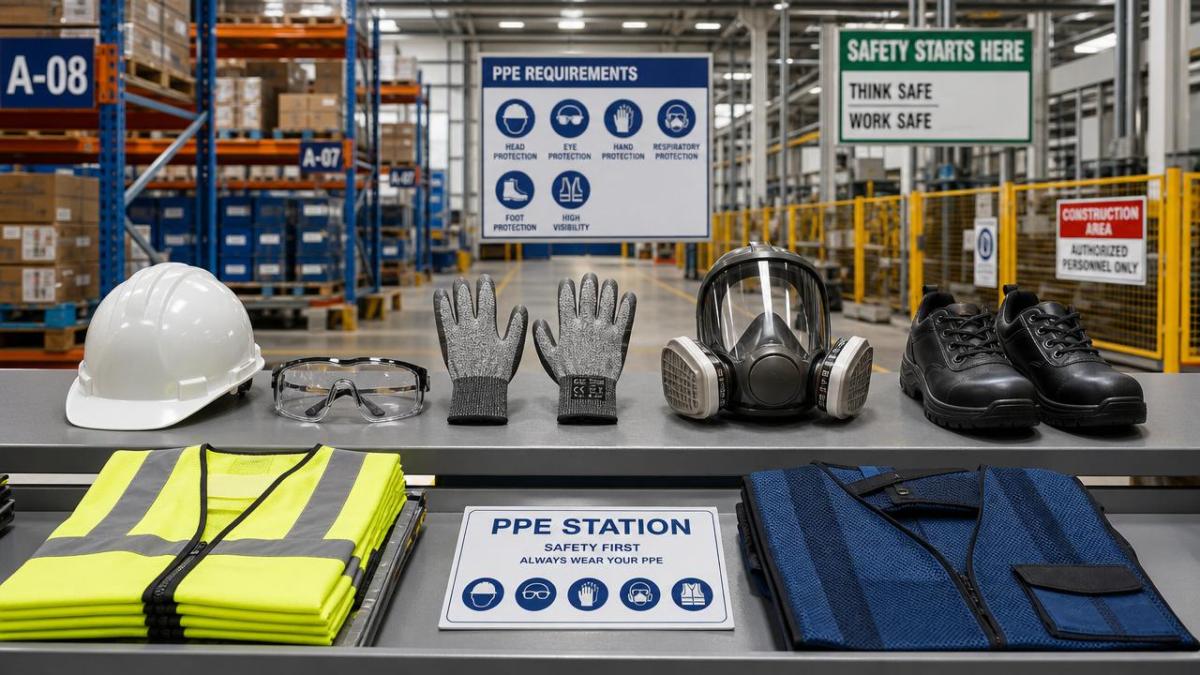
Single-site control is simpler because hazards, supervisors, suppliers, and training records usually stay within one system. Multi-site operations break that simplicity.
Industrial safety gear may look standardized on paper, yet real conditions differ by region, climate, contractor mix, and local regulation. Those differences create hidden compliance gaps.
A glove suitable for metal handling may fail in chemical exposure. A hard hat approved in one market may not satisfy another standard. A respirator program can collapse without fit testing discipline.
The business impact reaches beyond injury prevention. Noncompliant industrial safety gear can trigger failed audits, rejected bids, insurance disputes, production stoppages, and reputational damage after incidents.
Scenario background: the same safety policy rarely fits every location
Different operating environments change what “compliant” really means. A written corporate policy often defines minimum rules, but field conditions determine whether those rules remain effective.
Industrial safety gear decisions should therefore follow scenario-based judgment. The correct question is not only, “Do we provide PPE?” It is, “Does the provided PPE match the task, hazard, user, and local requirement?”
- Hazard intensity varies by task, shift pattern, and environmental exposure.
- Regional standards may differ across ANSI, EN, ISO, or local enforcement rules.
- Contract labor often introduces inconsistent training and undocumented substitutions.
- Inventory shortages can force unapproved replacements.
- Wear rates change across heat, dust, moisture, and abrasion conditions.
Typical application scenarios where industrial safety gear risks emerge
Construction and infrastructure sites with rotating crews
Construction sites often face the highest variation in worker turnover, subcontractor control, and temporary hazard zones. That makes industrial safety gear compliance especially fragile.
Common failure points include mixed helmet classes, expired fall protection components, missing cut-resistant gloves, and undocumented hearing protection training for high-noise tools.
Manufacturing plants with fixed processes but changing exposure levels
Manufacturing environments appear stable, yet exposure changes with new lines, maintenance work, material substitutions, and automation upgrades. Legacy PPE matrices quickly become outdated.
Industrial safety gear risks here often involve eye protection mismatch, insufficient arc-flash apparel, poor respirator cartridge selection, or glove choices that reduce dexterity and increase removal rates.
Warehousing and logistics hubs with low perceived danger
Warehouses are often underestimated. Yet forklift traffic, battery charging, pallet breakage, dock movement, and repetitive handling create steady injury potential.
Compliance failures usually come from relaxed enforcement. High-visibility clothing, toe protection, hand protection, and eyewear may be treated as optional in “low-risk” zones.
Utilities, field service, and remote maintenance operations
Remote work adds travel variables, weather shifts, and delayed supervision. Workers may carry industrial safety gear for multiple hazards but use only part of it in practice.
The key judgment points include electrical risk, visibility conditions, confined space readiness, weather-resistant PPE, and emergency replacement access when equipment is damaged in the field.
How scenario differences change industrial safety gear requirements
A central program should standardize governance, not force identical equipment everywhere. The table below shows how needs shift by setting.
Practical ways to align industrial safety gear with each site
The strongest multi-site programs balance central control with local validation. That approach supports consistency without ignoring real hazard differences.
- Create a global minimum PPE standard tied to hazard categories, not product names alone.
- Map each site’s tasks to required industrial safety gear and approved alternatives.
- Verify certification marks, expiry dates, and local standard acceptance before distribution.
- Use digital issue records to track who received what, when, and for which task.
- Build refresher training around actual misuse patterns, not generic annual content.
- Audit contractor PPE using the same criteria applied to direct employees.
- Monitor replacement rates to identify underperformance, discomfort, or misuse.
Where advanced systems are available, connect industrial safety gear governance to smart inventory, incident reporting, and supplier qualification data. This improves traceability and response speed.
Common misjudgments that weaken compliance across locations
Many failures do not come from missing policy. They come from wrong assumptions about how industrial safety gear is selected, worn, and sustained over time.
- Assuming one approved product works equally well in every climate and task.
- Treating certification as permanent, without checking updates, damage, or shelf life.
- Focusing on issuance records while ignoring observed worker behavior.
- Allowing site teams to substitute products during shortages without formal review.
- Overlooking fit, comfort, and compatibility with tools, eyewear, or communication devices.
- Separating procurement data from safety audits and incident investigations.
These misjudgments matter because industrial safety gear compliance is operational, not theoretical. A compliant item stored in a cabinet offers no protection in a live hazard zone.
An audit-ready framework for stronger industrial safety gear control
A durable framework should be simple enough for scale and strict enough for verification. Four control layers usually make the biggest difference.
1. Governance
Define approval rules, acceptable standards, substitution pathways, and document ownership. Every site should know when local deviation is allowed and who authorizes it.
2. Validation
Test industrial safety gear against task reality. Include fit checks, wear trials, and compatibility review with tools, helmets, face shields, and communication systems.
3. Visibility
Use dashboards for issuance, inspections, nonconformities, and replacement patterns. Visibility turns scattered site observations into actionable compliance intelligence.
4. Correction
Every failed audit point or incident should feed back into standards, supplier review, and training design. Recurrence often signals a system weakness, not individual carelessness.
Next steps to reduce industrial safety gear risk
Start with a cross-site PPE gap review. Compare approved industrial safety gear lists, hazard assessments, certification evidence, and actual usage practices at each location.
Then prioritize the sites with the highest exposure complexity, contractor dependence, or audit pressure. Fast improvement usually comes from standardizing approval controls and documenting field exceptions.
For organizations managing diverse industrial environments, industrial safety gear should be treated as a measurable control system, not a static supply category. Better alignment between scenario, standard, and worker behavior strengthens safety performance and compliance resilience at the same time.
Recommended News