
Search News
Industry Portal
Hot Articles
PPE Equipment Checklist for Safer Daily Operations
Time
Click Count
A practical PPE equipment checklist helps operators stay protected, compliant, and productive in fast-moving daily operations. From respirators and cut-resistant gloves to helmets, eye protection, and high-visibility wear, the right gear reduces avoidable risks before work even begins. This guide outlines what to inspect, why it matters, and how consistent PPE checks support safer routines across industrial, construction, and facility environments.
When people search for a PPE equipment checklist, they usually want something immediately usable, not a theory lesson. They need to know what to check before work, what defects mean “do not use,” and how to match equipment to real hazards.
For operators, the biggest concern is simple: will this gear actually protect me today? A strong checklist answers that question quickly by focusing on fit, condition, task suitability, and replacement triggers rather than generic safety slogans.
In daily operations, PPE equipment is the last line of defense after engineering controls, safe procedures, and training. That makes pre-use inspection critical. Even certified gear can fail if straps are worn, filters are expired, lenses are scratched, or sizing is wrong.
What operators should check first before starting any shift
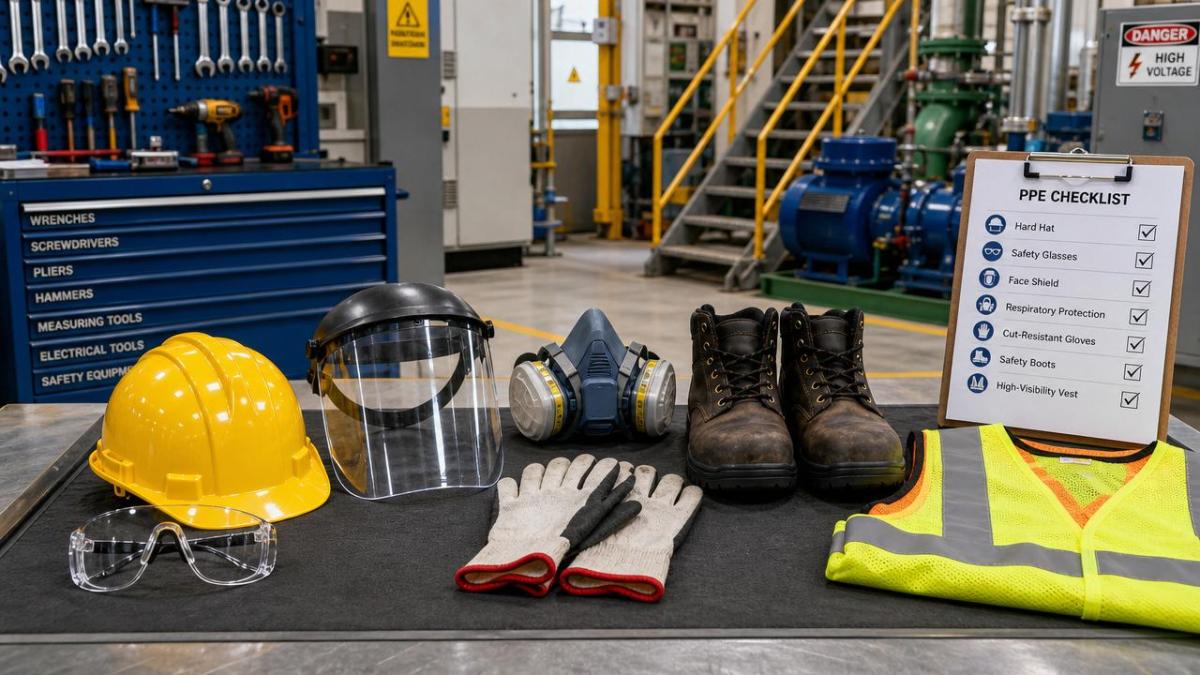
The best checklist starts with the work environment, because PPE equipment only works when it matches the actual exposure. Before touching any item, identify the day’s hazards: impact, cuts, dust, chemicals, noise, heat, falling objects, low visibility, or respiratory risks.
Next, confirm whether the planned task has changed. A routine maintenance round may require only safety glasses and gloves, while grinding, confined-space work, or chemical handling may demand face protection, respirators, hearing protection, and specialized clothing.
Then inspect each item in a consistent order. A practical sequence is head, eyes, face, breathing, hearing, hands, body, feet, and visibility. This prevents rushed omissions and makes daily checks easier to repeat even in busy industrial environments.
Finally, check comfort and fit. PPE equipment that slips, fogs, pinches, or limits movement often gets adjusted incorrectly or removed at the worst time. Protection is only reliable when operators can wear it correctly for the full task duration.
A practical PPE equipment checklist by category
A useful checklist should be specific enough to support action. Instead of “inspect helmet,” operators need to know exactly what to look for, what warning signs matter, and when damaged equipment must be removed from service.
1. Head protection. Check the shell for cracks, dents, deep scratches, UV damage, brittleness, or signs of impact. Inspect the suspension system for torn straps, broken clips, missing adjustment parts, sweatband deterioration, and insecure attachment points.
Confirm the helmet type matches the job. Electrical work may require non-conductive protection, while climbing or elevated work may need chin straps for retention. If a hard hat has sustained impact or shows aging, it should be replaced immediately.
2. Eye protection. Inspect safety glasses or goggles for scratched lenses, cracks, warped frames, weakened side shields, damaged elastic, and poor seal integrity. Vision clarity matters. Severely scratched lenses can reduce awareness and create secondary hazards during operation.
Also verify the correct style. Safety glasses may be enough for light debris, but dusty work, liquid splash, or chemical handling often requires sealed goggles. Anti-fog performance matters in humid or high-exertion tasks because fogging encourages unsafe removal.
3. Face protection. Examine face shields for cracks, clouding, heat distortion, and attachment weakness. A face shield is often supplemental, not a replacement for safety glasses or goggles, especially in grinding, cutting, or splash-prone operations.
Operators should check whether the visor length and coverage are adequate for the task. In metalworking or cutting, partial coverage may leave the chin or neck exposed. Mounting systems should stay secure through movement and vibration.
4. Respiratory protection. This is one of the most critical PPE equipment categories because the wrong filter or poor seal can create invisible danger. Check the facepiece for cracks, deformed seals, valve damage, strap wear, contamination, and storage damage.
Verify cartridge or filter type, service life, and expiration date. A respirator used around dust is not automatically suitable for fumes, vapors, or oxygen-deficient areas. Operators should also perform a user seal check every time the respirator is worn.
Facial hair, weight change, and damaged straps can all compromise fit. If breathing resistance increases, odor breakthrough occurs, or filters are wet or clogged, stop and replace components according to site procedures and manufacturer recommendations.
5. Hearing protection. Inspect earplugs or earmuffs for dirt buildup, tears, hardening, weak cushions, and broken headbands. Dirty or damaged hearing protection may not seal properly, and poor attenuation can lead to cumulative hearing loss over time.
Check that the noise reduction level suits the environment. Intermittent machine use and sustained high-decibel zones may require different solutions. Communication needs also matter, especially where operators must hear alarms, instructions, or moving equipment.
6. Hand protection. Gloves should be selected for the actual hazard, not by habit. Inspect for cuts, punctures, seam failure, stiffness, contamination, thinning palms, and loss of grip surface. Different tasks require different protection levels.
Cut-resistant gloves are valuable around sharp materials, but they are not the same as chemical-resistant gloves, heat-resistant gloves, or anti-vibration gloves. Operators should never assume one glove type covers all exposures in mixed-task environments.
7. Protective clothing. Check coveralls, sleeves, aprons, or specialized garments for tears, open seams, contamination, damaged closures, and degraded high-risk areas such as knees, cuffs, and forearms. Fit is important because loose clothing may snag in machinery.
For arc, flame, chemical, or cut hazards, verify that the clothing rating matches the exposure. Contaminated garments should be cleaned or replaced according to protocol. Reusing compromised clothing can quietly eliminate the protection operators expect.
8. Foot protection. Inspect safety footwear for sole separation, worn tread, toe cap damage, punctures, split seams, chemical degradation, and poor ankle support. Wet, oily, or uneven surfaces increase the value of reliable slip resistance.
If the work involves nails, scrap, heavy objects, or electrical hazards, footwear must match those exposures. A boot that looks acceptable from above may still be unsafe if the sole is worn smooth or the internal structure has broken down.
9. High-visibility wear. Check vests, jackets, or trousers for fading, torn reflective strips, heavy soiling, and closure failure. High-visibility PPE equipment is only effective when contrast and reflectivity remain strong enough for vehicle or equipment operators to notice.
This matters in yards, roadside work, warehouses, airports, and mixed pedestrian-vehicle zones. If reflective bands are peeling or the garment is too dirty to stand out, visibility is already compromised even if the item is technically still wearable.
How to know when PPE equipment is no longer safe to use
One of the most useful parts of any checklist is a clear removal standard. Operators need confidence to reject unsafe gear without hesitation. If PPE equipment is cracked, expired, deformed, contaminated, or no longer fits correctly, it should not remain in use.
Impact matters too. A hard hat or face shield may look acceptable after a strike, but hidden structural damage can reduce future protection. The same applies to respirators dropped repeatedly, gloves exposed to chemicals, or boots with unseen internal failure.
Watch for changes in performance, not just visible damage. Fogging, slipping, weak seals, reduced grip, unusual odor penetration, discomfort, or increased breathing resistance can all signal that protection has degraded beyond safe working limits.
Storage conditions also affect service life. Heat, sunlight, moisture, oils, dust, and compression can damage PPE equipment between shifts. Good equipment stored poorly can fail faster than expected, especially elastomers, filters, reflective materials, and coated fabrics.
How operators can make daily PPE checks faster and more reliable
The most effective checklist is one people will actually use. That means keeping it simple, visual, and tied to the real workflow. Long documents often fail on the shop floor, but short repeatable routines are easier to maintain consistently.
A practical approach is to divide checks into three levels: pre-use visual check, fit-and-function check, and post-use reporting. The first catches obvious damage, the second confirms performance, and the third helps remove defective items before the next shift.
Color-coded storage, labeled replacement schedules, and hazard-specific gear stations can also reduce mistakes. When respirator cartridges, cut-resistant gloves, and eye protection are organized by task, operators spend less time guessing and more time working safely.
Supervisors can support better compliance by standardizing what “good” and “bad” look like. Photos of acceptable wear limits, simple defect tags, and quick training refreshers help teams make consistent decisions without relying on memory alone.
Why a good PPE equipment checklist improves both safety and productivity
Some teams still treat PPE checks as a delay, but poorly maintained protective gear creates more disruption than inspection ever will. Injuries, near misses, replacement confusion, task stoppages, and compliance failures all cost more than a two-minute check.
Reliable PPE equipment also supports better work quality. Operators can focus more effectively when glasses stay clear, gloves preserve dexterity, helmets fit securely, and boots remain stable on demanding surfaces. Comfort and confidence directly affect task execution.
From a compliance standpoint, documented checks show that safety is active rather than symbolic. In construction, industrial plants, logistics sites, and facilities maintenance, that can support internal audits, incident reviews, and stronger daily accountability.
Most importantly, checklists help prevent normalization of risk. Small defects become easy to ignore when crews are busy, but repeated shortcuts create exposure. A simple routine keeps standards visible and reinforces that PPE equipment is essential, not optional.
Build a checklist around real hazards, not generic forms
The strongest PPE equipment checklist is not the longest one. It is the one that matches the hazards operators face every day and gives clear guidance on inspection, fit, use, and replacement. Relevance always beats paperwork volume.
For operators in industrial, construction, and facility settings, the key questions are practical: Is this the right gear for today’s task? Is it in safe condition? Does it fit and function properly? If the answer to any is no, stop and correct it.
Consistent checks protect more than compliance. They reduce avoidable injuries, improve confidence, and support smoother daily operations. When PPE equipment is chosen carefully and inspected routinely, it becomes a dependable final barrier rather than a false sense of security.
If you are reviewing or updating your current PPE equipment routine, start with the categories that fail most often in your environment. Focus on visible defects, fit, filter life, slip resistance, and task suitability. That is where real safety gains usually begin.
Recommended News