
Search News
Industry Portal
Hot Articles
Smart Building Lighting BACnet: What Matters for Retrofit ROI in 2026
Time
Click Count
Retrofit economics look different in 2026. Energy prices remain volatile, capital approval is slower, and building owners are asked to prove resilience as well as savings.
In that setting, smart building lighting BACnet has moved from a technical preference to a financial decision. The issue is not the lamp alone. It is the control architecture behind it.
When lighting is tied into building automation through BACnet, the retrofit can affect energy use, maintenance cycles, occupancy strategy, compliance reporting, and future system integration. That is where return on investment is won or lost.
For an intelligence platform such as SHSS, this matters because smart lighting now sits beside access control, hardware durability, and operational safety as part of one physical performance stack.
Why BACnet Matters More in Lighting Retrofits
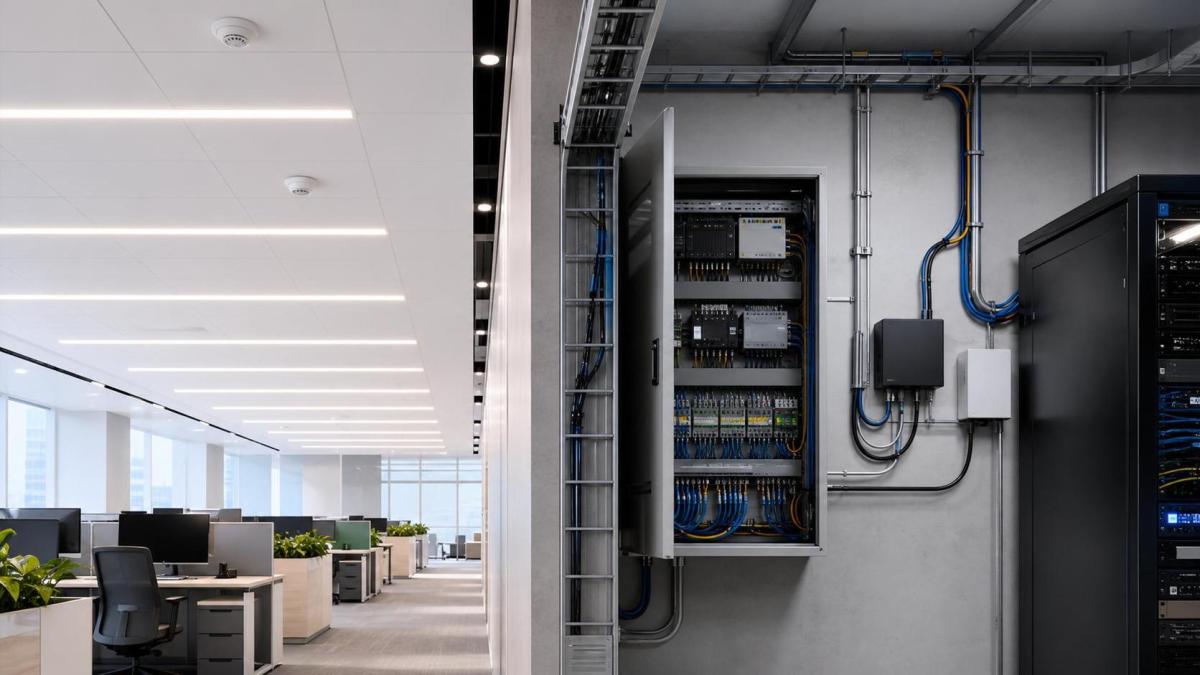
BACnet is a communication standard used in building automation. In lighting projects, it allows fixtures, sensors, gateways, and supervisory systems to exchange data in a common language.
That sounds simple, but the practical value is significant. A lighting system that only dims efficiently is useful. A lighting system that shares occupancy, alarms, schedules, and energy data becomes an asset.
This is why smart building lighting BACnet is increasingly specified in offices, campuses, hospitals, logistics centers, transport hubs, and mixed-use assets.
It supports a wider building logic. Lights respond to occupancy. HVAC can react to the same occupancy signal. Security and after-hours access rules can trigger lighting scenes. Faults can be visible from one interface.
The result is not only lower electricity use. It is tighter operational coordination.
ROI Starts with Integration Quality, Not Fixture Price
A common mistake in retrofit planning is over-focusing on fixture replacement cost. LED efficacy still matters, but in 2026, integration design often has greater influence on payback.
If smart building lighting BACnet is poorly mapped, savings projections can look strong on paper while field performance stays mediocre. Schedules conflict. Sensors are ignored. Maintenance data never reaches the building management system.
Better projects usually show value in four areas:
- Reduced energy consumption through occupancy, daylight harvesting, and granular zoning.
- Lower maintenance labor through remote diagnostics and faster fault isolation.
- Extended asset life through dimming strategies and smarter operating profiles.
- Improved building value through interoperability and future upgrade readiness.
In other words, retrofit ROI depends on whether the lighting system becomes part of the digital infrastructure, not whether it simply looks modern.
The 2026 Questions Investors and Operators Are Actually Asking
The conversation has shifted. Stakeholders are now less impressed by broad promises and more interested in measurable operating outcomes.
Several questions tend to define the decision:
- Will this BACnet lighting retrofit reduce whole-building energy use, not just lighting load?
- Can it coexist with existing BMS, access, and metering infrastructure?
- How much commissioning complexity will it add?
- What happens if one vendor exits or changes product lines?
- Will the data support ESG reporting, uptime management, and occupancy analytics?
These are not abstract concerns. They connect directly to capital efficiency, lease competitiveness, and operational continuity.
SHSS often frames this as a broader smart hardware question. A building performs best when lighting, security, and physical infrastructure are specified as coordinated systems rather than isolated line items.
Where Smart Building Lighting BACnet Delivers the Most Practical Value
Not every site needs the same control depth. The strongest returns usually appear where lighting behavior changes frequently or where operations depend on reliable automation.
In these environments, smart building lighting BACnet is valuable because it aligns light output with how the building is actually used.
What Often Erodes Payback
Retrofit underperformance usually comes from decisions made early. The hardware may be sound, but the project logic is weak.
Protocol claims without true interoperability
Some systems say they support BACnet but expose only limited points or require proprietary gateways. That narrows future flexibility and raises service dependence.
Over-complex control sequences
A control design that is difficult to commission rarely performs well over time. Simpler sequences with clear intent often create stronger long-term savings.
Ignoring maintenance workflows
If the facilities team cannot quickly identify driver failures, sensor faults, or communication loss, service costs rise and confidence drops.
Treating lighting data as an afterthought
Lighting data can support occupancy review, demand management, and asset planning. Without a data model, the retrofit remains operationally shallow.
How to Evaluate a BACnet Lighting Retrofit Before Approval
A stronger review process looks beyond product brochures. It tests whether the proposed architecture can hold value over years, not just at handover.
- Confirm which BACnet objects and points will be exposed to the BMS.
- Review whether occupancy and daylight logic can be tuned after installation.
- Check gateway dependence, licensing costs, and cybersecurity obligations.
- Model savings by zone type, operating hour profile, and maintenance burden.
- Ask how the system will behave during network loss or controller failure.
- Verify compatibility with adjacent systems such as access control and emergency response.
This is where cross-disciplinary thinking becomes useful. Lighting affects comfort and cost, but also security visibility, emergency behavior, and building service continuity.
A Broader View of Building Performance
The market is moving toward integrated physical systems. Lighting does not operate in isolation from access, sensing, structural hardware, or worker safety.
That is why SHSS tracks smart lighting alongside biometric security, durable hardware, and other infrastructure categories. In modern buildings, system value often appears at the connection points.
A retrofit using smart building lighting BACnet should therefore be read as part of a larger modernization path. It can prepare the site for deeper automation, cleaner data, and more disciplined operations.
The next step is practical. Map current lighting assets, identify which building systems already speak BACnet, and compare retrofit options by integration depth, not only by fixture cost.
That approach makes it easier to judge where smart building lighting BACnet will create fast payback, where it will reduce risk, and where it can support long-term building value beyond the initial energy case.
Recommended News