
Search News
Industry Portal
Hot Articles
Toxic Gas Protection for Chemical Plants: Common Selection Mistakes to Avoid
Time
Click Count
Why toxic gas protection for chemical plants gets chosen wrong so often
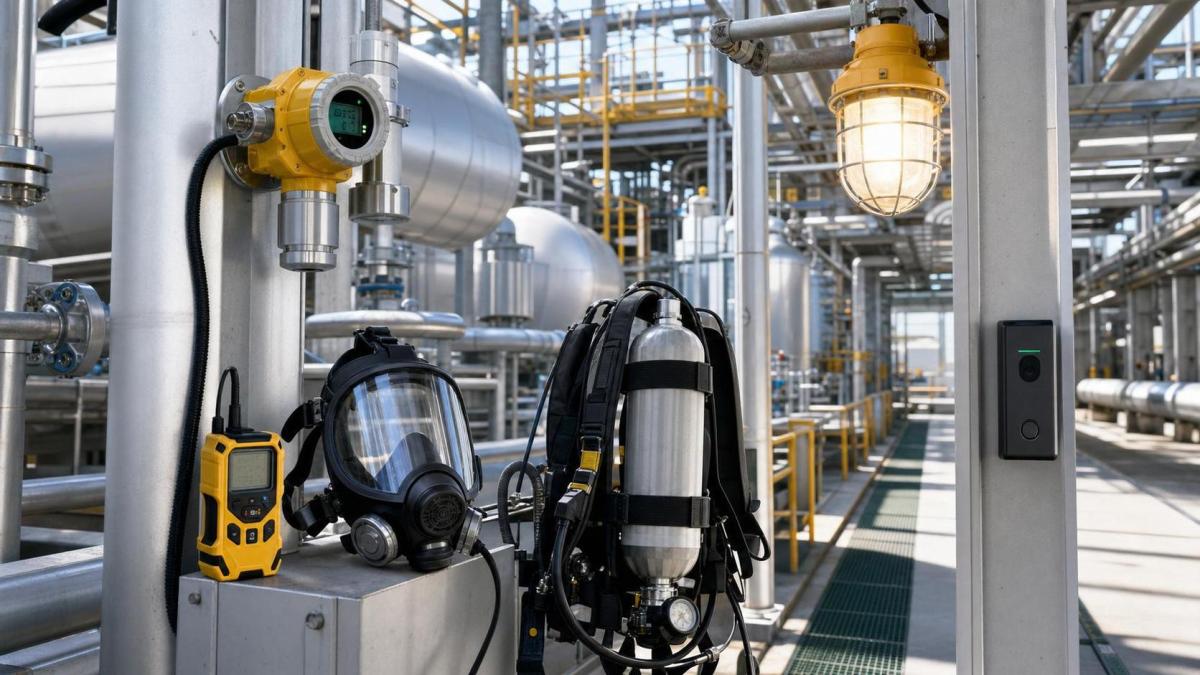
Toxic gas protection for chemical plants is rarely a simple equipment decision.
It shapes how safely people move, respond, inspect, clean, and recover during routine work and unexpected releases.
The trouble is that many selection mistakes look reasonable on paper.
A respirator may meet a standard, yet still fail the real exposure pattern inside a process area.
A detector may alarm correctly, yet be placed too far from the leak path.
In practice, toxic gas protection for chemical plants must connect PPE, detection, ventilation, lighting, access control, and emergency behavior.
That systems view is exactly why industrial safety platforms like SHSS keep protective gear in the same conversation as smart hardware.
When the environment turns hostile, the last line of defense only works if every earlier layer was selected with realism.
So the better question is not merely, “Which respirator should be bought?”
It is, “What failure are we actually trying to prevent, under which gas conditions, for how long, and with what escape margin?”
Is the biggest mistake assuming all toxic gas hazards behave the same?
Yes, and it creates several downstream errors.
Toxic gas protection for chemical plants has to start with gas behavior, not catalog categories.
Ammonia, chlorine, hydrogen sulfide, sulfur dioxide, and solvent vapors do not spread, persist, or irritate in the same way.
Some rise quickly. Some settle low. Some overwhelm smell before concentration feels dangerous. Some destroy trust in smell altogether.
That matters because protection choice depends on concentration range, oxygen level, release speed, and evacuation distance.
A cartridge respirator might be acceptable for controlled maintenance in known concentrations.
It may be completely wrong for unknown releases or oxygen-deficient spaces.
A quick comparison helps clarify where mistakes usually begin.
The safer approach is to map each gas hazard by scenario, not by general label.
That includes normal operation, line breaking, sampling, cleaning, confined entry, and emergency escape.
When does a respirator choice become a dangerous mismatch?
Usually when the selection stops at certification and ignores use conditions.
A correct certificate is essential, but toxic gas protection for chemical plants lives or fails in the details of wear time.
One common mistake is choosing air-purifying protection where supplied air or SCBA is actually required.
Another is relying on half-face masks in areas where eye exposure is also credible.
More subtle errors happen during maintenance planning.
Workers may need to bend, climb, talk, sweat, and wear helmets, visors, or hearing protection at the same time.
If a facepiece loses seal under movement, the nominal protection factor becomes meaningless.
Filter life is another weak spot.
Facilities often treat cartridges as calendar items instead of exposure-dependent components.
Humidity, concentration spikes, mixed contaminants, and storage conditions all affect service life.
A practical check before approving any setup should include:
- Whether oxygen deficiency is possible at any stage.
- Whether splash, vapor, and particle hazards appear together.
- Whether escape time exceeds the realistic comfort window.
- Whether facial hair, eyewear, or communication gear affects fit.
- Whether change-out schedules are based on measured conditions.
In real-world toxic gas protection for chemical plants, fit testing and field usability belong together.
One without the other creates false confidence.
Why do detection, lighting, and access controls matter in gas protection decisions?
Because protection starts before the mask goes on.
Toxic gas protection for chemical plants works best when it is part of a larger safety architecture.
Portable and fixed gas detectors should support each other, not compete for attention.
Fixed units help watch defined process zones.
Portable monitors travel with the changing task, especially during turnarounds, inspections, and line opening.
Lighting also matters more than many teams expect.
Poor visibility slows leak recognition, route finding, tag reading, and buddy checks.
Smart industrial lighting, one of the SHSS focus areas, can strengthen wayfinding and emergency response without adding process complexity.
Access control plays a similar role.
Restricted zones, maintenance permits, and verified entry records reduce unplanned exposure and help separate trained entry from casual movement.
This is where modern biometric and smart access systems support safety rather than just security.
When people, alarms, doors, and evacuation logic work together, the selected PPE performs within a controlled system.
When they do not, even premium equipment gets asked to solve the wrong problem.
What warning signs suggest your toxic gas protection plan is too theoretical?
The first sign is perfect paperwork paired with awkward field behavior.
If donning takes too long, people improvise.
If alarms trigger often without context, people tune them out.
If escape hoods stay sealed in cabinets nobody opens during drills, readiness is only assumed.
Another sign is that maintenance records exist, but no one can explain actual replacement logic.
The same applies to detector bump tests and calibration intervals.
A useful review question is simple: can each protective layer be tied to a specific failure scenario?
If not, the plan may be too generic.
Watch for these field-level signals:
- Cartridges are replaced “when they feel old.”
- Portable detectors are shared without clear bump-test ownership.
- Escape devices are stored beyond realistic reach points.
- Respirators interfere with helmets, visors, or communication.
- Drills never simulate reduced visibility or route congestion.
The more complex the site, the more toxic gas protection for chemical plants should be validated through task rehearsal, not policy wording alone.
How should you compare options without overbuying or underprotecting?
Start with the hardest credible scenario, then work backward.
That usually produces better decisions than starting with unit price.
For toxic gas protection for chemical plants, cost matters, but selection errors cost more through downtime, retraining, unusable stock, and incident exposure.
A sensible comparison should include both equipment and operating burden.
Some systems are cheaper to purchase but harder to maintain correctly.
Others cost more upfront yet simplify inspection, compatibility, and emergency readiness over time.
Use a shortlist built around these questions:
- Does the option match known and unknown exposure conditions?
- Can it be worn correctly during actual movement and heat load?
- Is maintenance simple enough to stay consistent during busy periods?
- Does it integrate with detectors, entry controls, and emergency routes?
- Can training explain the choice in plain operational terms?
That is also where SHSS-style cross-disciplinary thinking becomes useful.
PPE should not be judged alone when smart lighting, access records, and hardware reliability shape response speed around it.
What is the smartest next step if you suspect selection mistakes already exist?
Do not begin with a full replacement order.
Begin with a scenario review.
List the gases present, where releases can happen, how long exposure could last, and what escape path is realistic.
Then verify each layer against that map: detector placement, alarm logic, respirator type, filter selection, fit testing, storage points, and drill quality.
This kind of review usually reveals whether the problem is equipment choice, system design, or maintenance discipline.
The best toxic gas protection for chemical plants is not the most complex setup.
It is the setup that remains understandable, wearable, detectable, and dependable under stress.
If the current plan feels hard to explain in one walkthrough, that is already useful evidence.
Tighten the hazard map, compare protection layers against real tasks, and rebuild the selection standard around actual exposure conditions.
That is where safer decisions usually start.
Recommended News