
Search News
Industry Portal
Hot Articles
Protective Respirators: Choosing the Right Filtration Level
Time
Click Count
Protective Respirators: Choosing the Right Filtration Level
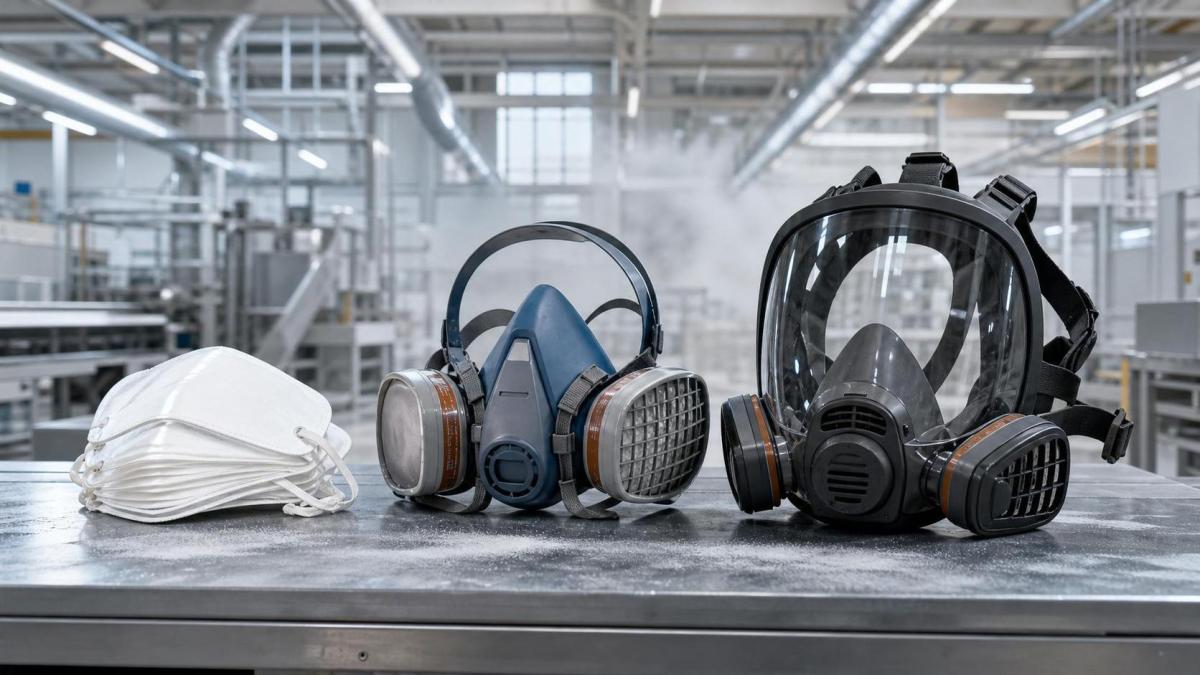
Protective respirators are more than standard PPE. They stand between the body and dangerous airborne exposure when dust, fumes, mists, or toxic particles fill the work area.
That is why filtration level matters so much. The wrong choice can reduce protection, raise fatigue, and disrupt tasks that demand focus, movement, and reliable breathing comfort.
In practice, selecting protective respirators is not about buying the highest rating available. It is about matching the respirator to the hazard, the duration, and the work pattern.
This guide breaks that decision into clear steps. It helps compare filtration levels, understand trade-offs, and choose protective respirators that fit real industrial conditions.
Start with the Hazard, Not the Product
A common buying mistake is starting with a mask model. The better starting point is exposure type, because different contaminants call for different protective respirators.
First, identify what is in the air. Is it nuisance dust, silica, welding fumes, oil mist, chemical vapor, or a mixed exposure created by several processes?
Next, consider concentration and duration. A short maintenance job may need a different filtration strategy than a full shift in a dusty production zone.
Ventilation also changes the picture. In a controlled area, lower burden options may work. In a tight, poorly ventilated space, higher protection becomes more important.
- Dust from cutting, grinding, or cement work often needs particle filtration.
- Welding and thermal processes may create ultrafine fumes needing stronger filtration performance.
- Spray painting or oily aerosols may require filters rated for oil-based particles.
- Solvents and gases usually require cartridges, not particle-only filtering facepieces.
This is where many respirator decisions become clearer. Once the contaminant is understood, filtration level becomes a technical match rather than a guess.
Understand the Main Filtration Levels
Protective respirators are usually grouped by how efficiently they capture airborne particles. Common standards include N95, N99, P100, FFP2, and FFP3.
These labels do not mean one option is always better. They show tested filtration capability under defined conditions, and those conditions matter during selection.
N95 respirators filter at least 95% of certain non-oil airborne particles. They are widely used for dusty tasks and many routine industrial applications.
N99 and P100 options provide higher particle filtration. They are often chosen when exposure is heavier, finer, or more persistent across the shift.
FFP2 and FFP3 serve a similar decision role in many markets. FFP3 is typically selected where greater particle protection is required.
The key point is simple. A higher filtration rating can improve protection, but it may also increase breathing effort and reduce acceptance during long wear.
Match Respirator Type to the Job
Filtration level is only one part of the decision. The respirator format also shapes comfort, seal quality, maintenance needs, and total cost over time.
Disposable filtering facepieces work well for short cycles, visitor use, and lower-complexity environments. They are easy to issue, but performance depends heavily on fit.
Half-face reusable protective respirators are often better for repeated industrial use. They allow cartridge changes and can support stronger filtration strategies with lower waste.
Full-face protective respirators add eye and face coverage. They are useful when splash risk, severe dust, or high-value protection justify the added weight.
- Choose disposable models for short, simple particulate tasks.
- Choose reusable models for repeated use and cartridge flexibility.
- Choose full-face models when exposure also threatens the eyes or skin.
From a procurement view, this is often where real value appears. The right protective respirators lower replacement waste while improving compliance on the floor.
Do Not Ignore Fit, Seal, and Wearability
Even the best filtration media fails if air leaks around the seal. That is why fit is just as important as rating when evaluating protective respirators.
Face shape varies. Nose bridge design, strap tension, and sealing material all affect whether the respirator stays stable during bending, lifting, and repetitive movement.
Wearability matters too. If the respirator causes heat buildup, pressure points, muffled speech, or strong breathing resistance, real-world compliance may drop fast.
This is especially true in construction, fabrication, mining support, utility maintenance, and smart industrial sites where tasks change constantly.
- Check fit testing requirements before deployment.
- Look for adjustable straps and stable nose support.
- Review exhalation comfort for hot work environments.
- Confirm compatibility with goggles, helmets, and hearing protection.
A respirator that scores slightly lower on paper may perform better in practice if it seals well and gets worn correctly for the full task duration.
Think Beyond Filtration Efficiency Alone
Filtration percentage gets the most attention, but smart selection should also consider workflow, environment, and maintenance discipline.
For example, humid sites can shorten comfort time. High-dust jobs may clog filters faster. Multi-shift operations need reliable replacement planning, not last-minute substitution.
In actual operations, these small details shape productivity. Protective respirators that are hard to stock, clean, or replace usually create hidden downtime.
Cost should be measured as total use cost, not just unit price. A cheaper respirator may become expensive if it fails early or drives poor compliance.
A Practical Selection Checklist for Protective Respirators
If the goal is faster decision-making, a short checklist helps. It keeps protective respirators aligned with actual risk rather than assumptions.
- Identify the airborne hazard and whether it includes oil, fumes, or vapor.
- Estimate exposure level, work duration, and ventilation conditions.
- Select the filtration level that matches the documented risk.
- Choose disposable, half-face, or full-face design based on workflow.
- Verify fit, comfort, and compatibility with other protective equipment.
- Set a replacement and inspection routine before rollout.
This process reduces overbuying and underprotection at the same time. It also makes conversations with safety teams and suppliers more precise.
Final Takeaway
Choosing protective respirators is really about matching filtration, fit, and work reality. Strong protection only works when the equipment suits the hazard and gets worn correctly.
For most operations, the best decision starts with exposure assessment, then moves through filtration level, respirator style, and wearer comfort in that order.
When protective respirators are selected this way, safety performance improves without sacrificing productivity. That is the balance every modern industrial site should aim for.
Use this framework during your next PPE review, and the right filtration level becomes a clear operational decision rather than a costly guess.
Recommended News