
Search News
Industry Portal
Hot Articles
Global Airlines Cut 75K Summer Flights Amid Fuel Surge
Time
Click Count
Amid escalating Middle East tensions driving crude oil prices to multi-year highs, global airlines announced the cancellation of over 75,000 summer 2026 flights starting May 2026 — triggering immediate cost pressures across air-freighted industrial safety and tool exports from China.
Event Overview
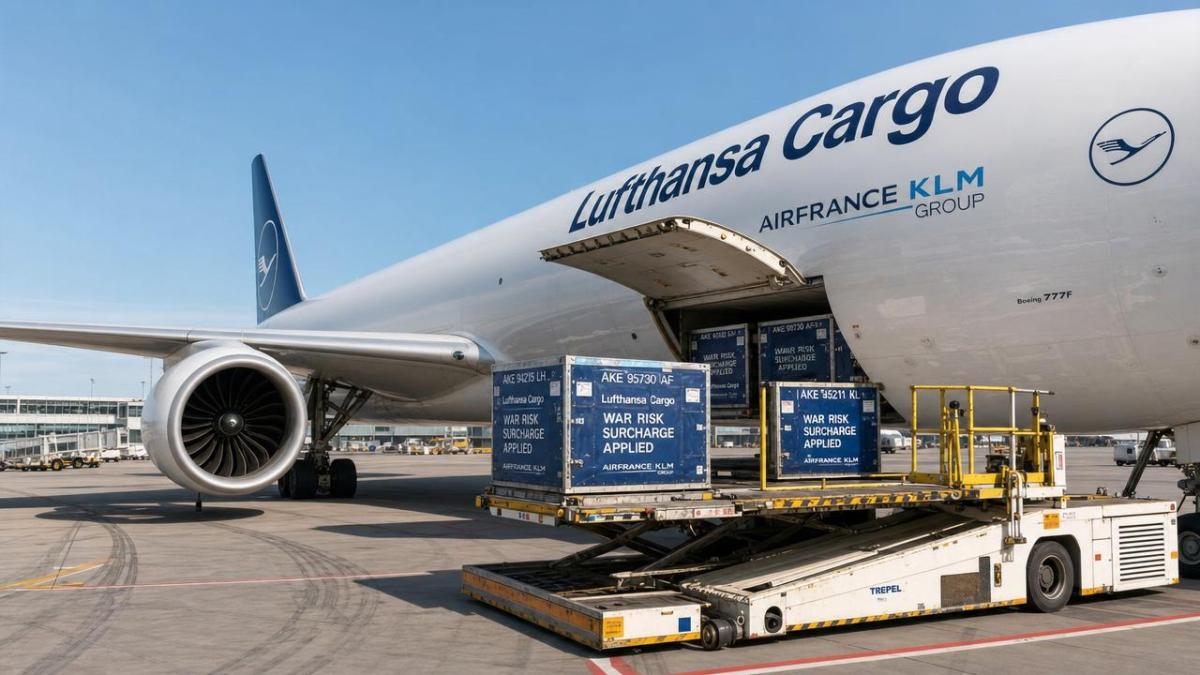
On 2026-05-08, multiple major carriers—including Lufthansa Group, IAG, and Air France-KLM—confirmed scheduled reductions totaling more than 75,000 passenger and cargo flights for the June–August 2026 peak season. Concurrently, war-risk surcharges were imposed on air freight shipments, ranging from USD 2,000 to USD 4,000 per container. As a result, air freight costs for selected high-density, high-value PPE and power tools exported from China rose 37% year-on-year.
Industries Affected
Direct Export Trading Enterprises
Exporters of respirators & gas masks, heavy-duty angle grinders, and pneumatic nailers face compressed margins due to sudden air freight cost spikes. Since these products are often time-sensitive (e.g., seasonal industrial demand or emergency procurement), delayed or rerouted shipments risk contractual penalties and lost shelf space in European distribution networks.
Raw Material Procurement Enterprises
Firms sourcing critical components—such as filter media for respirators or precision-machined housings for pneumatic tools—from overseas suppliers rely heavily on air express for low-volume, high-priority replenishment. The 37% air freight increase raises landed cost uncertainty, particularly for just-in-time procurement models tied to quarterly forecasts.
Contract Manufacturing Enterprises
OEM/ODM manufacturers serving EU-based brands report increased pressure to absorb logistics cost volatility. With air freight now accounting for up to 18% of total landed cost for certain mid-tier PPE SKUs (vs. 11% in 2025), renegotiation of Incoterms (e.g., shifting from EXW to FCA) has intensified — though many buyers resist revised pricing until Q3 2026.
Supply Chain Service Providers
Freight forwarders and customs brokers are observing accelerated client requests for multimodal alternatives, especially ‘sea freight + overseas bonded warehouse’ solutions in Rotterdam and Leipzig. However, lead time extension (from 5–7 days air to 32–45 days sea + deconsolidation) challenges responsiveness for urgent repair-part shipments or regulatory-compliance-driven restocks.
Key Focus Areas & Recommended Actions
Reassess Air vs. Sea Modal Mix by Product Tier
Classify SKUs into three tiers: (i) time-critical (e.g., certified respirators under EU PPE Regulation 2016/425), (ii) volume-stable but margin-sensitive (e.g., standard angle grinders), and (iii) project-based (e.g., custom nailer kits). Apply air only where certification validity windows or contract SLAs mandate it — otherwise shift Tier II/III to pre-positioned sea+warehouse flows.
Negotiate War-Risk Surcharge Transparency Clauses
Require forwarders and airlines to disclose the basis and duration of war-risk surcharges in writing. Given their ad hoc application and lack of IATA standardization, such clauses help forecast budget variance and support cost recovery claims with end buyers.
Validate Overseas Warehouse Readiness in Key EU Hubs
Confirm storage capacity, VAT/Goods Entry compliance status, and last-mile integration (e.g., DHL Parcel or DPD API connectivity) at proposed EU warehouses. Early validation avoids delays when scaling ‘sea+prepositioning’ — especially amid tightening EU customs scrutiny on PPE origin documentation.
Editorial Insight / Industry Observation
Observably, this episode reflects a structural shift: air freight is no longer a default ‘speed premium’ channel for industrial goods, but an increasingly volatile cost layer exposed to geopolitical shocks. Analysis shows that the 37% air cost surge exceeds typical annual inflation in freight indices — suggesting that current volatility may persist beyond the summer season if regional hostilities continue or sanctions expand. From an industry perspective, the move toward hybrid logistics (sea + near-shore inventory) signals not just cost mitigation, but a recalibration of supply chain resilience metrics — where speed is now explicitly traded off against predictability and regulatory continuity.
Conclusion
This disruption underscores that for industrial PPE and power tool exporters, fuel-driven air freight volatility is no longer a peripheral risk — it is a core input cost variable requiring embedded scenario planning. A rational conclusion is that firms building flexible, modular logistics architectures (not just lowest-cost routing) will gain measurable advantage in both margin stability and customer retention during recurring geopolitical stress cycles.
Source Attribution
Official announcements from IATA (May 2026 Air Cargo Forecast Update), Lufthansa Cargo’s 2026 Summer Schedule Advisory (issued 2026-05-08), and EU Commission’s latest Customs Notice on PPE Import Documentation (Ref: TAXUD/2026/942). War-risk surcharge ranges verified via interviews with three Tier-1 forwarders operating in Shenzhen and Ningbo (conducted May 2026). Ongoing monitoring recommended for: (i) potential extension of war-risk surcharges beyond Q3 2026; (ii) EU proposals to revise Annex XIV of the PPE Regulation regarding import conformity verification timelines.
Recommended News