
Personal Protective Equipment Fit Testing Mistakes That Raise Respirator Risk
For quality control and safety managers, respirator protection can fail long before a worker enters a hazardous zone—often during fit testing.
Personal Protective Equipment only delivers its promised defense when selection, seal checks, user training, and documentation are executed without shortcuts.
Yet common mistakes, from testing the wrong model size to ignoring facial hair or poor recordkeeping, quietly raise exposure risk and compliance liability.
This article highlights the fit testing errors that undermine respirator performance and shows how safety teams can build a reliable, audit-ready program.
Why Fit Testing Is a Risk Control Point, Not a Paper Exercise
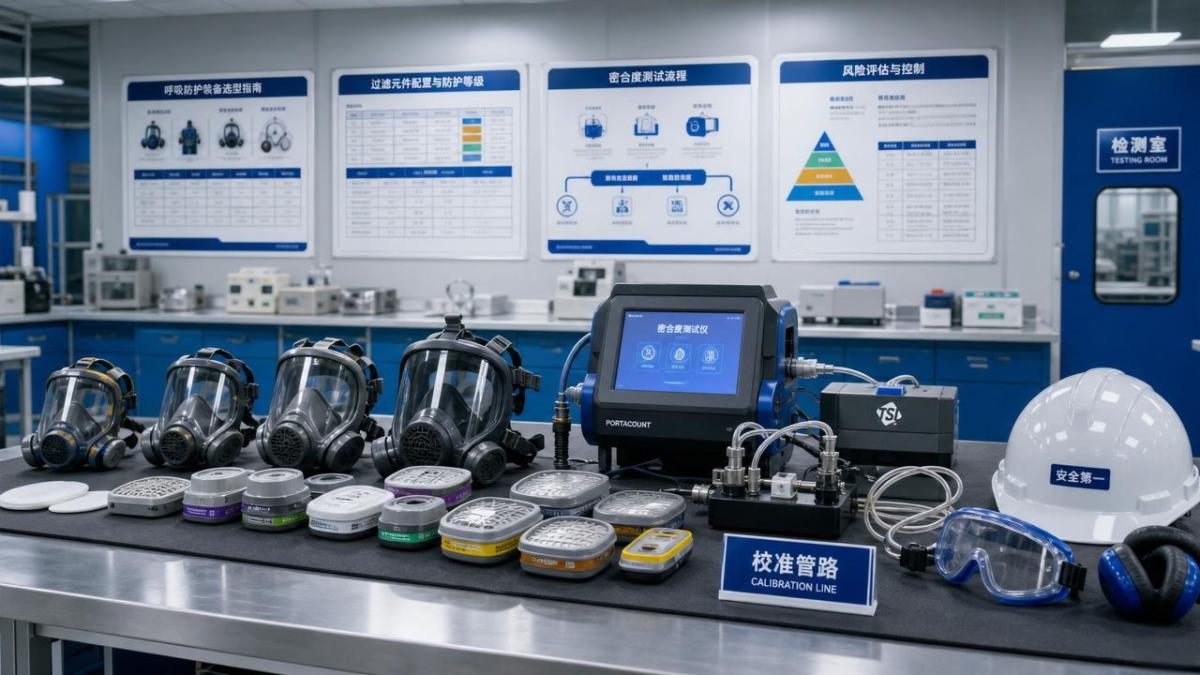
The biggest mistake is treating fit testing as an annual administrative task rather than a live verification of respiratory protection performance.
A respirator may be certified, correctly purchased, and properly stored, yet still fail if it does not seal on the individual wearer.
For safety managers, the issue is not whether Personal Protective Equipment exists on site, but whether it performs under real conditions.
For quality control teams, fit testing also affects process reliability because airborne contaminants can compromise workers, products, clean areas, and inspection outcomes.
A weak fit testing program creates two risks at once: higher exposure probability and weaker evidence during audits, investigations, or regulatory reviews.
The practical goal is simple: prove that the selected respirator fits the specific worker, task, hazard, and workplace conditions.
Mistake 1: Testing the Wrong Respirator Model, Style, or Size
One frequent failure occurs when employees are fit tested on one respirator but later issued another model, size, or facepiece style.
Even small differences in nose bridge shape, strap geometry, valve location, or face seal material can change the fit factor dramatically.
A worker who passes on a half-mask respirator may not pass on a different brand, disposable model, or full-face configuration.
Safety teams should never assume that similar-looking respirators provide interchangeable protection for the same individual wearer.
The tested respirator must match what the worker actually uses, including make, model, size, cartridge configuration, and facepiece type.
Procurement changes should trigger a fit testing review, especially when suppliers substitute products during shortages or cost-reduction initiatives.
For quality control, this means purchase approvals should include safety validation, not only price, availability, and technical specifications.
Mistake 2: Ignoring Facial Hair, Facial Changes, and Wearer Conditions
Facial hair remains one of the most predictable causes of respirator seal failure, yet it is still handled inconsistently.
Beards, stubble, sideburns, and even certain mustaches can interrupt the sealing surface and allow contaminated air to bypass filtration.
The problem is not appearance policy; it is physics. Tight-fitting respirators require clean contact between skin and face seal.
Other wearer changes also matter, including weight change, dental work, facial surgery, scarring, or changes in corrective eyewear.
A worker who passed last year may need retesting after significant facial changes or after reporting discomfort and repeated seal check failure.
Safety managers should define clear rules for facial hair, retest triggers, and supervisor escalation when a seal cannot be achieved.
Where shaving is not feasible, powered air-purifying respirators or loose-fitting hoods may be more appropriate for certain roles.
Mistake 3: Confusing User Seal Checks With Formal Fit Testing
A user seal check is important, but it is not a replacement for a required qualitative or quantitative fit test.
Seal checks help workers confirm the respirator is seated before each use, usually through positive or negative pressure checks.
Formal fit testing evaluates whether the respirator can reliably achieve an acceptable fit under defined test exercises and conditions.
Programs fail when supervisors believe a quick pre-use check proves compliance or replaces documented fit testing records.
The best approach is to teach both requirements clearly: fit testing confirms suitability, while seal checks confirm daily donning quality.
Workers should understand that a passed fit test does not guarantee protection if they wear the respirator incorrectly later.
This distinction is especially important for temporary workers, contractors, and employees who use respirators only during non-routine maintenance tasks.
Mistake 4: Poor Training Before the Fit Test
Fit testing is often compromised because employees arrive without knowing how to inspect, position, tighten, or remove the respirator.
If the test operator adjusts everything for them, the result may reflect technician skill rather than worker capability.
Respirator users should be trained before testing on limitations, cartridge selection, strap tension, seal checks, cleaning, storage, and replacement indicators.
They also need time to try different sizes and learn what a correct fit feels like during movement.
Training should include common donning errors, such as twisted straps, over-tightening, nose clip gaps, and interference from helmets or goggles.
For quality control environments, training must also address contamination prevention, glove handling, cleanroom protocols, and respirator storage between tasks.
A fit test should confirm a trained user can wear the equipment properly, not serve as their first exposure to it.
Mistake 5: Using the Wrong Test Method for the Respirator or Hazard
Qualitative and quantitative fit testing methods are not interchangeable in every situation, and misuse can create false confidence.
Qualitative methods rely on taste or smell detection, commonly using saccharin, Bitrex, isoamyl acetate, or irritant smoke.
Quantitative methods use instruments to measure leakage and produce a numerical fit factor, often required for higher protection factors.
The selected method must align with the respirator type, required protection level, applicable regulations, and internal risk tolerance.
For high-hazard environments, confined spaces, toxic gases, or critical production zones, quantitative testing may provide stronger evidence and decision support.
Safety managers should avoid choosing the cheapest method automatically, especially when exposure consequences are severe or legal scrutiny is likely.
The right method is the one that produces defensible evidence for the respirator, hazard profile, and operational context.
Mistake 6: Skipping Medical Evaluation and Comfort Feedback
Respirator use can increase breathing resistance, heat stress, communication difficulty, and fatigue, especially during long or physically demanding tasks.
Fit testing should not proceed as an isolated event if workers have not been medically cleared where required.
Medical evaluation helps identify whether an employee can safely wear the respirator under expected workload and environmental conditions.
Comfort feedback also matters because workers who experience pain, fogging, pressure points, or panic may loosen or remove protection.
Managers should document discomfort patterns and treat them as signals for alternative models, sizes, accessories, or work practice changes.
A respirator that technically passes but is intolerable during real work may still fail as a protective control.
Effective Personal Protective Equipment selection balances measurable fit, user acceptance, hazard control, and realistic task performance.
Mistake 7: Failing to Simulate Real Workplace Movements
Fit tests include exercises for a reason: respirators must seal while workers move, speak, bend, reach, and breathe heavily.
Programs become weak when test exercises are rushed, performed incorrectly, or treated as optional steps to save time.
Real work rarely involves standing still. Workers climb ladders, inspect welds, handle tools, crawl, lift materials, and communicate under pressure.
If these movements disturb the face seal, the respirator may leak precisely when exposure intensity is highest.
Safety teams should review job tasks and consider whether standard fit test exercises adequately reflect actual body positions and effort levels.
Where tasks are unusually demanding, additional practical checks may be useful after formal fit testing has been completed.
The goal is not to invent unnecessary complexity, but to ensure the test result reflects credible workplace conditions.
Mistake 8: Weak Documentation That Cannot Survive an Audit
Good respiratory protection programs fail during audits when records are incomplete, inconsistent, outdated, or disconnected from issued equipment.
Fit testing documentation should identify the worker, date, test method, respirator make, model, size, result, and tester information.
It should also show retest dates, failed attempts, alternative models tried, medical clearance status, and training completion where applicable.
Without these details, managers may struggle to prove that the right worker used the right respirator at the right time.
Digital tracking can reduce errors by linking fit test records to inventory, job roles, exposure assessments, and training databases.
Quality control teams should treat documentation as part of process assurance, not merely as a safety department file.
Strong records help identify patterns, such as models with frequent failures or departments needing targeted retraining.
Mistake 9: Not Retesting After Changes in Work, Hazard, or Equipment
Annual fit testing is common, but it should not be the only trigger for reviewing respirator suitability.
Retesting may be needed after respirator model changes, facial changes, failed seal checks, new contaminants, or revised exposure levels.
Changes in other Personal Protective Equipment can also affect fit, including safety glasses, face shields, welding helmets, and hard hats.
A new goggle design may press against the facepiece and create leakage during head movement or prolonged wear.
Process changes matter too. New chemicals, higher dust loading, longer shifts, or emergency response duties may require different protection.
Managers should build change-control links between procurement, industrial hygiene, operations, maintenance, and respiratory protection program ownership.
When fit testing is connected to management of change, hazards are less likely to outgrow the existing protection strategy.
How Safety and Quality Teams Can Build a More Reliable Program
A strong program starts with a written respiratory protection procedure that defines responsibilities, test methods, retest triggers, and documentation rules.
It should be based on exposure assessment, not convenience, and should clearly identify which tasks require which respirator types.
Procurement should maintain approved respirator lists and prevent unreviewed substitutions that invalidate existing fit test records.
Supervisors should verify daily seal checks, facial hair compliance, cartridge condition, storage practices, and correct respirator use in the field.
Fit testers need competency checks, standardized procedures, calibrated equipment where applicable, and authority to reject unsuitable respirator selections.
Workers need practical training that explains why fit matters, how failure occurs, and when to stop work and report problems.
Periodic program reviews should compare fit test pass rates, failed models, incident reports, exposure monitoring results, and audit findings.
Practical Checklist for Reducing Respirator Fit Testing Errors
Before testing, confirm the worker has medical clearance, required training, no interfering facial hair, and access to multiple approved respirator options.
During testing, verify the exact make, model, size, and configuration that will be issued for actual work.
Ensure the worker dons the respirator independently, performs a user seal check, and completes all required exercises correctly.
After testing, record results immediately, update issue records, schedule retesting, and communicate any restrictions to supervisors.
If the worker fails, do not force a pass through repeated strap tightening or coaching that cannot be replicated on the job.
Instead, try another size, model, or respirator type, and document the failed configuration for future purchasing decisions.
This checklist turns fit testing into a control system, helping teams prevent exposure rather than simply record compliance activity.
Conclusion: Fit Testing Protects People, Evidence, and Operations
Respirator risk increases when fit testing is rushed, poorly matched to equipment, weakly documented, or disconnected from workplace realities.
For safety managers, the priority is protecting workers from airborne hazards with controls that perform outside the training room.
For quality control managers, reliable respirator programs also protect process integrity, audit readiness, and operational continuity.
Personal Protective Equipment is the last physical barrier, but it only works when selected, fitted, worn, and verified correctly.
The strongest programs treat fit testing as a critical risk control point supported by training, documentation, procurement discipline, and change management.
When these elements work together, respirators become more than issued equipment; they become a dependable layer of worker protection.