
Search News
Industry Portal
Hot Articles
How to Choose Personal Protective Equipment for High-Risk Tasks
Time
Click Count
Choosing Personal Protective Equipment for high-risk tasks is never a routine purchasing decision. In construction, fabrication, utilities, logistics, and smart facilities, the right gear separates controlled exposure from preventable injury.
That matters even more today because tools are more powerful, sites are more connected, and work cycles are faster. A poorly matched glove, respirator, helmet, or face shield can fail long before a procedure does.
For organizations focused on quality consistency and operational safety, Personal Protective Equipment should be evaluated as a performance system. It has to match hazard intensity, task duration, environmental conditions, and actual worker behavior.
Why PPE selection has become a broader industrial issue
Across modern industry, risk is no longer limited to obvious physical contact. High-speed brushless tools, airborne particles, chemical agents, noise, thermal exposure, and access-controlled environments can overlap in a single workflow.
This is why SHSS treats PPE as part of a larger safety chain. The same discipline used to assess fastening integrity, biometric access reliability, or smart lighting performance also applies to protective gear selection.
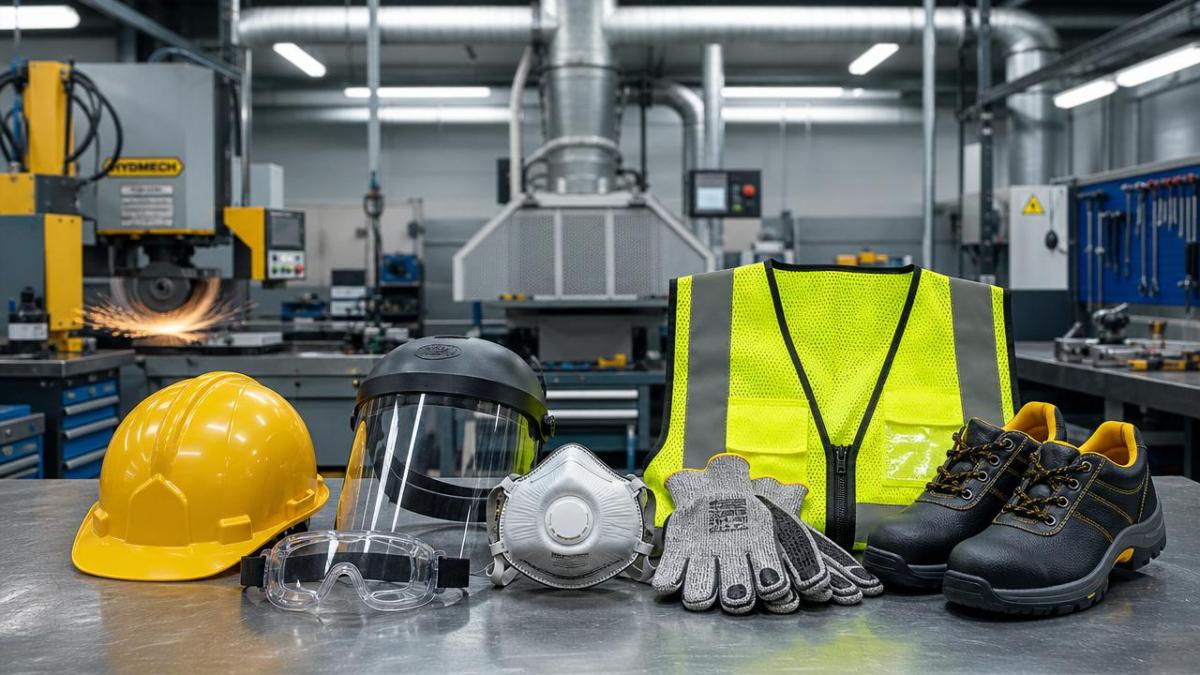
When high-risk tasks involve torque-heavy tools, sharp edges, dust, vibration, or poor visibility, Personal Protective Equipment becomes the final physical layer. If that layer is weak, every upstream control loses value.
Start with hazards, not with products
The most common mistake is choosing PPE by category alone. A helmet is not simply a helmet, and cut-resistant gloves are not automatically suitable for every metalworking task.
A better approach begins with task mapping. Identify what can strike, cut, burn, contaminate, crush, or impair the wearer during normal work and during foreseeable exceptions.
Questions that shape selection
- Is the hazard impact-based, chemical, thermal, biological, or respiratory?
- Is contact brief and accidental, or constant and repetitive?
- Does the task require dexterity, visibility, communication, or climbing?
- Will heat, humidity, darkness, or confined space reduce PPE performance?
- Can one exposure trigger severe harm even during a short task?
This step turns Personal Protective Equipment selection into risk engineering rather than catalog browsing. It also helps prevent overprotection, which can create fatigue, poor fit, and unsafe workarounds.
Match protection levels to real task conditions
Once hazards are clear, protection level becomes the next filter. The goal is not maximum bulk. The goal is verified protection that still allows work to be done correctly.
In practice, Personal Protective Equipment should be reviewed against both standards and field conditions. Laboratory ratings matter, but so do sweat, grime, repetitive motion, and imperfect storage.
Standards such as ANSI, EN, ISO, or NIOSH should guide decisions, but they should not replace on-site validation. A certified item can still be unsuitable if it conflicts with the task.
Materials, design, and compatibility matter more than labels
High-risk work often fails at the interface between products. Goggles may break the respirator seal. Gloves may reduce tool control. A face shield may interfere with hearing protection or helmet positioning.
That is why Personal Protective Equipment should be reviewed as a worn combination. Material strength, weight, flexibility, and temperature response all influence performance under stress.
Key material and design checks
- Cut resistance should be balanced with grip and tactile control.
- Respiratory protection should maintain seal integrity during movement.
- Protective clothing should resist tearing without trapping excessive heat.
- Footwear should protect against puncture and slip without causing instability.
- Helmet systems should support accessories without compromising suspension fit.
In sectors connected to SHSS coverage, this compatibility issue appears often. Brushless power tools increase output density, and that raises the need for gloves and face protection that preserve precision under higher force.
Common high-risk scenarios and what changes the decision
The right Personal Protective Equipment depends heavily on context. Two jobs may look similar on paper but require very different protection once exposure details are examined.
Metal fabrication and fastening operations
Flying fragments, burrs, sharp edges, and vibration are typical. Hand protection needs cut resistance, but not at the expense of grip around fasteners, drivers, or calibrated tools.
Confined or poorly ventilated work zones
Respiratory risk becomes more complex here. Filters, cartridges, fit testing, and emergency escape considerations must be reviewed together rather than treated as separate procurement items.
Infrastructure and smart city maintenance
Visibility, electrical awareness, weather exposure, and slip hazards can overlap. PPE has to support movement across ladders, platforms, access points, and illuminated or low-light areas.
These are not niche cases. They are routine field realities, and they explain why one-size-fits-all Personal Protective Equipment programs usually underperform.
How to build a practical evaluation process
A reliable PPE program is usually built through controlled comparison, not assumption. Short trials, wear tests, and incident reviews reveal problems that technical sheets often miss.
A workable review sequence
- Define the task and list primary and secondary hazards.
- Check legal, customer, and site-specific standard requirements.
- Compare candidate Personal Protective Equipment by tested performance data.
- Run field trials under actual shift conditions.
- Review fit, compatibility, compliance rate, and replacement frequency.
- Document the decision so future purchases stay consistent.
This method also supports quality control goals. When approved PPE models, sizes, and usage limits are clearly defined, audits become easier and variation across crews or sites is reduced.
What is gaining attention in current PPE decisions
Several shifts are shaping the market. Lightweight materials are improving wear time. Better anti-fog designs are reducing non-compliance. Integrated visibility features are becoming more relevant in mixed indoor and outdoor operations.
There is also more interest in data-backed selection. Organizations increasingly want traceable standards, predictable service life, and clearer replacement triggers rather than generic stockroom practices.
From the SHSS perspective, this reflects a wider industrial pattern. Safety equipment is being judged with the same seriousness as access systems, structural hardware, and intelligent lighting: measurable reliability now matters more than simple availability.
A sound next step for safer high-risk work
The strongest Personal Protective Equipment decisions usually come from a clear baseline: hazard map, task conditions, required standards, compatibility checks, and field feedback in one record.
If current PPE choices are based mainly on habit, price, or broad category labels, it is worth reassessing where actual risk is highest. Small specification gaps often become large safety failures under pressure.
A structured review of exposure types, protection ratings, wearability, and replacement rules can quickly improve confidence in high-risk tasks. That is the practical path toward safer work, steadier quality, and more dependable operational control.
Recommended News