
Search News
Industry Portal
Hot Articles
Industrial Safety Gear Mistakes That Raise Injury Risk
Time
Click Count
Industrial safety gear only works when hazard assessment, fit, maintenance, and worker behavior stay aligned with real exposure on site.
That alignment is getting harder.
Jobsites now combine faster tools, mixed crews, tighter deadlines, stricter audits, and more specialized materials.
As a result, small industrial safety gear mistakes can trigger cuts, crush injuries, inhalation exposure, falls, eye damage, and costly downtime.
In construction, manufacturing, utilities, warehousing, and smart infrastructure work, injury risk often rises not from missing PPE alone, but from incorrect PPE decisions.
This matters more as advanced tools, smart hardware, high-strength fasteners, biometric access systems, and connected lighting reshape daily industrial routines.
The core question is simple: where do industrial safety gear programs fail first, and how can those failures be contained before incidents happen?
Industrial safety gear risks are increasing as work environments become more complex
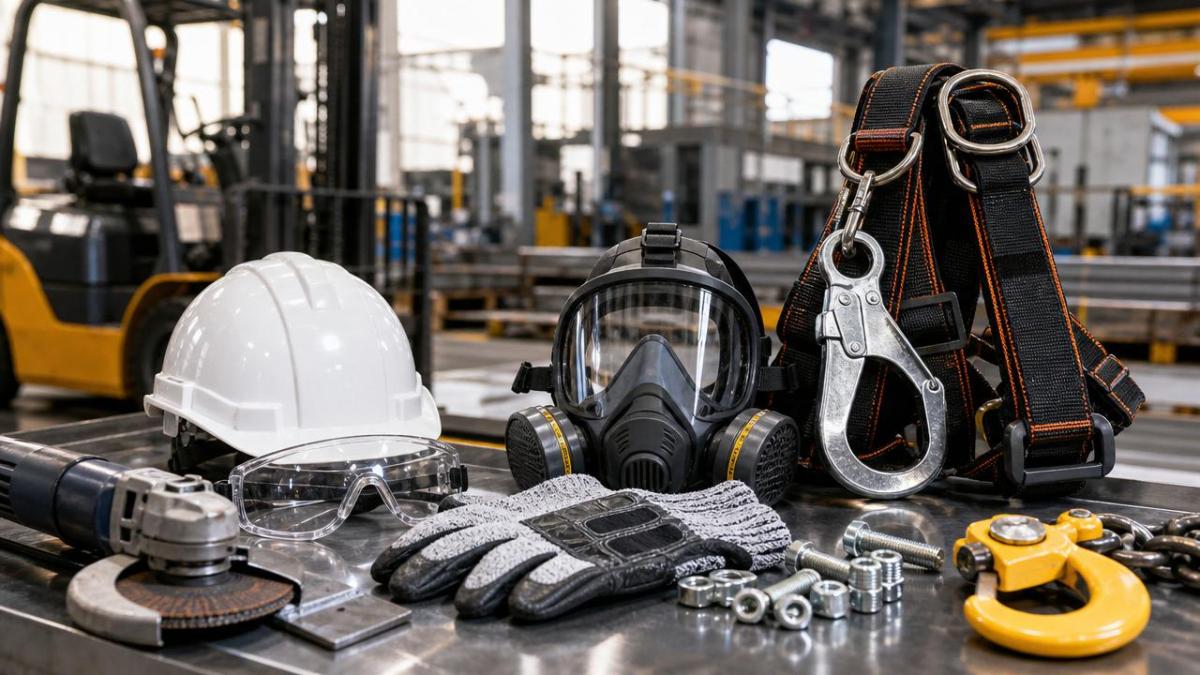
The biggest shift is not only higher risk.
It is greater mismatch between hazards and protection.
Battery-powered brushless tools deliver higher torque in lighter bodies, increasing exposure to kickback, flying debris, vibration, and hand injuries.
Smart access systems reduce unauthorized entry, yet maintenance crews still face physical hazards once they enter restricted zones.
High-strength hardware, abrasive materials, electrical rooms, and confined spaces all demand more precise industrial safety gear selection than before.
Another trend is task fragmentation.
Workers may switch from fastening to cutting, from inspection to cleanup, or from indoor assembly to outdoor installation in one shift.
When industrial safety gear does not change with the task, exposure rises fast.
Several market and operational signals explain why injury exposure is rising
The trend is being driven by a mix of technical, operational, and compliance pressures.
These signals show why industrial safety gear management cannot stay static while industrial operations evolve.
The most common industrial safety gear mistakes are preventable but often overlooked
1. Choosing PPE by habit instead of hazard
This is the most frequent failure.
Standard gloves may be used for sharp metal handling, while basic dust masks are issued where respirator selection should depend on actual airborne contaminants.
Industrial safety gear must follow exposure type, severity, duration, and task motion.
2. Ignoring fit and compatibility
Poor fit reduces protection and increases noncompliance.
Loose gloves reduce grip.
Fogging eyewear gets removed.
Face shields may interfere with helmets, earmuffs, or respirators.
Industrial safety gear should be evaluated as a system, not as isolated items.
3. Treating inspections as paperwork only
A checklist is not proof of protection.
Cracked helmets, worn cut-resistant sleeves, contaminated respirator seals, and damaged lanyards may pass unnoticed when inspection routines are rushed.
4. Missing standard updates and certification changes
Industrial safety gear standards change as materials, risks, and testing methods evolve.
If approved products are not reviewed regularly, old assumptions stay embedded in daily operations.
5. Training once and assuming retention
Workers forget details under pressure.
Without refreshers, people wear industrial safety gear incorrectly, bypass inconvenient items, or misread replacement limits.
These mistakes affect multiple business functions, not only front-line safety outcomes
Poor industrial safety gear decisions create direct human harm, but the secondary impact can be just as serious.
- Operations suffer from stoppages after incidents, near misses, and emergency reviews.
- Quality declines when hand injuries, vision issues, or fatigue affect precision work.
- Maintenance delays increase when access to hazardous areas requires unplanned PPE replacement.
- Insurance and legal exposure rise when documentation does not match actual industrial safety gear use.
- Reputation weakens when clients or inspectors see poor PPE discipline in sensitive facilities.
In integrated industrial settings, a single PPE failure can interrupt installation, inspection, commissioning, and service continuity at once.
The strongest prevention focus is shifting from buying PPE to managing industrial safety gear performance
The next stage of safety improvement is performance management.
That means tracking whether industrial safety gear remains appropriate, usable, compatible, and trusted across real working conditions.
Priority points worth close attention
- Map PPE to task-level hazards, not department-level assumptions.
- Separate general issue items from task-specific industrial safety gear.
- Verify sizing, comfort, and compatibility before large-scale deployment.
- Create visual inspection triggers for wear, contamination, and expiration.
- Review standards, labels, and certifications on a fixed schedule.
- Use short refresher drills after incidents, tool changes, or process changes.
- Collect worker feedback on mobility, heat stress, visibility, and task interference.
A practical response plan can reduce industrial safety gear failure before injuries occur
The most effective programs treat industrial safety gear as a living control layer that changes with tools, materials, and workflows.
The next step is to test industrial safety gear against real work, not assumptions
Start with one high-risk activity.
Compare the documented hazard, the issued industrial safety gear, the actual wearing behavior, and the condition of equipment after use.
That simple gap check often reveals the biggest hidden failures.
Then scale the review across cutting, fastening, electrical access, material handling, elevated work, and dusty or chemical exposure zones.
Industrial safety gear should not be viewed as a final checkbox.
It is an active part of modern industrial resilience, productivity, and injury prevention.
When selection, fit, upkeep, and training move together, injury risk falls and operational confidence rises.
Recommended News