
Search News
Industry Portal
Hot Articles
Protective Gear Checklist for High-Risk Work Areas
Time
Click Count
Protective gear starts with the real hazard, not the catalog
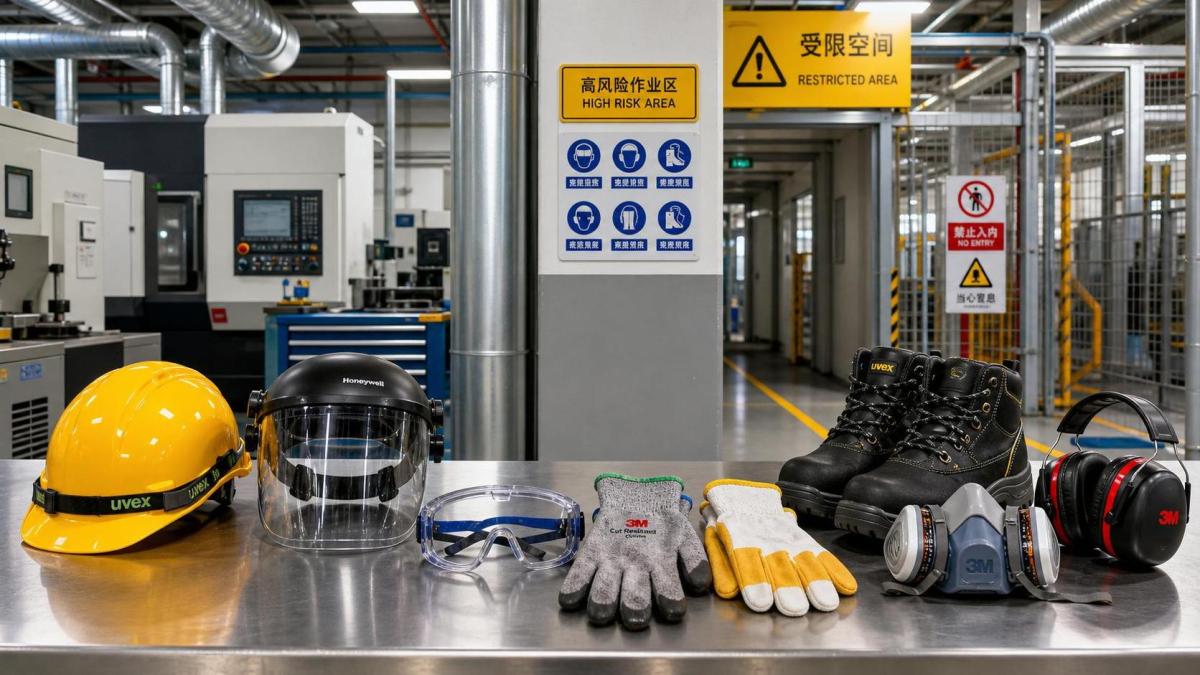
In high-risk work areas, protective gear is the last physical barrier between a routine task and a serious incident.
That is why a useful checklist does more than confirm item presence.
It tests whether each helmet, visor, glove, boot, and respirator fits the exposure actually created on site.
Across construction, industrial maintenance, logistics yards, utility service, and smart facility operations, the protective gear decision is rarely identical.
A grinding station, a confined shaft, and a biometric security room may all look controlled, yet their risks differ sharply.
SHSS often frames this through a wider safety chain.
Brushless tools increase output, smart lighting changes visibility conditions, and hardware reliability shapes maintenance frequency.
Protective gear must adapt to those connected realities, not sit apart from them.
A strong checklist therefore begins with task energy, airborne contaminants, contact risk, movement patterns, and emergency response limits.
Once those are clear, protective gear selection becomes more accurate and easier to inspect consistently.
Why the same protective gear checklist fails in different work areas
The common mistake is assuming similar-looking tasks require the same protective gear.
In practice, the risk profile changes with tool speed, material type, heat, dust concentration, moisture, and duration.
Cut resistance, for example, matters differently when handling sheet metal than when pulling cable through wet trenches.
Respiratory protection also shifts from nuisance dust control to full hazard isolation when fumes or oxygen uncertainty appear.
Even visibility wear needs closer judgment.
A reflective vest that works in a daylight yard may underperform near LED glare, moving forklifts, or night utility repair zones.
The better approach is to ask three questions before approving protective gear.
- What can hit, cut, burn, enter, or impair the body during normal work?
- What changes when the task runs longer, faster, or under poor access conditions?
- Which item will fail first because of fit, fogging, fatigue, contamination, or poor compatibility?
These questions turn a protective gear checklist into a decision tool rather than a paperwork exercise.
Where impact, flying debris, and tool energy shape the checklist
On active construction decks and heavy fabrication lines, impact and projection hazards usually dominate early decisions.
Hard hats, eye protection, face shields, and metatarsal footwear deserve first attention.
Yet the real judgment point is not only rated protection.
It is whether the protective gear still performs when workers bend, climb, kneel, or use high-torque brushless tools all shift long.
Gloves are a frequent example.
High cut resistance helps around sharp edges and fasteners, but overly stiff gloves reduce grip precision on powered drivers.
That can create a new hazard through slips, cross-threading, or overcorrection.
In these zones, the checklist should verify coverage and dexterity together.
- Helmet suspension condition and replacement date
- Eye protection seal against side debris
- Glove balance between cut level and grip control
- Footwear traction on dust, oil, and uneven steel surfaces
- Compatibility with hearing protection and face shields
This is also where replacement discipline matters.
Protective gear exposed to repetitive impact, metal burrs, and vibration often degrades before it looks damaged.
Dust, fumes, and confined access change the protective gear decision
Maintenance shutdowns, plant retrofits, tunnels, and utility vaults create a different pressure.
Air quality becomes the main variable, and protective gear failure becomes less visible until symptoms arrive.
That is why respirator choice should never be reduced to “mask available or not.”
A checklist here must confirm contaminant type, exposure duration, seal integrity, filter suitability, and escape constraints.
Full-face protection may be justified when eye irritation and inhalation risk occur together.
In hotter spaces, however, heat stress and communication limits can undermine compliance.
The practical answer is not always the heaviest option.
It is the most reliable protective gear for the actual task cycle, including donning, work posture, and rescue timing.
The table shows why protective gear should follow exposure logic, not generic site labels.
Smart buildings and critical facilities need a subtler form of protection
Not every high-risk area is visibly harsh.
Data rooms, biometric access zones, electrical control spaces, and smart lighting infrastructure often look clean and orderly.
Still, the protective gear checklist remains important because the risks are more selective.
Arc exposure, static discharge, trip hazards in low-light maintenance aisles, and restricted movement around live systems all matter.
In these settings, bulky protective gear can be as problematic as insufficient protection.
Face protection that distorts visibility may interfere with fine adjustments.
Loose gloves can snag on panels or connectors.
Footwear that protects well outdoors may track contaminants into sensitive equipment spaces.
A better checklist here evaluates protective gear alongside access control, lighting quality, and equipment sensitivity.
That broader view fits the SHSS perspective.
Physical safety, intelligent infrastructure, and operational continuity are linked more tightly than many sites assume.
What different work areas usually need from the same protective gear category
The same gear type often serves very different purposes depending on location.
That is where many site audits miss important detail.
- Helmets in overhead construction protect against falling objects; in utility tunnels they also need lamp and chin retention compatibility.
- Gloves in metal handling prioritize cut resistance; in assembly zones they must also preserve tactile control.
- Respirators in demolition focus on particulate loading; in chemical maintenance, cartridge match and seal testing matter more.
- Visibility clothing in open yards supports vehicle awareness; near smart lighting systems it should avoid glare confusion and reflective blind spots.
- Protective footwear on bridges needs slip and puncture defense; in clean technical rooms it may need anti-static properties as well.
This is why a high-quality protective gear checklist should include a field for task variation, not just item quantity.
Common misjudgments that weaken protective gear performance
Several weak points show up repeatedly in real operations.
They rarely come from missing equipment alone.
More often, they come from shallow matching between protective gear and site conditions.
- Selecting by specification sheet only, without checking movement, climate, and shift length
- Treating temporary maintenance as low risk, even when access is tight and systems are partially energized
- Buying one glove model for all tasks, then losing grip quality or overpaying for unnecessary protection
- Ignoring how eyewear, respirators, helmets, and hearing protection interfere with one another
- Focusing on purchase price while overlooking replacement rates, cleaning burden, and fit-test frequency
These errors matter because protective gear works as a system.
If one piece causes removal, discomfort, or poor visibility, the full barrier weakens.
A practical way to adapt the checklist before the next inspection cycle
A more reliable protective gear review starts with a short hazard map for each high-risk area.
List the task, energy source, airborne risk, contact hazard, visibility condition, and expected wear time.
Then compare current protective gear against actual use, not intended use.
Where items are removed early, fog quickly, tear fast, or block precision, the checklist needs revision.
It also helps to separate mandatory baseline gear from task-triggered upgrades.
That keeps daily control simple while preserving stronger protection for cutting, confined entry, chemical cleaning, or energized maintenance.
The most useful next step is to review recent near misses, replacement records, and maintenance logs together.
Those records usually reveal where protective gear no longer matches real exposure.
Once the checklist reflects the site’s actual scenarios, safety control becomes more credible, efficient, and easier to sustain.
Recommended News