
Search News
Industry Portal
Hot Articles
How to Choose Full-Face Respirators for High-Risk Air Hazards
Time
Click Count
How to Choose Full-Face Respirators for High-Risk Air Hazards
When airborne hazards involve toxic gases, fine particulates, or unknown contaminants, choosing the right full-face respirators becomes a critical safety decision.
The task is not just about passing an audit.
It is about matching protection to exposure, work pace, visibility needs, and real operating conditions.
In high-risk settings, a poor choice can create hidden failure points.
This guide breaks down how to evaluate full-face respirators for safer, smarter selection decisions.
Start with the Hazard Profile
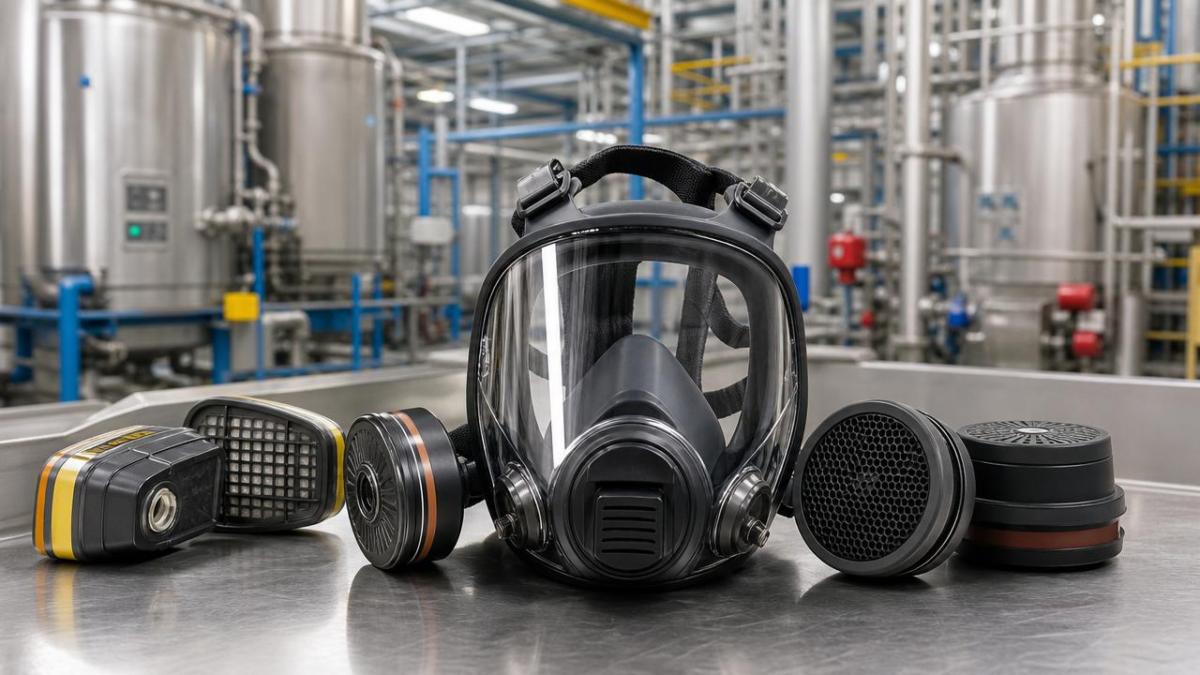
The best full-face respirators are chosen from the hazard backward, not from the catalog forward.
That sounds simple, but it changes the whole buying process.
Start by defining what workers may inhale.
Separate gases, vapors, dust, fumes, mists, and unknown contaminants.
Then document concentration, exposure duration, temperature, humidity, and oxygen conditions.
A unit that works for paint vapor may fail in acid gas exposure.
Likewise, particulate-only filters are not enough for mixed chemical environments.
In practical operations, the biggest errors happen in mixed-risk zones.
Typical examples include tank cleaning, chemical transfer, spray coating, emergency leak response, and confined-space maintenance.
These environments often require more than one protection mechanism.
- Identify contaminants by type, concentration, and volatility.
- Confirm whether oxygen deficiency is possible.
- Review peak exposure, not just average exposure.
- Flag unknown hazards for higher-level protection review.
This first step prevents overbuying in low-risk areas and underprotecting in critical ones.
Know When Full-Face Respirators Are the Right Choice
Not every task needs full-face respirators, but high-risk air hazards often do.
The key advantage is combined respiratory and eye protection.
That matters when contaminants can irritate, burn, or impair vision.
Compared with half-mask models, full-face respirators usually offer better face seal coverage.
They also reduce the need to coordinate separate goggles and masks.
That reduces compatibility issues during fast-moving tasks.
However, they are not a universal answer.
If oxygen is low or contaminants exceed cartridge limits, air-purifying full-face respirators may not be appropriate.
In those cases, supplied-air or SCBA systems may be necessary.
This is where selection becomes a decision tree, not a product comparison.
Common use cases
- Chemical handling with splash and vapor risks.
- Metal grinding with nuisance gas and fine particulate exposure.
- Pesticide application in enclosed or poorly ventilated zones.
- Emergency response where eye protection must stay integrated.
Check Standards, Certifications, and Assigned Protection
A good procurement decision should stand up technically and legally.
That means reviewing approval standards before comparing comfort features.
Depending on region, check NIOSH, OSHA, EN standards, or other applicable local requirements.
For many teams, the real question is whether the respirator matches the risk control target.
This is where assigned protection factor and cartridge approval matter.
A full-face respirator may carry a strong certification, but the wrong cartridge makes the system incomplete.
More importantly, some suppliers present filter compatibility in a vague way.
That should be a red flag during evaluation.
In short, certified full-face respirators should be evaluated as complete systems, not stand-alone masks.
Focus on Fit, Seal Integrity, and Real Wearability
Even the best-rated full-face respirators fail if the seal breaks during use.
That is why fit should be treated as a frontline performance factor.
A model that looks strong on paper may not suit your workforce profile.
Face shape variation, facial movement, sweat, and task intensity all affect seal stability.
Fit testing is essential, but field wearability matters just as much.
If workers remove the respirator to speak, cool down, or clear fogging, the protection model breaks.
That is a usability problem, not a discipline problem.
What to assess during trials
- Multiple sizes and adjustable harness design.
- Seal performance during bending, climbing, and head rotation.
- Pressure points on nose bridge, jaw, and forehead.
- Speech clarity for teamwork and emergency communication.
- Fog resistance during long work cycles.
From recent field changes, comfort is becoming a stronger safety variable.
Long shifts and faster production lines leave less room for poor ergonomics.
Evaluate Lens Quality, Visibility, and Compatibility
One reason teams choose full-face respirators is eye protection.
But the lens does much more than shield against splashes.
It affects depth perception, peripheral awareness, and error rates.
In inspection, maintenance, or process control work, poor visibility can undermine productivity quickly.
Look for wide field of view, optical clarity, anti-fog performance, and scratch resistance.
Then check compatibility with helmets, hearing protection, and communication devices.
This matters more than it used to.
Integrated PPE programs now depend on equipment working together without interference.
A high-quality respirator that clashes with other gear creates practical noncompliance.
Compare Cartridge Strategy, Maintenance, and Lifecycle Cost
Selection should not stop at the mask body.
The long-term value of full-face respirators depends on cartridge management and maintenance discipline.
Some models are cheaper upfront but expensive to support.
Others simplify inventory because one platform supports many filter types.
This becomes important across multi-site operations.
Ask suppliers how cartridges are stocked, labeled, replaced, and tracked.
Review cleaning steps, spare part availability, lens replacement cost, and service life expectations.
A strong selection decision should support compliance, uptime, and budget control at the same time.
Practical buying questions
- Can one respirator platform cover several hazard profiles?
- Are replacement parts easy to source locally?
- How clear is the cartridge change schedule?
- Can cleaning be done consistently between shifts?
- Does total cost stay predictable over one year?
Build a Smarter Selection Process
The most reliable way to choose full-face respirators is to combine technical review with field validation.
Start with exposure mapping and required protection level.
Then narrow the shortlist by certification, cartridge fit, visibility, comfort, and compatibility.
After that, run user trials in the actual work environment.
That final step often reveals issues that datasheets never show.
Better decisions usually come from a simple checklist:
- Define the airborne hazard and exposure limits.
- Confirm whether air-purifying full-face respirators are suitable.
- Verify certifications and cartridge approvals.
- Test fit, visibility, and task compatibility.
- Review maintenance workflow and lifecycle cost.
When the air hazard is serious, respiratory protection should be selected with the same rigor used for any critical control measure.
The right full-face respirators do more than meet standards.
They support safer work, clearer visibility, steadier compliance, and better decisions under pressure.
Recommended News