
Search News
Industry Portal
Hot Articles
Safety Equipment Checklist for Reducing Fall and Respiratory Risks
Time
Click Count
Safety Equipment Checklist for Reducing Fall and Respiratory Risks
For quality control and safety managers, a reliable safety equipment checklist is essential to reducing fall and respiratory hazards across demanding work environments.
From full-face respirators and cut-resistant gear to harness systems and site inspection protocols, the right safety equipment helps prevent incidents, strengthen compliance, and protect workforce continuity.
This guide outlines practical checkpoints to support safer operations and smarter risk control.
Why a Safety Equipment Checklist Matters More Than Ever
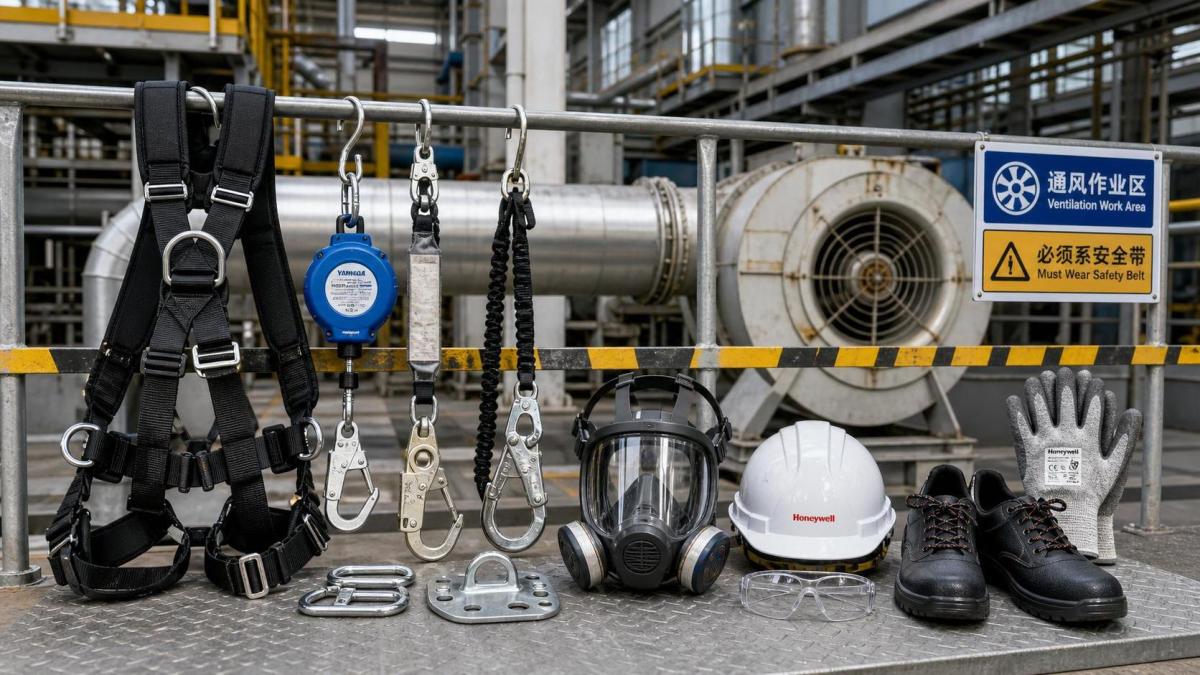
Fall exposure and airborne hazards often appear in the same workspace.
Roof work, confined maintenance, abrasive cutting, demolition, and elevated installation all create layered risk.
That is why a basic PPE list is no longer enough.
A useful safety equipment checklist connects equipment condition, worker fit, jobsite changes, and task-specific controls.
In real operations, the problem is rarely missing equipment alone.
More often, the issue is wrong selection, poor storage, expired filters, damaged connectors, or rushed inspections.
A stronger checklist turns those weak points into visible control points.
It also supports traceability, which matters during audits, incident reviews, and supplier qualification.
Core Safety Equipment for Fall Protection
Start with the equipment most directly linked to fall arrest and fall restraint.
Your safety equipment checklist should verify both presence and serviceability.
Must-check fall protection items
- Full-body harness with intact stitching, labels, buckles, and D-rings.
- Shock-absorbing lanyard matched to clearance distance.
- Self-retracting lifeline with smooth locking action.
- Anchorage connectors rated for the actual structure.
- Horizontal or vertical lifeline systems inspected before use.
- Helmet with secure chin strap for elevated work.
- Non-slip footwear suited to wet, dusty, or uneven surfaces.
Many incidents happen even when harnesses are worn.
The real failure often sits in anchor selection, swing-fall risk, or inadequate clearance below the worker.
So the checklist should force a task review, not just a gear count.
Quick fall-risk checkpoints
- Confirm working height and total fall clearance.
- Check anchor location against swing-fall exposure.
- Review ladder, platform, or scaffold stability.
- Verify rescue access before work starts.
- Remove dropped-object hazards near the work edge.
Essential Safety Equipment for Respiratory Protection
Respiratory hazards are easy to underestimate because many are invisible.
Dust, fumes, vapors, and oxygen-deficient atmospheres demand different controls and different safety equipment.
That means one respirator type cannot cover every task.
Respiratory protection checklist
- Match respirator type to dust, mist, gas, or vapor exposure.
- Check filter or cartridge compatibility and expiration date.
- Inspect face seal, valves, lens, and straps.
- Confirm fit testing and user seal check procedures.
- Review storage conditions to prevent contamination.
- Verify replacement intervals based on real exposure levels.
For heavy dust or mixed airborne hazards, full-face respirators often provide a better margin of protection.
They protect both breathing pathways and eye area during grinding, chemical handling, or contaminated maintenance work.
In higher-risk settings, air monitoring should guide respirator choice.
This is where a safety equipment checklist becomes a decision tool, not just a compliance form.
Do Not Separate PPE from the Work System
The best safety equipment performs poorly inside a weak system.
That is why checklists should include surrounding controls.
System-level checks that reduce risk
- Ventilation status near cutting, coating, or enclosed work.
- Permit-to-work controls for confined or elevated tasks.
- Tool condition, especially guards and dust extraction points.
- Housekeeping around edges, ladders, and access routes.
- Lighting quality for stairwells, platforms, and temporary work zones.
- Emergency communication and rescue readiness.
This broader view is especially useful in mixed industrial sites.
For example, brushless cutting tools can improve productivity, but they may also increase dust generation.
Smart lighting can improve visibility, yet slippery access points still create fall exposure.
In other words, safety equipment works best when paired with engineering and administrative controls.
Inspection Table for Daily and Weekly Control
A practical table keeps the safety equipment checklist consistent across shifts and sites.
A table like this also helps compare suppliers and standardize acceptance criteria.
That is valuable when operations span contractors, rotating crews, or multiple facilities.
How to Make the Checklist Work in Real Operations
A checklist only adds value when people actually use it well.
The easiest way to improve usage is to keep the process short, visual, and tied to the task.
Implementation tips
- Separate checklists by task type, not by one universal form.
- Use fail points that trigger immediate escalation.
- Link equipment checks to toolbox talks and shift briefings.
- Review near misses to update the checklist every quarter.
- Track recurring defects by brand, batch, or storage area.
From a quality perspective, recurring defects usually signal a deeper control gap.
That gap may involve procurement quality, incorrect user training, or unsuitable product selection.
A smarter safety equipment program treats those signals early, before they become incidents.
Final Checklist Priorities for Stronger Risk Reduction
If the goal is fewer injuries and more stable operations, focus on a few priorities first.
- Choose safety equipment based on real exposure, not habit.
- Inspect fall and respiratory gear before every use.
- Document failed items and remove them immediately.
- Pair PPE checks with site conditions, tools, and rescue planning.
- Use checklist data to improve sourcing, training, and compliance.
The most effective safety equipment checklist is simple enough to use daily and detailed enough to catch what usually gets missed.
When that balance is right, fall risks drop, respiratory protection improves, and safety control becomes far more consistent.
Start with the highest-risk tasks, tighten inspection discipline, and let the checklist become part of normal operational decision-making.
Recommended News