
Search News
Industry Portal
Hot Articles
Custom Hardware Solutions in the Middle East: Lead Times, Localization, and Project Risk
Time
Click Count
Custom Hardware Solutions in the Middle East: Lead Times, Localization, and Project Risk
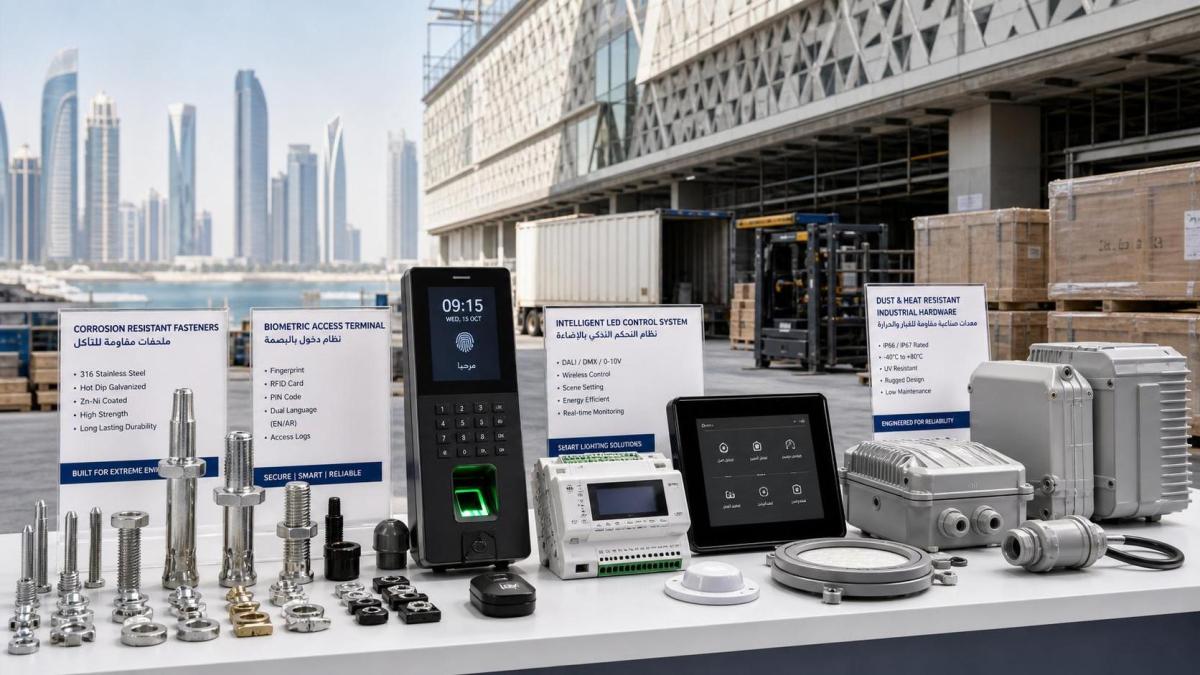
For project leaders navigating complex builds, custom hardware solutions Middle East projects demand more than product fit. They require realistic lead times, local compliance, and tighter risk control.
From security systems to structural hardware and smart infrastructure, early alignment matters. Specifications, supply chains, and site conditions must connect before procurement starts.
That is especially true across Gulf and wider regional projects. Heat, dust, marine exposure, multilingual operations, and approval cycles shape real delivery outcomes.
In practice, custom hardware solutions Middle East programs succeed when technical customization is matched with local execution planning. Product excellence alone rarely protects the schedule.
Why Custom Hardware Solutions Matter in Regional Projects
Many projects in the region cannot rely on off-the-shelf hardware. Performance expectations are higher, and operating conditions are usually harsher.
A biometric access reader for a cooled office tower differs from one used at a remote logistics gate. The same applies to fasteners, lighting, tools, and protective equipment.
Custom hardware solutions Middle East buyers often need modified enclosures, corrosion resistance, language support, power compatibility, and protocol integration.
More importantly, the hardware must work within local contractor workflows. Installation crews, commissioning teams, and maintenance staff all influence what counts as a usable solution.
- Security systems may require Arabic and English interfaces.
- Lighting controls may need DALI, Zigbee, or BMS integration.
- High-strength hardware may need extra coating for coastal exposure.
- PPE may need adaptation for heat stress and long-duration use.
This is where solution design becomes a project control tool. Good customization reduces rework, prevents field improvisation, and keeps handover cleaner.
Lead Times: The Hidden Driver Behind Cost and Delay
Lead times are usually underestimated at the beginning. Teams often focus on unit price and technical approval, then discover manufacturing and logistics bottlenecks too late.
For custom hardware solutions Middle East programs, lead time has several layers. Design confirmation is only the first one.
- Engineering review and shop drawing alignment.
- Prototype or sample validation.
- Tooling, firmware adjustment, or material sourcing.
- Factory testing and quality release.
- Export paperwork, shipping, and customs clearance.
- Site delivery, inspection, and phased installation.
Even minor changes can reset this sequence. A revised biometric algorithm package, a different fastener finish, or a new driver spec may add weeks.
From recent market shifts, the clearer signal is this. Shipping uncertainty has eased in some lanes, but approval and integration delays still hurt project timelines.
A practical approach is to separate critical-path items from replaceable items. Custom hardware solutions Middle East sourcing should never treat all packages the same.
A Simple Lead Time Planning Table
Localization Is More Than Translation
Localization is often treated as labels, manuals, or packaging. In reality, it touches performance, compliance, and service continuity.
Custom hardware solutions Middle East projects should localize for climate, regulation, labor structure, and building operations. That means adapting how the hardware lives on site.
For example, biometric terminals may need anti-glare screens and stable recognition under strong sunlight. Industrial tools may need battery management that tolerates higher ambient temperatures.
Fasteners for transport hubs or coastal assets may need stronger anti-corrosion treatment. Smart lighting may require tailored beam angles for large exterior areas and mixed pedestrian traffic.
This also means aligning with local standards, consultant preferences, and approval expectations. A technically superior product can still fail if submittals are incomplete or unfamiliar.
What Localization Should Cover
- Voltage, frequency, connectors, and cabinet layout.
- Arabic and English interfaces where needed.
- Dust, salt, UV, and heat resistance.
- Regional certifications and consultant submittal formats.
- Spare parts strategy and local maintenance capability.
When these points are defined early, custom hardware solutions Middle East procurement becomes easier to defend internally. Teams can compare bids on project fit, not only price.
Where Project Risk Usually Appears First
Project risk rarely starts with a dramatic failure. It usually begins with small assumptions that stay unchecked for too long.
In custom hardware solutions Middle East delivery, five risks appear again and again. They are predictable, which makes them manageable.
- Specification drift after award.
- Late interface decisions between systems.
- Missing approval documents or local certificates.
- Unclear ownership for testing and commissioning.
- No backup path for long-lead components.
Take smart access control as an example. Hardware can arrive on time, but integration with attendance software, elevators, or visitor systems may remain unresolved.
The same pattern affects LED lighting controls. Fixtures may be installed, yet scene programming, sensor calibration, and BMS mapping often slip toward project closeout.
With structural or fastening packages, risk often sits in traceability. If batch records, coating data, or torque procedures are weak, downstream acceptance becomes slower.
A Practical Delivery Model for Better Control
The most reliable model is simple. Tie customization decisions to milestones, and do not allow open technical items to travel too far into procurement.
For custom hardware solutions Middle East execution, the following sequence works well across security, hardware, lighting, and protective systems.
- Lock the use case before locking the part number.
- Define environmental conditions by zone, not by project average.
- Approve one sample, mockup, or pilot installation early.
- Map every system interface and assign an owner.
- Create a long-lead watchlist with weekly review.
- Prepare alternates before they are urgently needed.
- Link FAT, SAT, and handover documents to payment gates.
This structure keeps decisions visible. It also reduces last-minute substitutions that damage performance or create warranty disputes later.
In real projects, the biggest gain is not speed alone. It is decision quality under pressure.
How SHSS-Aligned Intelligence Supports Better Outcomes
For teams sourcing across industrial tools, biometric security, fasteners, smart lighting, and PPE, fragmented information creates unnecessary exposure.
A structured intelligence approach helps compare suppliers, validate technical claims, and pressure-test lifecycle assumptions before contract value is at risk.
That is where SHSS brings useful perspective. It connects hardware performance, compliance signals, procurement logic, and site realities into one decision frame.
For custom hardware solutions Middle East planning, this kind of intelligence supports clearer specifications, stronger vendor evaluation, and fewer avoidable surprises after award.
Final Takeaway
Custom hardware solutions Middle East success depends on three basics done well. Build realistic lead times, localize beyond translation, and manage risk before procurement momentum takes over.
When teams define operating conditions early, verify interfaces, and keep alternatives ready, custom programs become far more predictable.
The strongest results usually come from disciplined front-end decisions. That is what protects schedules, controls variation, and keeps hardware performing as intended long after handover.
For any upcoming package review, start with one question. Is this hardware merely specified, or is it genuinely prepared for the Middle East project environment?
Recommended News