
Search News
Industry Portal
Hot Articles
BLDC Motors: When Higher Upfront Cost Pays Off
Time
Click Count
Why the BLDC motors cost debate looks different now
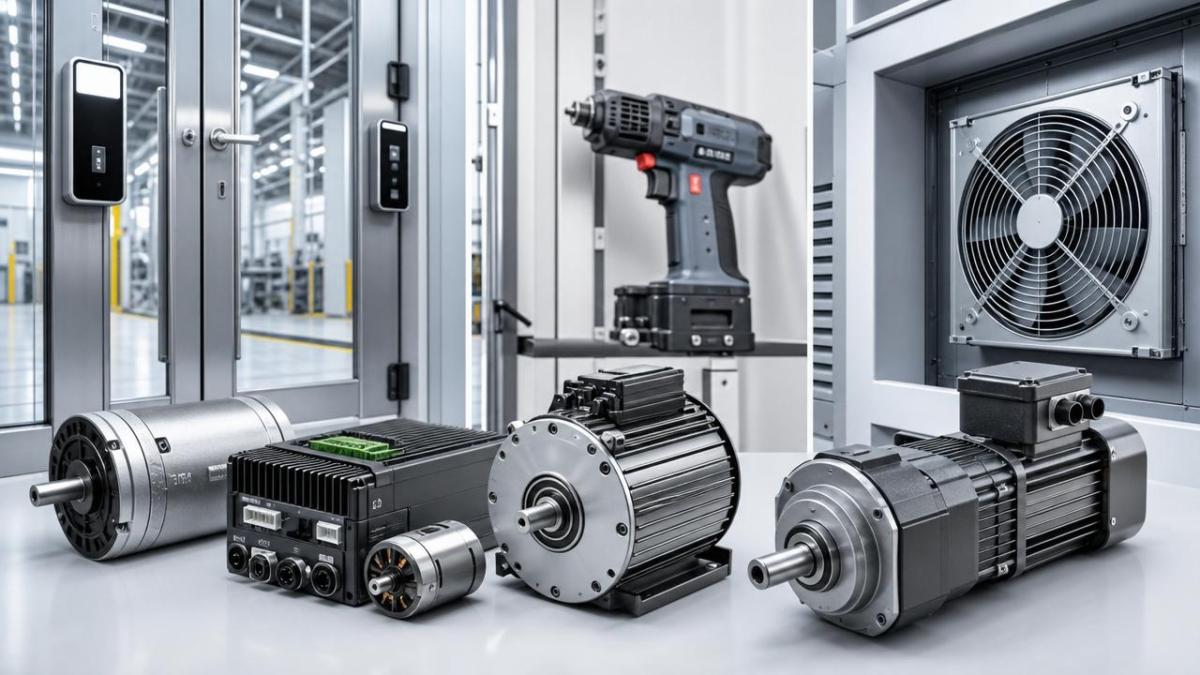
The old question was simple: why pay more for BLDC motors when brushed units still run?
That question is getting harder to defend.
Across smart hardware, industrial tools, lighting, and access systems, equipment is being judged by lifecycle output, not invoice price alone.
This shift matters because capital decisions now sit closer to uptime, energy exposure, and maintenance risk.
In that environment, BLDC motors move from premium option to financial logic.
The change is especially visible in sectors watched closely by SHSS, where physical reliability and operational continuity are tightly linked.
Industrial brushless tools, smart lighting, and security devices increasingly depend on compact motors that deliver efficiency without frequent service interruptions.
When systems guard buildings, support crews, or keep city assets running, downtime carries a bigger bill than many budgets first show.
What is changing behind the numbers
From recent demand patterns, three signals stand out.
- Electricity costs remain volatile, making motor efficiency more visible in operating budgets.
- Labor for maintenance is more expensive and less predictable than before.
- Equipment buyers increasingly expect connected, compact, higher-output designs.
BLDC motors fit all three signals.
They remove brush wear, reduce friction losses, and support tighter electronic control.
That means less routine replacement, lower heat generation, and steadier performance across long operating hours.
For handheld industrial tools, the effect is obvious.
A lighter tool with high torque can speed fastening, drilling, and repetitive assembly while extending service intervals.
For smart lighting and controlled ventilation systems, efficient motors reduce background energy waste that often escapes attention.
In access and security hardware, quieter and more precise motion can improve user experience while lowering failure rates.
The real payback starts when total cost replaces sticker price
Higher upfront cost only pays off under certain conditions.
The good news is that those conditions are becoming more common.
BLDC motors usually make financial sense when equipment runs frequently, interruption costs are meaningful, or maintenance access is expensive.
That is why the conversation is moving toward total cost of ownership.
This is the point many budget reviews miss.
An extra premium on day one can be smaller than one unplanned stoppage, one site visit, or one early fleet replacement.
Where BLDC motors deliver the strongest return
Not every application needs BLDC motors.
The strongest return appears where motion is frequent, output precision matters, or operating environments are hard on components.
Industrial brushless tools
This is one of the clearest cases.
BLDC motors support higher power density, better battery use, and longer run life in compact tools.
When crews use tools all day, savings compound through uptime and labor output, not just energy reduction.
Smart lighting and building systems
In lighting-related airflow, control, and auxiliary motion systems, efficient motors help trim hidden energy consumption.
That matters more in facilities already measuring energy performance at system level.
Access control and security hardware
SHSS tracks a broader shift toward unbreachable physical systems with digital intelligence layered on top.
In doors, gates, and automated enclosures, BLDC motors can improve smoothness, response, and service consistency.
The value here is not speed alone.
It is lower failure risk in assets tied to security, compliance, and uninterrupted access.
Why some projects still fail to capture BLDC motors value
The technology itself is rarely the only variable.
Projects underperform when the business case is reduced to unit pricing.
Another common issue is poor matching between motor, controller, duty cycle, and thermal conditions.
BLDC motors need correct electronic control to unlock their efficiency and reliability advantages.
If integration quality is weak, expected savings can shrink.
More worth noting is measurement discipline.
When teams do not track downtime hours, maintenance visits, battery replacement, or energy draw, the payback remains invisible.
That does not mean value is absent.
It means value is leaking into unlabeled budget lines.
What deserves closer attention before approving the higher spend
A stronger BLDC motors decision usually starts with five checks.
- Operating hours per day and annual duty cycle
- Estimated cost of downtime, even for short interruptions
- Field maintenance frequency and travel burden
- Expected service life versus replacement planning horizon
- Controller quality, thermal design, and actual system efficiency
These checks are especially useful in mixed portfolios.
Some assets may justify BLDC motors immediately, while others remain better served by lower-cost alternatives.
That selective approach often produces better capital allocation than a full conversion or a blanket rejection.
The next few years will reward better lifecycle discipline
The broader direction is becoming clearer.
As AIoT devices spread and equipment becomes more connected, reliable motion control will carry more financial weight.
That supports the case for BLDC motors in systems where uptime, precision, and energy performance are tied together.
SHSS has long framed modern infrastructure around physical anchors and last lines of defense.
Seen through that lens, motor choice is no longer a narrow engineering detail.
It becomes part of resilience planning.
The practical next step is straightforward.
Review high-runtime assets first, compare brushed and BLDC motors using real duty data, and model cost over three to five years.
Then separate applications where energy, maintenance, and downtime savings are measurable from those where they are marginal.
When that discipline is applied, the answer becomes less emotional.
Higher upfront cost pays off when BLDC motors protect continuity, reduce service burden, and keep productive assets running longer with fewer surprises.
Recommended News