
Search News
Industry Portal
Hot Articles
Brushless Drill vs Brushed: Which Saves More on Daily Jobs?
Time
Click Count
Choosing between a brushed drill and a brushless drill now shapes far more than tool preference. It influences uptime, battery use, repair cycles, and the real cost of daily work across construction, installation, maintenance, and industrial assembly.
That matters in a market where productivity is measured in completed holes, secure fastenings, and fewer interruptions. For businesses tracking long-term value, the better question is not only which drill costs less today, but which system saves more over months of use.
Within the broader SHSS view of smart hardware, brushless technology reflects a wider shift toward durable, efficient, and data-aware equipment. The same logic driving advanced security, high-strength fastening, and intelligent lighting also favors tools that reduce waste while improving control.
Why the brushless drill discussion matters now
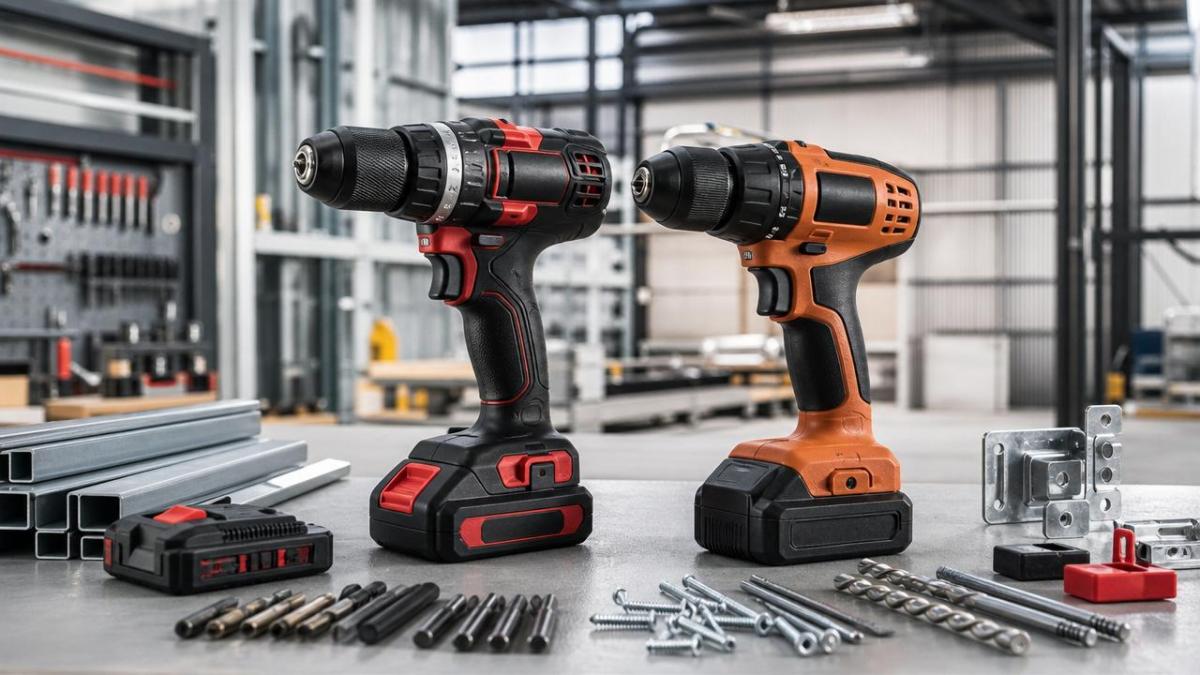
Daily jobs have changed. Crews move between metal framing, concrete anchors, cabinetry, MEP installation, and site finishing, often within the same shift. Tools are expected to keep pace without adding downtime.
A brushed drill still has a place in light, occasional work. It is familiar, simple, and often cheaper at the point of purchase. Yet repeated use exposes the tradeoff: more friction, more heat, more wear, and more maintenance.
A brushless drill replaces physical brushes with electronic motor control. That sounds like a technical detail, but in practice it changes how torque is delivered, how energy is consumed, and how consistently the tool performs under load.
What actually separates brushed and brushless systems
The main difference sits inside the motor. A brushed drill uses carbon brushes to transfer electrical current. Those brushes create contact, friction, and gradual wear.
A brushless drill uses electronic switching to manage current flow. With fewer wearing parts, it usually runs cooler and converts more battery energy into usable output.
That mechanical change affects several business outcomes at once. Efficiency improves, service intervals stretch, and performance becomes easier to predict across repeated tasks.
Where daily savings really come from
The strongest case for a brushless drill is rarely a single dramatic advantage. Savings usually come from several smaller gains that compound over time.
Battery runtime and charging rhythm
Because a brushless drill wastes less energy as heat, it often delivers more holes or fastenings per charge. On active sites, that reduces battery swapping and charging congestion.
This matters even more in fleets built around cordless platforms. Better runtime lowers the number of backup batteries needed to support the same workload.
Less downtime from wear
Brush wear is predictable, but it still interrupts operations. A brushed drill may be inexpensive to acquire, yet service events erode that advantage when tools are used every day.
A brushless drill tends to stay in rotation longer with fewer internal wear issues. That improves scheduling confidence, especially where teams depend on consistent tool availability.
Torque control and rework reduction
Electronic motor control also helps a brushless drill respond more precisely to resistance. In practical terms, that can mean cleaner starts, steadier fastening, and fewer stripped screws or misdrilled entries.
When multiplied across cabinetry, electrical boxes, anchors, brackets, or steel studs, fewer errors translate into labor savings that often exceed the initial price gap.
How different work environments change the answer
Not every use case points to the same conclusion. The right decision depends on duty cycle, material type, runtime expectations, and how expensive delays become once work starts.
- Light intermittent work often tolerates a brushed drill, especially for occasional drilling in wood, plastic, or basic household maintenance.
- Frequent installation work favors a brushless drill because repetitive starts, stops, and overhead use reward lower heat and better battery efficiency.
- Industrial assembly benefits from more repeatable torque behavior, which helps protect fasteners, fixtures, and finish quality.
- Mobile service teams usually gain from longer runtime and less maintenance, since field delays cost more than workshop repairs.
This broader context aligns with SHSS coverage of hardware ecosystems. A drill is not an isolated purchase. It interacts with batteries, fasteners, PPE, and work sequencing on real sites.
Looking beyond tool price to total cost of ownership
The purchase price gap between brushed and brushless models is easy to measure. The harder part is valuing hidden operating costs that appear later.
A useful comparison should include labor interruption, battery inventory, repair frequency, expected tool life, and the cost of inconsistent output on deadline-driven work.
In many commercial settings, a brushless drill becomes cheaper over its service life even when its sticker price is higher. The turning point usually arrives faster in high-use environments.
Practical signals that a brushless drill is the better fit
Some indicators make the decision clearer. If any of these conditions are common, a brushless drill usually deserves closer consideration.
- Tools stay in use for several hours a day.
- Battery logistics already affect workflow.
- Fastening quality has direct cost implications.
- Service interruptions create scheduling pressure.
- Work includes mixed materials and changing resistance.
On the other hand, if use is occasional and non-critical, a brushed model may still be reasonable. The key is matching motor design to actual duty, not to marketing claims.
How to compare options more intelligently
A smart comparison starts with workload mapping. Estimate how many drilling and fastening cycles occur per day, which materials dominate, and how much downtime costs in labor terms.
Then review the surrounding ecosystem. Battery compatibility, fastener performance, charger availability, and operator safety all influence whether a brushless drill will deliver its expected savings.
This is where the SHSS perspective becomes useful. In modern hardware environments, performance is rarely about one component alone. Reliable outcomes depend on how tools, anchoring systems, and site protection work together.
For the next step, build a side-by-side cost model for twelve months of real use. Include purchase price, batteries, maintenance, expected downtime, and rework risk. That approach usually reveals whether a brushless drill is simply a premium option or the more economical one.
Recommended News