
Search News
Industry Portal
Hot Articles
China Raises Export Rebate for Brushless Li-ion Tools to 13%
Time
Click Count
On June 10, 2026, China put into effect a tax policy change that directly affects export trade in Brushless Li-ion Tools under tariff code 8508.80. The adjustment, issued by the Ministry of Finance and the State Taxation Administration, raises the export rebate rate from 9% to 13%, making it relevant not only to exporters but also to manufacturers, overseas distributors, procurement teams, and supply chain operators that rely on pricing stability, document accuracy, and delivery planning in this product segment.
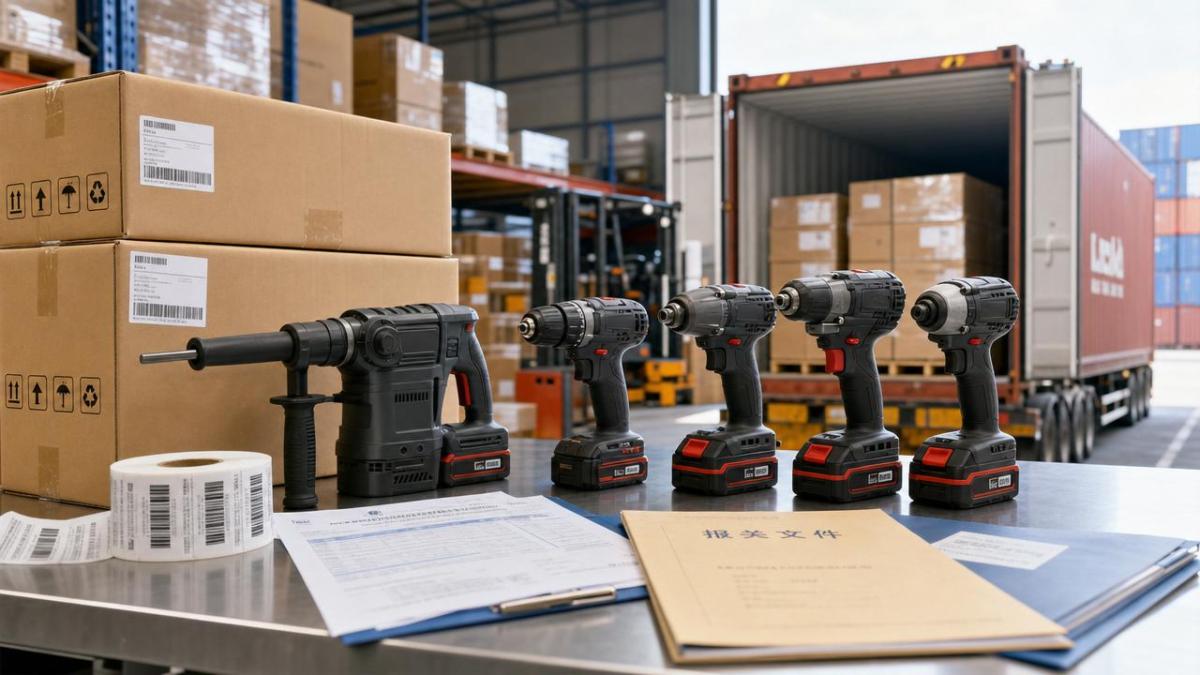
What the policy change confirms
According to the information provided, the Ministry of Finance and the State Taxation Administration jointly issued the Notice on Increasing Export Rebate Rates for Certain High-Technology Equipment (Caishui [2026] No. 28). Effective from June 10, 2026, the export rebate rate for Brushless Li-ion Tools classified under tariff code 8508.80 was raised from 9% to 13%.
The stated purpose of the adjustment is to support the stability of the global supply chain for industrial-grade brushless tools. The information provided also indicates that the change is expected to reduce export quotations by about 2.1% to 3.4%, which may help overseas distributors lower procurement costs and shorten inventory cycles.
Where the immediate pressure points may shift
Export pricing and transaction execution
From an industry perspective, exporters are among the first to feel the effect because the rebate change can alter quote structures, margin calculations, and negotiation space. What deserves closer attention is whether product classification, customs documentation, and invoicing are aligned with tariff code 8508.80, since the commercial benefit of a higher rebate depends on correct execution in trade paperwork and shipment processing.
Manufacturing and delivery coordination
Manufacturers supplying industrial-grade brushless tools may see changes in order pacing if customers or channel partners adjust purchasing plans around the lower expected export quotation level. Analysis shows that the practical impact is less about production expansion as a fact and more about whether plants, sales teams, and logistics functions can coordinate delivery schedules and model-level documentation without creating disputes over specification, shipment timing, or product scope.
Overseas distributors and procurement teams
For overseas distributors, the reported pricing effect and shorter inventory cycle expectation make this policy relevant to procurement timing and stock planning. Observably, buyers and import-side procurement teams should pay attention to whether suppliers pass through the pricing benefit, how contract terms are updated after June 10, 2026, and whether technical files, commercial invoices, and model descriptions remain consistent across purchase orders and shipping documents.
Supply chain and compliance service providers
Service providers involved in customs handling, trade documentation, testing support, and compliance review may also face a more active verification role. It is more appropriate to understand this as a documentation-sensitive change: if product descriptions, tariff coding, or supporting files are inconsistent, the commercial value of the rebate increase may not be reflected smoothly in export execution.
What companies should watch in practice
Check tariff code use and product scope carefully
Analysis shows that the first operational issue is not policy interpretation in the abstract but whether exported products are consistently declared under tariff code 8508.80. Companies should review internal product mapping, customs declarations, invoices, and quotation templates to reduce the risk of mismatch between commercial documentation and rebate treatment.
Review contract and quotation updates after the effective date
What deserves closer attention is the handling of orders quoted before and after June 10, 2026. Exporters, distributors, and buyers may need to review how pricing validity, delivery timing, and tax-related assumptions are reflected in contracts, especially where shipment timing and final quotation confirmation do not fall on the same date.
Keep technical and compliance files synchronized
Although the information provided does not set out detailed execution rules, companies should still watch whether product descriptions, technical specifications, test records, and shipment documents remain aligned across internal and external systems. This is particularly relevant where procurement files, bid documents, or customer approval packages refer to specific product categories or tool configurations.
Follow later official clarification and market execution
Observably, the current information confirms the rebate increase and its effective date, but does not provide a full operational interpretation for every transaction scenario. Companies should therefore continue tracking any later official wording, implementation clarifications, and market-side contract responses that may affect how the benefit is recognized in practice.
How this signal is best understood for now
Analysis shows that this development is best read as an implemented trade-policy adjustment rather than a preliminary consultation signal, because an effective date has already been provided. At the same time, it would be premature to treat the market effect as fully settled. What deserves closer attention is how quickly exporters revise quotations, whether overseas buyers reset purchasing cycles, and how consistently supporting documents are handled in execution.
From an industry perspective, the policy matters because it links fiscal treatment directly with export competitiveness and supply chain rhythm in a defined product category. The more useful takeaway at this stage is not to assume a uniform commercial outcome, but to watch how pricing, documentation, and order planning respond after implementation.
A measured takeaway for the market
The increase in the export rebate rate for Brushless Li-ion Tools from 9% to 13% is a concrete rule change with immediate relevance for trade execution from June 10, 2026. It creates a clearer cost and quotation framework for the affected product category, while also putting more weight on correct classification, document consistency, and timing in export operations.
It is more appropriate to understand this event as a policy already in force but still in the early stage of market digestion. The practical significance for the industry will depend not only on the rebate rate itself, but also on how exporters, distributors, procurement teams, and compliance functions translate that change into contracts, delivery plans, and transaction records.
Basis of this article
This article is generated based on the user-provided news title, event date, and event summary. For events of this type, commonly relevant source categories may include official notices, releases from regulatory or tax authorities, customs or trade-administration information, industry association updates, standard-setting documents, and reporting by authoritative media.
No specific official source link was provided in the input, so the exact official publication path still requires continued verification. Observably, the points that still merit follow-up include later implementation details, compliance interpretation in actual export processing, possible changes in bid and procurement documents, market feedback from distributors and buyers, and how companies apply the rule in practice.
Recommended News