
Search News
Industry Portal
Hot Articles
China Raises Export Rebate for Brushless Li-ion Tools to 13%
Time
Click Count
On June 11, 2026, China began implementing a higher export tax rebate for Brushless Li-ion Tools under tariff code 8508.8090, raising the rate from 9% to 13%. The adjustment matters not only to exporters of brushless drills, impact wrenches, angle grinders, and related tools, but also to manufacturers, supply chain coordinators, overseas buyers, and channel operators watching pricing, delivery arrangements, and order execution. For the industry, the policy is worth close attention because it directly targets the export competitiveness of higher-value intelligent tools while also addressing delivery pressure in global markets.
What the New Announcement Confirms
According to Announcement No. 28 of 2026, jointly issued by China’s Ministry of Finance, State Taxation Administration, and General Administration of Customs, the export tax rebate rate for Brushless Li-ion Tools classified under tariff code 8508.8090 increased from 9% to 13% effective from 00:00 on June 11, 2026.
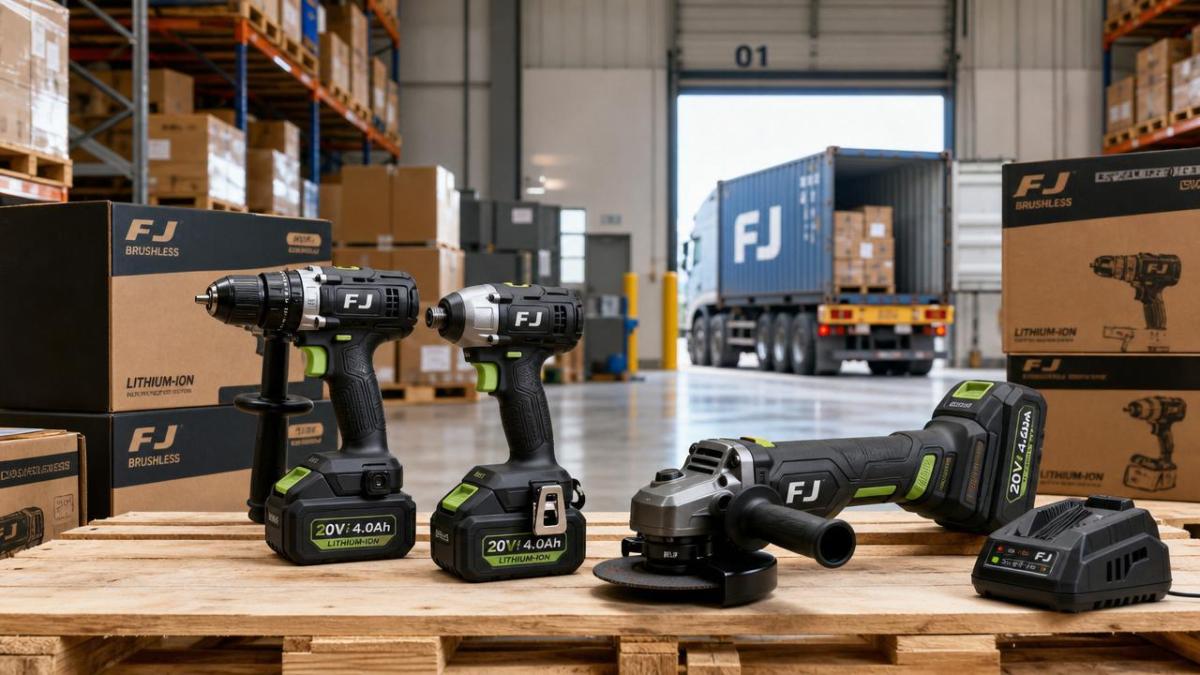
The covered scope includes the full range of brushless lithium-ion tools referenced in the provided information, including brushless electric drills, impact wrenches, and angle grinders. The policy adjustment is expected to add more than RMB 2.7 billion in annual rebate value.
The stated policy purpose is to strengthen the export competitiveness of high-value-added intelligent tools and to ease global delivery pressure.
Where the Impact May Be Felt First
Export-facing tool suppliers will focus on pricing and order structure
Analysis shows that companies directly engaged in export trade may feel the impact first because the rebate rate change directly affects the cost and margin structure tied to outbound shipments. The most immediate business links to watch are quotation strategies, contract execution timing, and the product mix within the covered tariff category.
What deserves closer attention is whether companies adjust commercial terms immediately or treat the added rebate space more cautiously while confirming documentation and customs treatment in practice.
Manufacturing operations may reassess production and delivery planning
From an industry perspective, manufacturers of brushless lithium-ion tools may pay closer attention to production scheduling and shipment planning. Because the policy covers a broad tool range, factories handling multiple covered product lines may review how orders are prioritized, especially where export delivery windows are tight.
The key operational issue is not only the rebate rate itself, but also whether order allocation, invoicing, and declaration processes align cleanly with the effective date and product classification.
Supply chain and logistics service providers will watch execution details
Observably, supply chain service providers, customs-related service teams, and logistics coordinators may be affected through the execution layer rather than the pricing layer. Their main concern is whether shipments, declarations, and supporting materials are prepared accurately under the applicable tariff code and timing requirements.
For these participants, the relevant change is procedural: accurate coordination may become more important where customers expect the policy benefit to be reflected in delivery or transaction arrangements.
Overseas buyers and channel partners may seek clearer delivery commitments
Analysis shows that downstream buyers and distribution partners may not be direct beneficiaries of the rebate, but they may still respond to it through negotiation on lead times, purchasing rhythm, and supplier discussions. Since the policy objective includes easing global delivery pressure, some customers may look for more stable fulfillment commitments from Chinese suppliers.
The practical point to monitor is whether expectations on price or delivery shift faster than actual operational implementation.
What Companies Need to Track Now
Verification of tariff classification and product coverage
Companies should closely review whether their exported products fall within tariff code 8508.8090 as referenced in the announcement. This matters because the policy benefit depends on correct classification, and the covered scope should be understood through the official wording rather than through broad commercial naming alone.
Alignment between shipment timing and declaration practice
Because the new rate took effect from 00:00 on June 11, 2026, firms should pay attention to the relationship between shipment timing, customs declaration handling, and supporting records. In practice, the distinction between a policy announcement and its operational application often becomes most important at the documentation stage.
Internal coordination across sales, finance, and customs functions
What deserves closer attention is cross-functional coordination. Sales teams may face customer questions on quotations and delivery, while finance and customs teams must confirm how the new rate is reflected in actual processing. Companies with multiple covered categories may need a tighter internal review process to avoid inconsistencies in execution.
Customer communication and delivery expectations
From an industry perspective, businesses should also manage external communication carefully. The policy sends a clear support signal, but that does not automatically mean every order, market, or delivery commitment changes at the same speed. Clear communication with buyers, distributors, and service partners may help avoid misunderstandings around timing and expected commercial outcomes.
How This Policy Signal Should Be Read
Analysis shows that this development is more than a routine technical adjustment, because it specifically targets Brushless Li-ion Tools and explicitly links the change to export competitiveness and global delivery pressure. That gives the measure relevance beyond tax treatment alone.
At the same time, it is more appropriate to understand this as a policy signal with immediate operational implications rather than as a completed industry outcome. The rebate increase is a confirmed fact, but its full effect on pricing behavior, shipment patterns, and customer relationships still depends on how companies implement it in day-to-day business.
Observably, the industry still needs to watch whether subsequent official clarifications, procedural practices, or market responses shape how broadly the policy effect is realized.
A Short-Term Adjustment With Longer-Term Implications
For now, the most balanced reading is that China has raised support for exports of higher-value brushless lithium-ion tools in a way that is immediately actionable for affected businesses. The confirmed change is clear, the covered category is defined, and the intended direction of policy is explicit.
However, the broader industry significance should be judged through execution rather than assumption. It is more appropriate to understand this as a short-term operational change that may also carry a longer-term signal for the positioning of intelligent tool exports, while still requiring continued observation.
Basis and Ongoing Verification
This article is generated based on the user-provided news title, event date, and event summary. The confirmed factual basis includes the stated announcement number, the June 11, 2026 effective time, the tariff code 8508.8090, the rebate increase from 9% to 13%, the covered product examples, the estimated additional annual rebate value, and the stated policy purpose.
Source types typically relevant to this kind of industry update may include official government announcements, company disclosures, industry association updates, authoritative media reporting, and customs or standards-related documents. A specific official source link was not provided in the input, so further verification remains necessary. Ongoing attention should focus on any follow-up official wording, implementation details, and practical market response.
Recommended News