
Search News
Industry Portal
Hot Articles
Thread Rolling or Cutting: Which Delivers Better Bolt Fatigue Life?
Time
Click Count
Thread Rolling or Cutting: Which Delivers Better Bolt Fatigue Life?
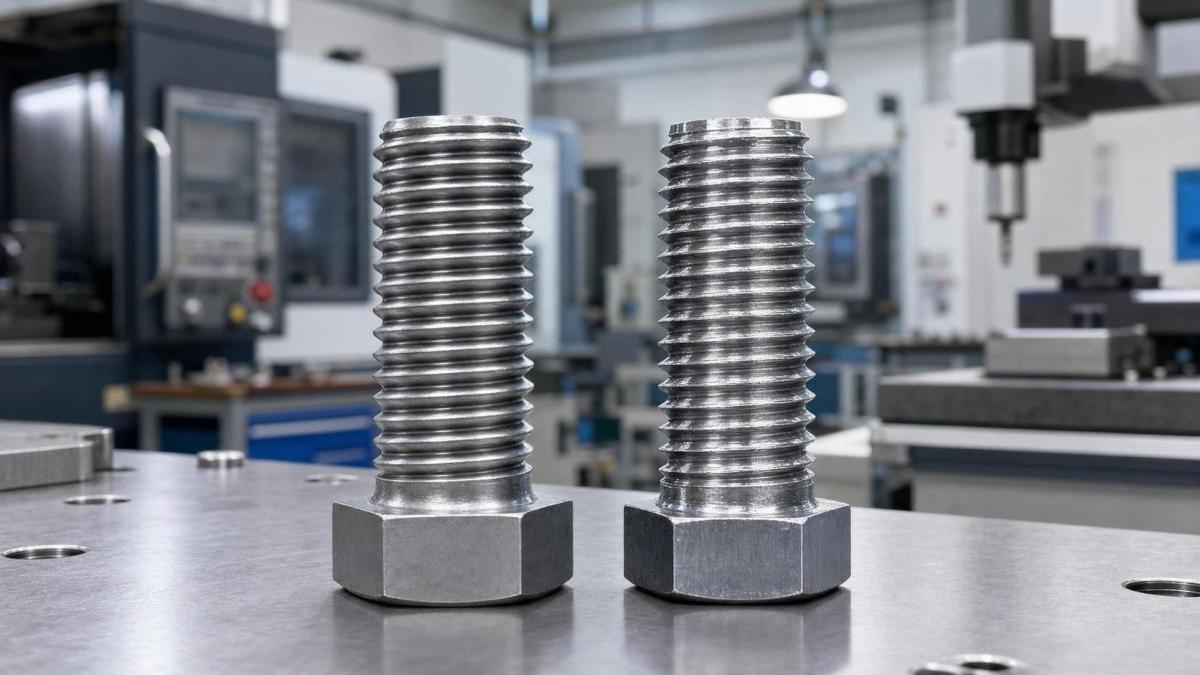
When bolt reliability is judged by fatigue life, thread formation stops being a simple production choice.
It becomes a design decision with direct consequences for safety, maintenance cycles, and total ownership cost.
That is why thread rolling continues to attract attention in construction equipment, structural connections, rotating machinery, and high-strength fasteners.
The core question is simple.
Does thread rolling really provide better bolt fatigue life than thread cutting?
In most cyclic loading applications, the answer is yes.
Still, the reason is not marketing language or a vague “better finish” claim.
It comes from measurable changes in grain flow, root geometry, surface integrity, and residual stress.
Those factors strongly influence crack initiation, which is where fatigue failure usually begins.
In practical evaluation work, this means thread rolling should be reviewed as a performance feature, not only a manufacturing method.
How Thread Rolling and Cutting Actually Differ
Thread cutting removes material with a tool.
The final thread shape is created by machining away metal from the blank.
Thread rolling forms the thread by plastic deformation.
The material is displaced under pressure between dies rather than cut away.
That difference sounds straightforward, but its effect on bolt fatigue life is significant.
A cut thread interrupts material flow at the thread root.
A rolled thread tends to preserve and redirect grain flow along the thread profile.
This often produces a smoother root and a stronger surface condition.
Under repeated tensile or vibrational loading, that surface condition matters more than many buyers first expect.
Why the Thread Root Controls Fatigue Performance
Most fatigue cracks in threaded fasteners begin at the thread root.
That area sees high stress concentration during every load cycle.
If the root contains tool marks, torn metal, or tensile residual stress, crack initiation becomes easier.
Thread rolling helps because it usually creates compressive residual stress at the surface.
Compressive stress resists crack opening.
That delays crack initiation and can slow early crack growth.
This is one of the biggest technical advantages of thread rolling in fatigue-sensitive bolting.
Why Thread Rolling Usually Improves Bolt Fatigue Life
In demanding service conditions, thread rolling offers several fatigue-related benefits at the same time.
- It forms favorable compressive residual stress at the thread root.
- It reduces surface discontinuities compared with rough machining.
- It improves grain flow continuity around the thread form.
- It can produce better dimensional consistency in high-volume production.
- It often creates a rounded root profile that lowers local stress concentration.
Taken together, these effects explain why thread rolling is widely specified for aerospace, automotive, energy, rail, and structural fastener applications.
From a technical evaluation standpoint, the gain is not always a small margin.
In cyclic service, it can mean the difference between stable service life and early field failures.
Surface Finish Is Only Part of the Story
Many discussions reduce thread rolling to better surface finish.
That is true, but incomplete.
A smoother surface reduces micro-notches that can trigger fatigue cracks.
However, thread rolling also changes subsurface stress and local metal flow.
Those hidden features are often more important than appearance alone.
This is especially true for bolts exposed to vibration, alternating tension, or clamp-load fluctuation.
When Thread Cutting Still Makes Sense
Saying thread rolling usually improves fatigue life does not mean thread cutting has no place.
There are cases where cutting remains practical or necessary.
- Large diameters or special geometries that are difficult to roll economically.
- Short production runs where tooling investment matters more than fatigue optimization.
- Very hard materials that exceed efficient rolling conditions.
- Repair, rework, or custom machining situations.
Even in those cases, careful control of root radius, finish, and post-processing becomes essential.
A well-made cut thread can still meet performance targets if the service load is moderate or mostly static.
But when fatigue life is the critical requirement, thread rolling usually keeps the advantage.
The Risk of Comparing Only Unit Price
In real sourcing decisions, cut threads may appear cheaper at first glance.
That comparison can be misleading.
If a fatigue-related failure causes shutdowns, warranty claims, inspections, or safety incidents, the lifecycle cost changes fast.
This is where thread rolling often proves economically stronger, not just mechanically stronger.
Key Evaluation Factors Beyond the Forming Method
Thread rolling is important, but it is not the only variable controlling fatigue life.
A sound technical review should also check the full fastener system.
This is an important point in standards-based evaluation.
A rolled thread cannot compensate for poor joint design or uncontrolled installation torque.
But when all other factors are reasonably managed, thread rolling usually lifts fatigue performance.
Standards and Verification Questions Worth Asking
Recent procurement reviews increasingly ask for process evidence, not only nominal dimensions.
That is a useful change.
- Was thread rolling performed before or after heat treatment?
- What thread root profile is specified and verified?
- Are fatigue test results available for the actual part family?
- How are coating, lubrication, and hydrogen control managed?
- Is there process consistency across production lots?
These questions help separate a generic claim from a reliable thread rolling process.
Application Scenarios Where Thread Rolling Matters Most
The value of thread rolling becomes clearer when the service environment is severe.
- Wind, rail, and mining equipment exposed to continuous vibration.
- Structural joints with fluctuating loads and long service intervals.
- Automated machinery where small fastener failures stop production.
- Heavy vehicles and lifting systems with repeated tensile cycles.
- Critical hardware where inspection access is limited or costly.
In these scenarios, thread rolling is not just a better process option.
It becomes part of the risk-control strategy.
That shift in thinking is becoming more common as maintenance budgets tighten and uptime expectations rise.
So, Which Delivers Better Bolt Fatigue Life?
For most high-cycle or vibration-prone applications, thread rolling delivers better bolt fatigue life than thread cutting.
The advantage comes from compressive residual stress, improved grain flow, smoother roots, and lower crack initiation risk.
Thread cutting still has valid uses, especially in custom, low-volume, or geometry-limited cases.
But if fatigue resistance is a top selection criterion, thread rolling should usually be the benchmark.
The best next step is practical and specific.
Review the load spectrum, check the thread forming method, verify test data, and compare lifecycle risk rather than piece price alone.
In most critical joints, that approach leads to the same conclusion.
When durability under repeated stress matters, thread rolling is usually the stronger engineering choice.
Recommended News