
Search News
Industry Portal
Hot Articles
How to Choose a Brushless Drill for Daily Jobsite Use
Time
Click Count
Choosing a brushless drill for daily jobsite use is rarely a simple brand decision. On active sites, the better tool is the one that keeps torque consistent, stays balanced in hand, survives dust and vibration, and does not lose pace halfway through repetitive fastening or drilling work.
That matters even more in a market shaped by advanced manufacturing, tighter uptime expectations, and growing pressure for safer, more efficient field operations. For SHSS, which tracks industrial brushless tools alongside fasteners, PPE, and smart infrastructure systems, the brushless drill sits at a practical intersection of productivity, durability, and jobsite reliability.
Why the brushless drill has become a daily jobsite standard
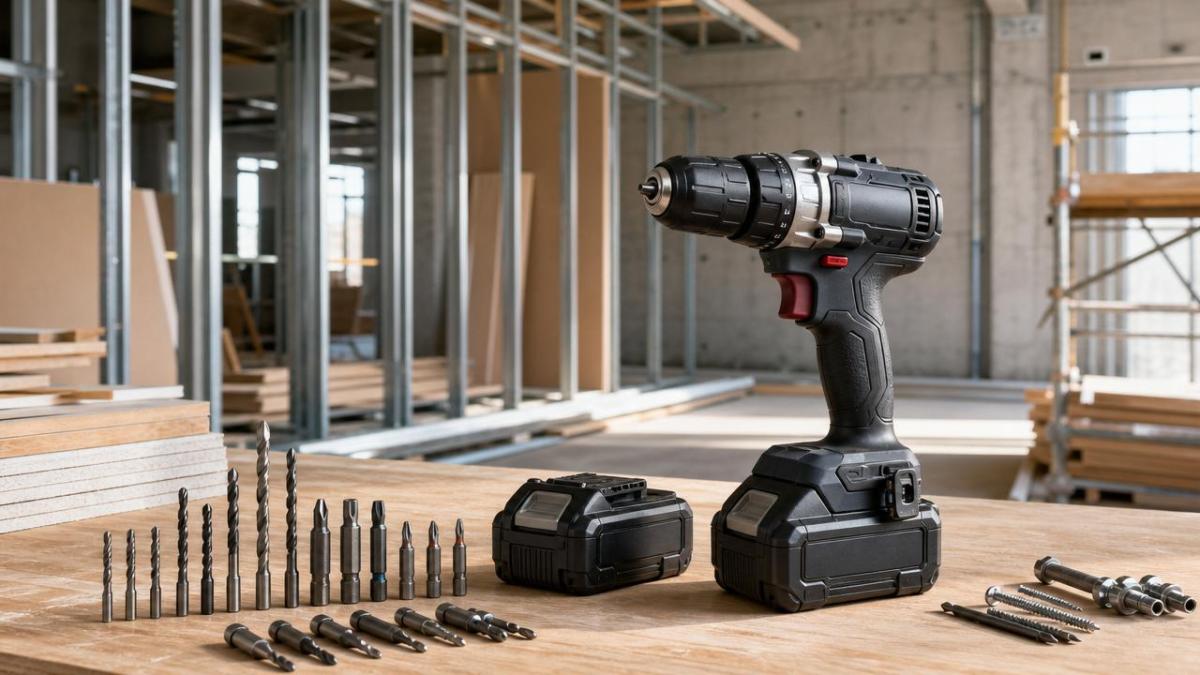
A brushless drill uses an electronically controlled motor instead of traditional carbon brushes. In practical terms, that usually means less friction, better energy efficiency, lower maintenance demand, and more responsive power delivery under changing loads.
On a real jobsite, those differences are not abstract. They show up when drilling anchor holes into masonry backing, driving long screws into timber, or switching between metal studs and finish hardware in the same shift.
Compared with brushed tools, a well-matched brushless drill often runs cooler and manages battery output more efficiently. That helps support steadier performance during repeated use, especially where downtime interrupts workflow across crews and connected tasks.
This is also why brushless adoption connects naturally with broader industrial trends. Sites today rely on stronger fasteners, more compact tools, better lighting, and stricter safety systems. Each piece supports the same goal: reliable execution without wasted motion.
What to evaluate before choosing one
Not every brushless drill is built for the same work rhythm. A compact tool that feels excellent for cabinet installation may struggle in structural framing, while a heavy-duty model can become tiring during overhead fastening or long indoor fit-out shifts.
The right starting point is the task mix, not the advertising label. Look at the materials, fastener sizes, hole diameters, working posture, and frequency of use across a normal week.
Torque that matches actual load
High torque sounds impressive, but daily usability depends on controlled torque, not just peak figures. A brushless drill should handle routine resistance smoothly without sudden surges that strip screws or twist wrists.
For mixed work, variable speed control and clutch settings matter as much as raw output. They help the tool adapt from pilot holes and sheet metal screws to larger lag fasteners with less rework.
Battery system and runtime stability
Battery voltage alone does not tell the full story. Runtime depends on motor efficiency, battery chemistry, amp-hour capacity, and how the drill manages load spikes during tougher applications.
On repetitive jobs, stable output near the middle and late stages of the charge cycle is often more valuable than strong performance for the first few minutes. A dependable brushless drill should feel predictable through the shift.
Weight, grip, and balance
A spec sheet may list total weight, but balance is what the hand notices first. If the battery pack makes the tool tail-heavy, control suffers during precision tasks and fatigue rises during overhead or ladder work.
Grip contour, trigger feel, and handle texture also influence confidence. A brushless drill used every day should feel secure with gloves, in damp conditions, and after hours of repetitive motion.
Durability matters more than headline features
Many tools look similar on a shelf. The difference appears after exposure to concrete dust, vibration, minor drops, transport abuse, and frequent bit changes.
A daily-use brushless drill should be judged by how well its chuck, gearbox housing, ventilation layout, trigger assembly, and battery interface hold up over time. These are the areas that often decide service life.
This is where SHSS’s wider hardware perspective becomes useful. Tool performance does not stand alone. Poor drill consistency can damage fasteners, slow installation quality, and increase strain on PPE use when awkward handling leads to unsafe body position.
In other words, durability is not just about the tool surviving. It also protects fastening accuracy, work pace, and safer execution across the surrounding task chain.
Quick field checks before selection
- Check chuck runout with a long bit installed and spinning at low speed.
- Listen for uneven gearbox noise under light and moderate load.
- Test forward and reverse switching with gloves on.
- Inspect battery latch engagement and removal force.
- Evaluate LED placement if work often happens in low light.
Different jobs call for different brushless drill priorities
The most suitable brushless drill changes with the working environment. A single “best” model rarely exists across all trade conditions.
This is why field context matters more than showroom comparison. A brushless drill that earns daily trust usually fits the repetitive realities of one environment instead of trying to dominate every category.
How to compare models without getting lost in marketing
Specification sheets are useful, but they often mix meaningful indicators with attention-grabbing numbers. To compare a brushless drill more clearly, focus on performance signals that affect daily output and fatigue.
Useful comparison points
- Loaded drilling speed, not only no-load RPM.
- Battery ecosystem maturity and charger turnaround time.
- Chuck retention and bit slippage resistance.
- Comfort during repetitive fastening, especially overhead.
- Service support, spare parts access, and warranty handling.
It also helps to think beyond the tool itself. If the drill is used with premium anchors, structural fasteners, or controlled installation standards, inconsistency becomes expensive quickly. Better drill control often protects material quality as much as labor time.
For sites adopting smarter workflows, that logic is familiar. Just as connected lighting or biometric access systems are evaluated on reliability in real conditions, a brushless drill should be judged by repeatable field performance rather than brochure language.
A practical shortlist for final selection
Before making the final call, reduce the decision to a few operational questions. That keeps the choice grounded in work quality instead of feature inflation.
- Does the brushless drill stay controllable during the hardest routine task?
- Can it complete a typical shift pattern without disruptive battery rotation?
- Is the weight acceptable for the most frequent working position?
- Will the tool integrate with existing batteries, bits, and accessories?
- Does the expected lifespan justify the upfront price difference?
A good brushless drill is not simply powerful. It is steady, durable, efficient, and comfortable enough to remain useful hour after hour. That combination is what turns a tool into a dependable daily asset.
The next sensible step is to map the drill against actual materials, fastening sizes, and shift patterns, then compare two or three models under those same conditions. That approach usually reveals more than any catalog ever will.
Recommended News