
Search News
Industry Portal
Hot Articles
Industrial Brushless Tools vs Brushed Models: Runtime, Maintenance, and Cost
Time
Click Count
Industrial brushless tools or brushed models: what really changes in daily ownership?
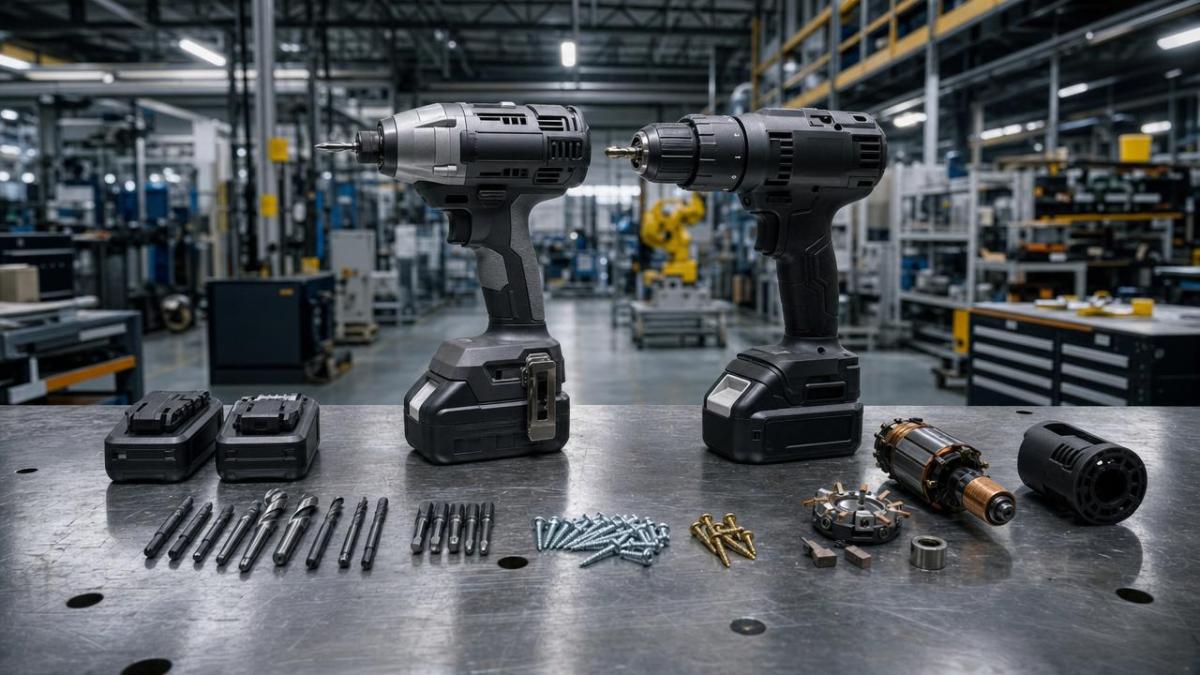
Choosing between industrial brushless tools and brushed alternatives is rarely a simple motor decision.
In practice, runtime, heat control, service frequency, and replacement cycles shape total purchasing value much more clearly.
That is why this comparison matters across construction, plant maintenance, assembly lines, infrastructure work, and smart city projects.
The wider SHSS perspective is useful here.
Tool decisions do not exist alone.
They connect with fastening reliability, worker safety, site access, lighting uptime, and broader operational continuity.
So when industrial brushless tools are evaluated, the better question becomes this:
Do they reduce interruption, protect output, and improve lifecycle cost enough to justify the higher entry price?
The answer is often yes, but not in every case.
A careful comparison makes the difference between smart standardization and overbuying.
Is brushless always better, or only better in certain workloads?
Brushless motors remove physical brushes and commutators from the power transfer process.
That change reduces friction, electrical arcing, and internal wear.
The result is usually better efficiency, cooler operation, and more stable torque under demanding loads.
Brushed tools still have a place, especially in lighter duty or occasional use.
They are often cheaper to buy, easier to understand, and acceptable for limited running hours.
The more useful dividing line is workload intensity.
If a tool runs all day, faces repetitive fastening, or operates under variable torque demand, industrial brushless tools usually outperform brushed models by a wide margin.
If the tool is used only for short service calls or backup tasks, a brushed platform may remain financially acceptable.
This is common in mixed fleets.
High-cycle crews use brushless systems, while low-frequency roles keep simpler brushed units in reserve.
A quick comparison helps clarify the trade-off
This table should not replace field data, but it gives a solid first screen for specification reviews.
How much runtime advantage do industrial brushless tools actually deliver?
Runtime is one of the strongest arguments for industrial brushless tools.
Because energy loss is lower, more battery power becomes usable work instead of wasted heat.
In repetitive drilling, fastening, or anchor installation, that difference often becomes visible within a single shift.
The practical benefit is not only longer operation.
It also means fewer battery swaps, less charger congestion, and smoother labor flow.
That matters on remote sites, elevated work zones, and large facilities where downtime has movement cost.
Still, published runtime claims can mislead.
Much depends on battery chemistry, electronic controls, bit condition, material hardness, and duty cycle.
A brushless impact driver on thin sheet metal behaves very differently from a brushless rotary hammer in reinforced concrete.
A more dependable comparison method is to ask suppliers for task-based productivity data.
- Fastenings completed per charge in a defined substrate
- Average temperature rise during continuous use
- Battery change frequency across an eight-hour shift
- Output consistency near low battery levels
Those numbers are usually more useful than headline voltage alone.
Where do maintenance savings show up first?
Maintenance savings with industrial brushless tools rarely appear as one dramatic line item.
They appear as fewer interruptions.
Brush wear, sparking, carbon dust, and commutator damage are all reduced or removed.
That lowers scheduled servicing and helps avoid unplanned breakdowns during peak output periods.
In actual operations, the first visible savings usually come from three areas:
- Less technician time spent on brush replacement and inspection
- Lower spare parts consumption across large fleets
- Fewer stoppages that delay fastening, drilling, or installation sequences
This matters especially when tool uptime supports other critical systems.
For example, delayed anchor drilling can slow high-strength fastener installation.
That can push back lighting, security hardware, or protective barrier deployment.
SHSS often frames this as operational stitching.
A tool that fails less often protects far more than its own service record.
It stabilizes connected tasks across the project chain.
Does the higher price of industrial brushless tools really pay back?
This is usually the deciding question.
The short answer is that payback depends on usage intensity, downtime cost, and fleet size.
If tools are heavily used, the premium often recovers faster than expected.
If usage is light, recovery may take much longer or never become meaningful.
A sound cost model should include more than purchase price.
It should account for service labor, spare brushes, battery turnover, productivity loss, and tool replacement intervals.
Many evaluations miss the cost of micro-stoppages.
Five minutes lost across dozens of operators quickly becomes visible money.
The same thinking appears in SHSS analysis of smart lighting and security systems.
Longer-life infrastructure often looks expensive until lifecycle math is applied correctly.
A practical payback checklist
- Measure annual operating hours per tool, not just tool count
- Track service events and average repair handling time
- Estimate labor cost tied to battery swaps and performance drop
- Separate critical-use tools from occasional-use inventory
- Compare three-year cost, not invoice price alone
When that framework is used, industrial brushless tools often show stronger value in core production roles.
What buying mistakes are most common when comparing brushless and brushed tools?
One common mistake is treating all brushless platforms as equal.
Motor design matters, but electronics, battery management, housing durability, and thermal protection matter just as much.
Another mistake is buying on peak torque without checking sustained performance.
A strong headline number can hide overheating or unstable output during repetitive tasks.
There is also a budgeting error that appears often.
Teams compare tool body price, but ignore charger ecosystems, batteries, accessories, and cross-platform compatibility.
That can distort the real ownership picture.
A final issue is underestimating application fit.
For occasional light-duty use, brushed models may still be reasonable.
For heavy fastening near structural hardware, repeated drilling, or uptime-sensitive service work, industrial brushless tools usually deserve priority.
The strongest buying decisions usually come from segmented sourcing, not one-size-fits-all standardization.
Questions worth asking before final selection
- What material and fastening profile defines normal use?
- How many daily cycles does each tool actually complete?
- Which failures create the highest downstream delay cost?
- Is the battery platform shared across the wider fleet?
- Are service parts and warranty support locally available?
So which option makes more sense for long-term purchasing plans?
Industrial brushless tools make the strongest case where uptime, efficiency, and controlled maintenance matter every week.
They tend to justify their premium in production-heavy environments and field operations with real interruption cost.
Brushed tools still fit limited-duty roles, backup inventory, and budget-constrained applications with low annual run time.
The better path is usually not choosing one category for everything.
It is building a decision standard around runtime demand, maintenance tolerance, and total cost visibility.
A useful next step is to compare current fleets by task, failure history, and annual service cost.
Then test industrial brushless tools in the highest-cycle applications first.
That approach produces cleaner data, better ROI evidence, and a more durable sourcing decision.
Recommended News