
Search News
Industry Portal
Hot Articles
Industrial Fasteners: Key Failure Risks and Material Choices for Harsh Environments
Time
Click Count
Industrial Fasteners: Key Failure Risks and Material Choices for Harsh Environments
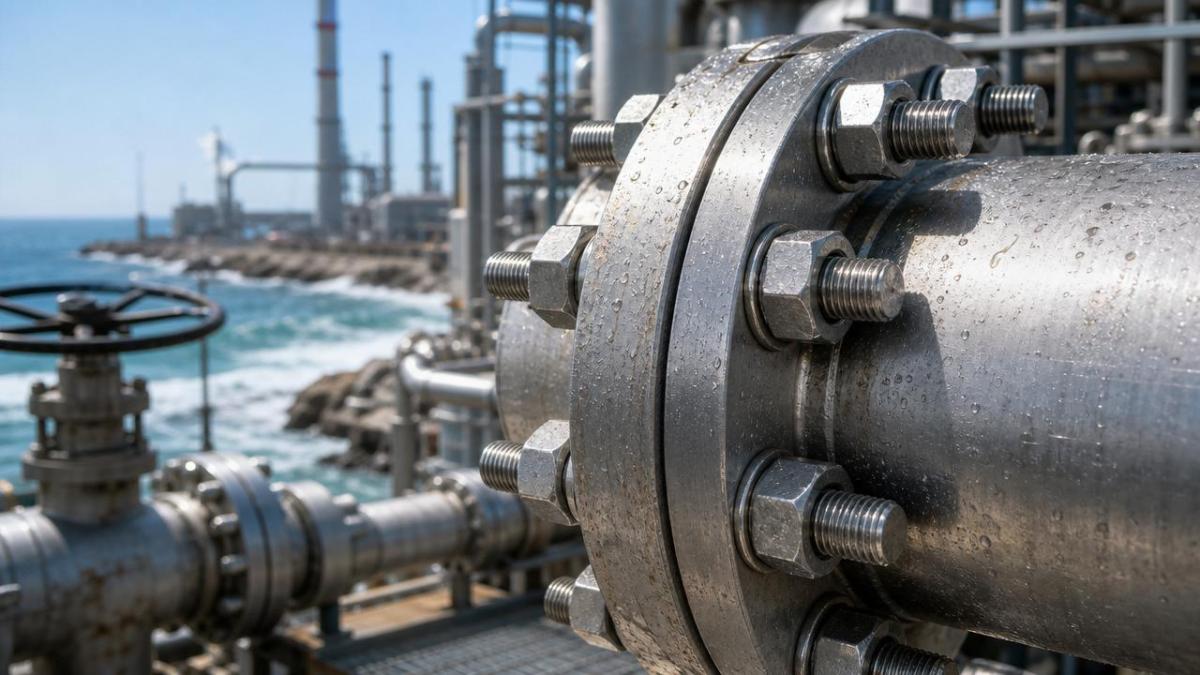
Industrial fasteners may look small, but they often decide whether a system stays safe or fails without warning.
In harsh environments, a single wrong bolt grade can trigger leaks, loosened joints, or costly structural damage.
That is why industrial fasteners deserve the same attention as coatings, welds, seals, and protective systems.
This matters even more in sectors shaped by heavy vibration, salt spray, heat cycling, chemical washdown, and high load transfer.
From recent field trends, the bigger issue is not fastener strength alone.
The real challenge is matching material, finish, preload, and maintenance practice to actual exposure conditions.
When that match is poor, industrial fasteners can fail long before design life, even when installation looks correct on day one.
The good news is that most failures follow patterns.
Once those patterns are understood, material selection becomes more disciplined and much easier to defend during audits or incident reviews.
Why Industrial Fasteners Fail in Harsh Conditions
Most industrial fasteners do not fail because they were undersized on paper.
They fail because service conditions attack the joint in ways standard specifications do not fully capture.
A corrosive plant, offshore platform, tunnel, or outdoor electrical enclosure can expose fasteners to several risks at once.
1. Corrosion and Section Loss
Corrosion remains the most common threat to industrial fasteners in aggressive settings.
It reduces cross-section, weakens threads, raises friction, and complicates removal during inspection or shutdown work.
Uniform rust is only part of the picture.
Pitting, crevice corrosion, and chloride attack often progress faster and are harder to detect early.
2. Vibration Loosening
Dynamic loads slowly reduce clamp force.
Once preload drops, joint movement begins, and the fastener starts to loosen, fret, or fatigue.
This is common in rotating equipment, mobile machinery, rail assets, compressors, and high-cycle production lines.
3. Heat, Creep, and Thermal Cycling
Temperature swings create expansion mismatch between the fastener and the joined materials.
That mismatch changes preload over time.
At elevated temperatures, some industrial fasteners also lose strength or experience creep, especially in continuous duty systems.
4. Hydrogen and Stress Cracking
High-strength steel fasteners can be vulnerable to hydrogen embrittlement.
This may follow electroplating, acid cleaning, or certain service environments.
The failure can be delayed, brittle, and sudden, which makes it especially dangerous.
5. Wrong Installation Variables
Even the right industrial fasteners can underperform if torque methods, lubrication, washers, or surface conditions are inconsistent.
In practice, many failure investigations point back to preload scatter rather than material defects alone.
How to Choose Materials for Industrial Fasteners
Material choice should start with exposure mapping, not catalog habit.
That means reviewing moisture, chemicals, temperature range, load profile, inspection access, and expected service life together.
A lower-cost option may become the most expensive one after rework, downtime, or compliance issues.
Carbon Steel Fasteners
Carbon steel industrial fasteners are widely used because they balance strength, availability, and price.
They work well in controlled indoor settings or where protective coatings remain intact.
However, bare or lightly protected carbon steel struggles in wet, marine, or chemical environments.
Stainless Steel Fasteners
Stainless steel industrial fasteners are often selected for corrosion resistance and cleaner appearance.
Grades matter a lot.
A2 may suit general outdoor use, while A4 or 316 stainless performs better around chlorides and washdown exposure.
Still, stainless is not corrosion-proof.
Crevice conditions, trapped moisture, and galling risks must be managed carefully.
Alloy Steel and High-Strength Grades
High-strength industrial fasteners are essential where heavy preload and structural load transfer are required.
They are common in bridges, mechanical equipment, and critical frames.
The tradeoff is higher sensitivity to coating process control and hydrogen-related failure mechanisms.
Special Alloys
For extreme heat, chemical exposure, or offshore duty, nickel alloys and other special materials may be justified.
These industrial fasteners cost more upfront, but they often reduce replacement cycles and shutdown risk.
Coatings, Compatibility, and Hidden Selection Mistakes
Material selection does not stop at the base metal.
Coatings, mating materials, and environmental chemistry often decide whether industrial fasteners deliver reliable field performance.
Watch for Galvanic Corrosion
When dissimilar metals contact each other in the presence of an electrolyte, galvanic attack can accelerate quickly.
This is a frequent issue in aluminum structures, coastal installations, and electrical housings.
Isolation washers, compatible alloys, and better drainage can reduce that risk.
Do Not Treat Coatings as Universal Protection
Zinc plating, hot-dip galvanizing, mechanical plating, and fluoropolymer systems all behave differently.
Some coatings improve corrosion performance but alter torque-tension behavior.
Others may create dimensional issues on threads or conflict with temperature limits.
Check Chemical Compatibility Early
Cleaning agents, acids, alkalis, and process vapors can all change material performance.
A fastener that survives rainwater may fail quickly in chlorine, fertilizer, or food processing atmospheres.
This is where supplier data, standards review, and site history become highly valuable.
A Practical Risk Review for Industrial Fasteners
In actual operations, the best way to improve fastener reliability is to standardize the review process.
A simple checklist often prevents expensive repeat failures.
- Identify the real exposure, including splash zones, trapped moisture, and cleaning chemicals.
- Confirm load type, especially vibration, shock, thermal cycling, and sustained tension.
- Review base material, coating, and mating material compatibility before approval.
- Check whether the chosen industrial fasteners need lubrication or anti-galling controls.
- Validate installation method, torque values, tools, and operator consistency.
- Require traceability for grade, heat treatment, coating batch, and relevant standards.
- Set inspection intervals based on consequence of failure, not only calendar routine.
This process is especially useful when assets operate across multiple climates or mixed industrial environments.
It also supports clearer communication between procurement, maintenance, engineering, and compliance teams.
Fast Material Reference for Common Environments
What Better Fastener Decisions Look Like
Stronger reliability comes from treating industrial fasteners as engineered safety components, not commodity line items.
That shift usually leads to fewer emergency repairs, steadier compliance performance, and better lifecycle cost control.
For organizations managing critical assets, the practical next step is clear.
Review your highest-risk joints, map the exposure honestly, and compare current industrial fasteners against real service demands.
In many cases, a better grade, coating, or installation standard can remove a repeating failure mode before it becomes a safety event.
When harsh environments are part of daily operations, smarter fastener choices are not a minor upgrade. They are basic risk control.
Recommended News