
Search News
Industry Portal
Hot Articles
Industrial Power Tools: Costly Selection Mistakes to Avoid in 2026
Time
Click Count
Choosing industrial power tools in 2026 is no longer a simple comparison of torque, battery size, and unit price.
A wrong choice can create hidden downtime, safety exposure, warranty disputes, and inflated ownership costs across jobsites or production lines.
As brushless motors, smart batteries, and connected platforms mature, industrial power tools must be judged by durability, compliance, serviceability, and supplier credibility.
What makes industrial power tools harder to select in 2026?
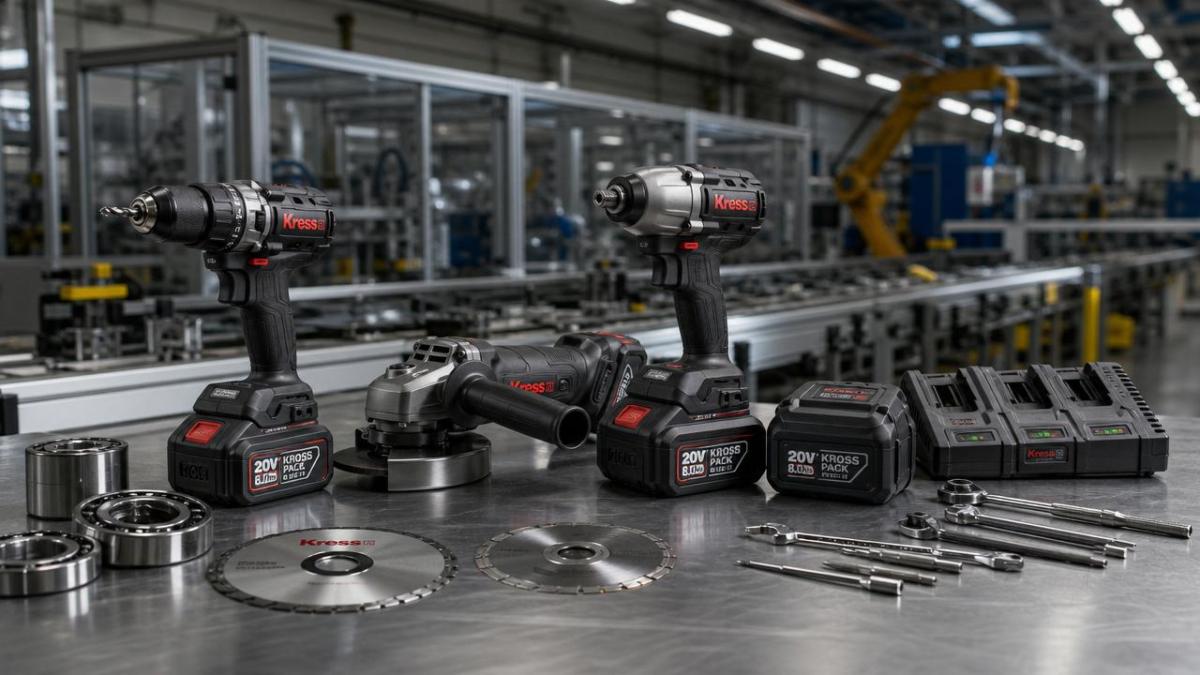
The market has shifted from standalone machines to tool ecosystems with batteries, chargers, software, diagnostics, and service contracts.
Industrial power tools now influence productivity data, operator safety, energy use, and maintenance scheduling.
This makes a cheap drill, grinder, driver, or impact wrench potentially expensive after deployment.
Brushless motors have become common, but not all BLDC designs deliver equal heat control or torque stability.
Battery packs may show similar voltage ratings, yet differ sharply in cell quality, discharge rate, protection circuits, and cycle life.
Connected industrial power tools add another layer: firmware, cybersecurity, user permissions, and data retention policies.
The first mistake is treating advanced tools as commodity hardware instead of operational infrastructure.
Why do specification sheets mislead buyers?
Peak torque, no-load speed, and amp-hour ratings are useful, but they rarely describe real work performance.
A tool may deliver impressive torque for seconds, then throttle under continuous fastening, drilling, cutting, or grinding loads.
For industrial power tools, sustained output matters more than laboratory peak numbers.
Thermal design, gearbox metallurgy, bearing quality, and dust sealing often decide service life.
Always ask for duty-cycle data, test conditions, vibration ratings, and failure-rate references from comparable applications.
Which cost mistakes inflate total ownership cost?
The purchase price is only one line in the economics of industrial power tools.
The larger cost may appear later through downtime, replacement packs, lost accessories, service delays, and inconsistent output quality.
A lower-priced platform can become costly when batteries fail early or spare parts require long delivery cycles.
A premium tool can also waste money if its smart functions are unused or incompatible with existing workflows.
- Compare battery cycle life, not only capacity.
- Check charger speed, heat control, and multi-pack management.
- Evaluate accessory availability for bits, blades, discs, and sockets.
- Confirm service turnaround times in each operating region.
- Review warranty exclusions for dust, overload, water, and misuse.
A practical cost model should include tools, batteries, chargers, consumables, repairs, calibration, training, and standby units.
For industrial power tools used daily, downtime cost can exceed the original purchase price within months.
When is the cheapest option acceptable?
Low-cost tools may fit light-duty tasks, occasional maintenance, or controlled environments with minimal dust and heat.
They are risky for structural fastening, repetitive production, mining, shipyards, heavy fabrication, and remote construction sites.
Industrial power tools should match the failure consequence, not the smallest available budget.
How can application mismatch damage productivity and safety?
A tool designed for assembly benches may fail quickly in concrete dust, wet tunnels, or steel fabrication areas.
Application mismatch is one of the most expensive mistakes in selecting industrial power tools.
Wrong ergonomics can also raise fatigue, vibration exposure, and fastening inconsistency.
A compact impact driver may be ideal overhead, while a high-torque wrench may be better for flange work.
For grinders and cutters, guard design, brake speed, kickback control, and dust extraction compatibility are critical.
For drills and rotary hammers, impact energy, bit system, anti-vibration control, and sealing matter more than headline wattage.
What site conditions should be checked first?
Start with environment, duty cycle, materials, operator posture, and available charging infrastructure.
Then map each task to torque range, speed range, battery runtime, and required protection features.
Industrial power tools used outdoors need strong ingress protection, stable battery chemistry, and reliable electronics under temperature swings.
Tools used near sensitive assets may need spark control, traceability, torque reporting, or restricted user settings.
Why do battery platforms create long-term lock-in?
Battery ecosystems can simplify work, but they also create lock-in that lasts for years.
Once many packs, chargers, and cordless industrial power tools are deployed, changing platforms becomes costly.
The decision should consider future tool categories, not only today’s immediate purchase.
A strong platform offers consistent battery communication, overload protection, thermal monitoring, and backward compatibility.
A weak platform forces separate chargers, scattered spare inventory, and unpredictable runtime across departments or project sites.
What questions reveal a stronger platform?
- Will new packs support older tools safely?
- Are high-output packs available for demanding tools?
- Can chargers identify damaged or overheated batteries?
- Are battery diagnostics visible without complex software?
- Is the platform broad enough for future applications?
For industrial power tools, battery strategy is a capital decision, not an accessory decision.
What compliance and documentation gaps cause disputes?
Compliance failures can delay projects, block imports, or complicate insurance claims after incidents.
Industrial power tools should carry relevant electrical, safety, vibration, noise, and battery transport documentation.
Documentation should match the exact model, region, charger type, and battery configuration supplied.
Connected tools may introduce data security and privacy obligations, especially when user logs or location data are collected.
Firmware updates should be documented, reversible when necessary, and tested before deployment in critical operations.
Which documents should be requested before approval?
- Declaration of conformity for target markets.
- Battery transport test summaries and labeling guidance.
- Noise, vibration, and exposure information.
- User manuals in required languages.
- Warranty terms, service procedures, and spare-part commitments.
Reliable suppliers of industrial power tools make these records easy to verify.
If documents are vague, inconsistent, or delayed, the commercial risk is already visible.
How should serviceability influence the final decision?
Serviceability separates professional systems from disposable equipment.
Industrial power tools should be easy to inspect, repair, calibrate, and return to service quickly.
A sealed tool with no local parts may look rugged, but it can create long replacement cycles.
Service networks, loaner programs, authorized repair centers, and parts availability all affect productivity.
For torque-critical tools, calibration intervals and certificates should be part of the selection process.
What does a service-ready tool program include?
- Serial-number tracking for every tool and battery.
- Preventive maintenance intervals based on real usage.
- Clear repair pricing for common failures.
- Fast access to brushes, bearings, switches, guards, and housings.
- Retirement rules for damaged batteries and worn tools.
The best industrial power tools are supported by a system that keeps them productive after purchase.
FAQ comparison table for avoiding selection mistakes
What final checklist should guide a 2026 purchase?
Before approving industrial power tools, build a short validation process that combines technical, financial, and operational evidence.
Start with field trials using real materials, normal operators, and expected daily cycles.
Record runtime, heat behavior, vibration comfort, fastening accuracy, accessory wear, and charging bottlenecks.
Then compare suppliers by documentation quality, local service, platform roadmap, and transparent warranty handling.
Industrial power tools should be selected like safety-critical productivity assets, not like ordinary consumables.
- Define the task, material, environment, and failure consequence.
- Test tools under sustained workload, not showroom conditions.
- Calculate total ownership cost for at least three years.
- Verify compliance, battery transport, and safety documentation.
- Confirm repair access, spare parts, and calibration support.
- Review connected-tool data, firmware, and access controls.
The safest 2026 strategy is disciplined comparison, not brand habit or specification chasing.
When industrial power tools are matched to application, platform, compliance, and service needs, they reduce downtime and protect operating margins.
Use the next purchase cycle to audit current failures, standardize proven platforms, and remove tools that quietly drain productivity.
A stronger selection process turns industrial power tools into durable engines for safer, faster, and more accountable work.
Recommended News