
Search News
Industry Portal
Hot Articles
How Industrial Lighting Manufacturers Reduce Flicker and Glare
Time
Click Count
For complex buildouts, lighting quality is no longer a cosmetic issue. When flicker disturbs machine vision, or glare strains people working long shifts, the cost appears in errors, complaints, downtime, and failed performance targets.
That is why an industrial lighting solutions manufacturer is judged on more than lumen output. The real test is whether the system delivers stable, low-glare illumination across warehouses, production lines, logistics hubs, public infrastructure, and smart commercial sites.
Within the broader SHSS view of smart hardware, lighting sits beside security, tools, fasteners, and PPE as part of a single operational chain. In that chain, visual comfort supports safety, productivity, and reliable digital control.
Why flicker and glare matter in industrial environments
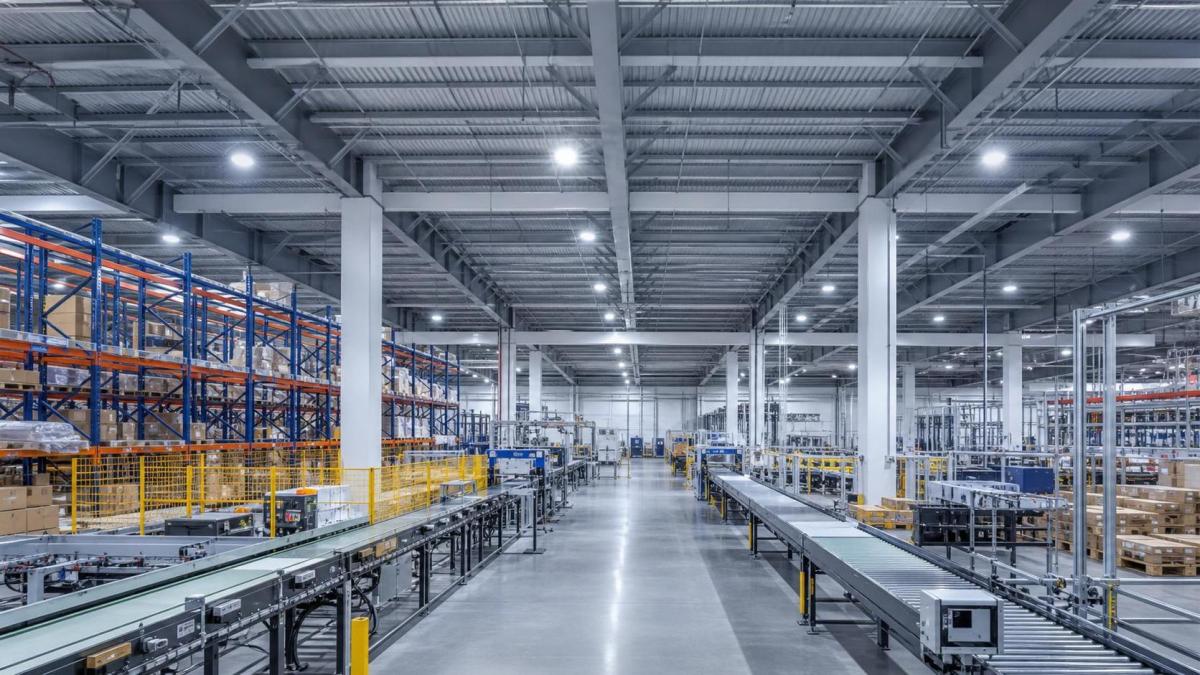
The image above fits a common challenge: bright spaces that still feel visually unstable.
Flicker is the rapid variation of light output over time. Some flicker is visible. Some is invisible to the eye but still affects cameras, sensors, task accuracy, and human comfort.
Glare is different. It appears when brightness is poorly controlled, badly placed, or reflected from shiny surfaces. Even a powerful fixture can underperform if glare forces people to look away.
In industrial and commercial projects, these problems show up in practical ways. Forklift operators misread aisles. Inspection teams struggle with reflective parts. Security cameras capture unstable images. Staff fatigue rises during long operating hours.
A capable industrial lighting solutions manufacturer treats flicker and glare as engineering variables, not side issues. That approach is increasingly important as AIoT, automation, and smart city assets rely on predictable optical conditions.
How manufacturers reduce flicker at the source
The first line of control is the driver. LED chips do not create serious flicker by themselves. Poor current regulation, unstable dimming logic, and low-quality power conversion usually cause the problem.
A strong industrial lighting solutions manufacturer uses constant-current drivers with low ripple design. Better driver architecture smooths the power delivered to LEDs, reducing visible pulsing and high-frequency modulation.
Dimming compatibility matters as well. In connected projects, luminaires often work with DALI, Zigbee, or other control systems. If driver and control protocol are poorly matched, flicker may appear during dimming transitions.
This is where engineering discipline matters. Manufacturers test fixtures at full output, partial dimming, startup, emergency mode, and sensor-triggered switching. A stable fixture must perform across all of those states.
Power quality from the site also affects results. Voltage fluctuation, harmonics, and inconsistent emergency circuits can increase instability. Better manufacturers design tolerance into the luminaire rather than assuming ideal power conditions.
Metrics worth checking
Many product sheets still emphasize efficacy and lifetime while saying little about light stability. For project evaluation, the following indicators are more useful:
- Percent flicker or modulation depth under normal operating conditions
- Flicker index or equivalent stability measurement
- Driver performance across dimming ranges
- Compatibility with sensors, controls, and emergency systems
- Evidence of test data rather than broad marketing claims
When an industrial lighting solutions manufacturer can provide those details clearly, the procurement process becomes much less speculative.
How glare is controlled through optics and layout
Reducing glare starts with optical design. The question is not only how much light leaves the fixture, but where it goes, at what angle, and how evenly it reaches the task area.
A reliable industrial lighting solutions manufacturer uses lenses, reflectors, diffusers, and shielding to shape the beam. This avoids harsh brightness peaks and reduces direct line-of-sight discomfort.
Fixture placement matters just as much. High-bay lights in warehouses, for example, need beam control that matches mounting height, aisle geometry, rack reflectance, and travel paths.
In production spaces, glare often comes from polished metal, coated surfaces, glass covers, or machine housings. The best result may come from lower luminance fixtures, wider distribution, and tighter aiming control.
Outdoor and semi-outdoor sites add another layer. Smart streetlights, loading docks, and perimeter zones need visibility without causing disability glare for drivers, camera systems, or nearby buildings.
Typical glare control methods
Why smart controls can help or hurt
Smart lighting adds value, but only when the control layer is stable. Occupancy sensors, daylight harvesting, scheduling, and adaptive dimming can reduce energy use and improve comfort.
Yet poor integration can introduce fresh problems. Abrupt dimming curves, sensor oversensitivity, and mismatched control gear often create visible stepping, repeated switching, or inconsistent brightness across zones.
This is especially relevant in the SHSS context, where lighting increasingly interacts with security, access control, and smart infrastructure. Cameras, biometric entry points, and automated workflows depend on stable, readable light.
A capable industrial lighting solutions manufacturer tests the luminaire as part of a connected system, not as a standalone object. That includes protocol reliability, dimming smoothness, fail-safe behavior, and scene consistency.
Application differences across project types
The right anti-flicker and anti-glare strategy changes with the site. Lighting for a tunnel, logistics center, assembly plant, and civic complex cannot follow one generic specification.
In warehouses, vertical illumination and aisle visibility usually matter more than raw horizontal lux. In factories, machine interaction and reflective materials drive optical decisions.
For data centers and smart buildings, stable low-flicker output supports both maintenance work and surveillance quality. In public infrastructure, glare control becomes part of traffic safety and neighborhood acceptance.
Even agriculture and vertical farms deserve mention. Spectral tuning may be the headline feature, but glare and flicker still affect maintenance visibility, control systems, and long operating cycles.
A practical review checklist
- Match optics to ceiling height, surface reflectance, and task direction
- Ask for flicker data at multiple dimming levels
- Review glare performance in real layouts, not only catalog renderings
- Confirm compatibility with DALI, Zigbee, or site controls
- Check how the system behaves during emergency switching or voltage variation
- Compare maintenance access, thermal design, and driver replacement policy
How to judge an industrial lighting solutions manufacturer
Not every supplier that sells LED fixtures performs like a true industrial lighting solutions manufacturer. The distinction usually appears in documentation depth, testing discipline, and application support.
Look for evidence that the manufacturer understands the full operational environment. That means thermal management, ingress protection, control integration, optical simulation, compliance expectations, and total lifecycle economics.
It also helps to see whether the company can speak across adjacent systems. SHSS highlights this broader perspective well: lighting decisions increasingly connect to safety hardware, digital monitoring, and resilient urban infrastructure.
A manufacturer that can explain flicker, glare, controls, and payback in one coherent framework is usually easier to work with during design review and commissioning.
Where to focus next
The next step is rarely choosing the brightest fixture. It is defining the visual risks of the site, then comparing how each industrial lighting solutions manufacturer addresses them in technical and operational terms.
Start with actual use conditions: task type, control logic, camera presence, mounting height, reflective surfaces, and maintenance constraints. Then review flicker metrics, glare control methods, and system integration data side by side.
That process usually produces a better decision than price comparison alone. In projects where safety, uptime, and performance matter, stable low-glare light is not an upgrade feature. It is part of the infrastructure standard.
Recommended News