
Search News
Industry Portal
Hot Articles
PPE Specification Europe: Key Compliance Points to Check
Time
Click Count
Why does PPE specification Europe deserve a closer review before approval?
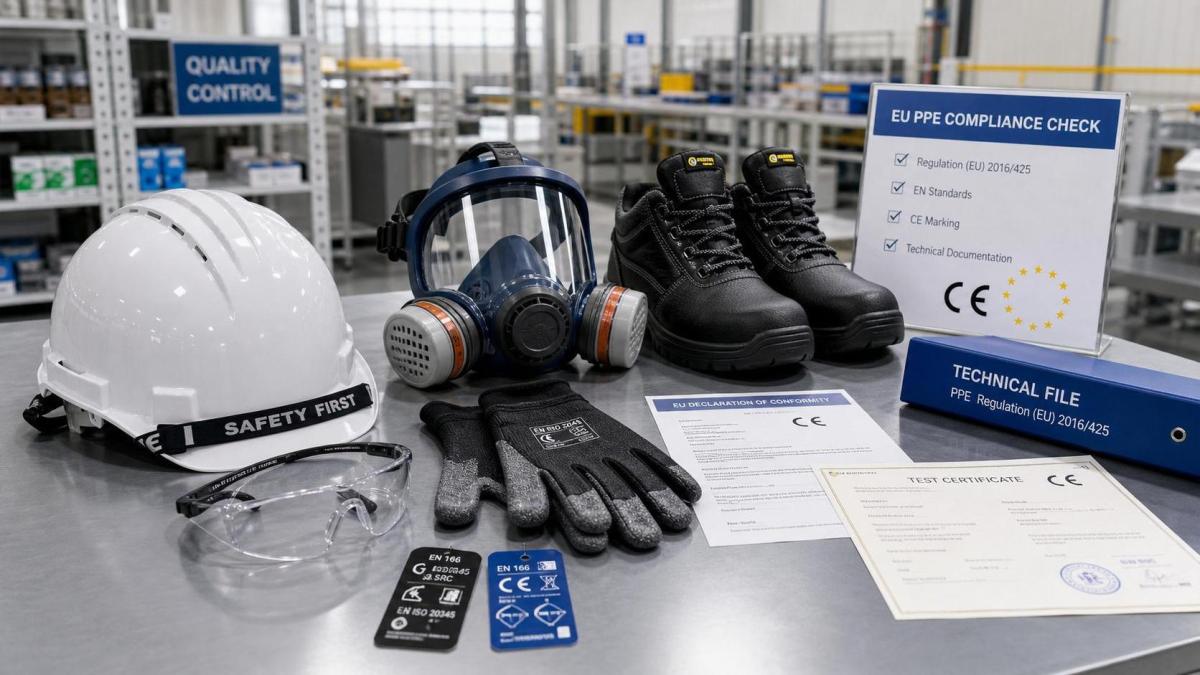
PPE specification Europe is not just a paperwork topic. It directly affects legal placement, worker protection, and failure exposure across industrial and urban projects.
A helmet, respirator, glove, or visor may look acceptable on arrival. That does not mean it meets European compliance expectations in actual use.
The usual risk starts when teams check only price, appearance, or a supplier declaration. European requirements go much deeper than that.
In practice, PPE specification Europe covers product category, applicable EN standard, conformity route, labeling, user information, and technical documentation.
For high-hazard environments, small errors can have large consequences. A wrong filter class or unsupported cut level can turn routine work into a serious incident.
That is why platforms such as SHSS track PPE alongside tools, fasteners, lighting, and security systems. In all these fields, performance claims must survive real operating conditions.
A useful way to read PPE specification Europe is this: every claim on protection must be traceable, test-backed, and clearly matched to the intended hazard.
When people say “European PPE compliance,” what should you actually verify?
The first checkpoint is the legal framework. Most PPE placed on the EU market falls under Regulation (EU) 2016/425.
This regulation is the backbone, but it does not work alone. It connects with harmonized EN standards for specific product types and hazard levels.
For example, gloves, safety footwear, helmets, eye protection, and respiratory devices all follow different technical standards and test methods.
CE marking matters, but it is only one visible sign. It does not replace a review of the underlying evidence.
A practical check usually includes the following points:
- Product category under the PPE regulation, especially for complex or life-threatening risks.
- Applicable EN standard and edition date.
- EU Declaration of Conformity consistency with the exact model supplied.
- Notified Body involvement where required.
- Marking, traceability code, and instruction manual completeness.
- Any limitation of use, maintenance interval, or shelf-life condition.
More common problems appear when documents are valid in general, but not valid for the exact variant, size range, coating, or filter configuration delivered.
That gap is easy to miss during sourcing and difficult to fix after deployment.
Which documents and markings separate compliant PPE from risky stock?
This is often the fastest way to screen a shipment. Good PPE specification Europe review begins with document alignment, not laboratory guesswork.
Start with the product itself. The model reference, batch data, manufacturer identity, and required symbols should match the paperwork exactly.
Then move to the EU Declaration of Conformity. It should identify the product clearly, reference the regulation, and cite the relevant standards.
For Category III PPE, check whether ongoing conformity procedures are covered. Some products require continued surveillance beyond initial type examination.
The user instructions also deserve attention. European compliance expects usable information, not a generic leaflet copied across product families.
The table below helps with a fast review.
A document pack that looks complete can still fail this review. The real question is whether every line ties back to the exact item on site.
How do EN standards, material claims, and performance levels connect in real use?
This is where PPE specification Europe becomes technical. A compliant product is not simply “strong” or “protective.” It must meet defined performance levels.
Take cut-resistant gloves as an example. Labels may mention abrasion, blade cut, tear, puncture, and sometimes impact resistance under specific EN methods.
A glove suited for sheet metal handling may not be the right choice for oily assembly lines or fine fastening work.
Respiratory protection is even less forgiving. Filter class, face fit, contaminant type, and duration of exposure must work together.
In construction, heavy industry, utilities, and smart-city maintenance, hazards often overlap. Dust, sharp edges, vibration, low visibility, and chemical splash may appear in the same task.
That is why material claims such as aramid reinforcement, anti-fog coating, or high-impact shell design should never be accepted without standard-linked proof.
A useful review question is not “Is the material advanced?” It is “Which tested hazard does this material reduce, and under what limit?”
SHSS often frames this through a wider industrial lens. Just as a high-strength fastener must prove load transfer, PPE must prove hazard resistance under stated conditions.
Where do teams usually make mistakes with PPE specification Europe?
The most common mistake is assuming that CE marking ends the review. It does not.
Another frequent error is buying by category name alone. “Safety glove” or “protective mask” says almost nothing about the actual protection level.
Some teams also overlook compatibility. Eye protection may interfere with respirator sealing. Hearing protection may clash with helmet fit. That creates a hidden compliance gap.
There is also a timing issue. Documents may be valid when first approved, then drift out of date after a supplier changes material source or model construction.
A few warning patterns are worth watching closely:
- Test reports shown instead of a proper Declaration of Conformity.
- Certificates that do not list the delivered variant.
- Translated instructions missing storage or replacement guidance.
- Protection claims based on marketing terms rather than EN ratings.
- Shelf-life sensitive items held in uncontrolled storage.
In actual audits, these gaps matter because regulators and project owners do not assess intention. They assess evidence and product suitability.
What is a practical review process before sourcing or deployment?
A workable PPE specification Europe process should be short enough to repeat and strict enough to catch weak submissions.
Start by mapping the task hazard, not the product family. The same glove type can be acceptable in one job and inadequate in another.
Then compare the hazard profile with the claimed EN performance levels, use limitations, and expected wearing duration.
Before release, it helps to run a structured checklist:
- Confirm the exact hazard: cut, impact, dust, chemical, heat, arc, visibility, or mixed exposure.
- Match the product to the correct EN standard and category.
- Verify the Declaration of Conformity and marking details.
- Review instructions for fitting, care, cleaning, and replacement.
- Check interoperability with other worn equipment.
- Record batch traceability for incoming inspection and field use.
More mature operations add wear trials. That step is useful when protection level, comfort, and task precision must balance across long shifts.
The goal is simple: PPE specification Europe should be verified at the point where documents, physical product, and workplace hazard meet.
What should happen next after the initial compliance check?
Initial approval is only the starting line. European PPE control works better when review continues through receipt, storage, issue, and replacement.
That matters especially in sectors where SHSS sees risk concentration: construction, industrial maintenance, infrastructure, utilities, and smart-city operations.
The most reliable next step is to build a product-specific acceptance standard. Include document checks, labeling rules, performance references, and rejection triggers.
It is also worth setting review intervals for long-running suppliers. A stable vendor can still introduce unnoticed specification drift.
If the current process feels fragmented, begin with the highest-risk PPE first. Respiratory, fall protection, chemical, and cut-resistant items usually deserve priority.
In short, PPE specification Europe should be treated as a living control process, not a one-time file collection exercise.
A disciplined review of standards, markings, performance limits, and use conditions reduces both compliance surprises and field exposure. That is the right basis for the next sourcing or deployment decision.
Recommended News