
Search News
Industry Portal
Hot Articles
GDPR Compliance Checklist for Cross-Border Customer Data Handling
Time
Click Count
Cross-border customer data now moves through sales portals, connected devices, cloud support systems, and access control platforms at the same time. In that environment, GDPR compliance is not a legal side issue. It is part of operational control, risk management, and customer trust.
That matters even more across hardware, security, lighting, PPE, and industrial supply chains, where order records, installer details, building access logs, and biometric identifiers may travel between regions. A practical checklist helps turn GDPR compliance from a policy file into daily business discipline.
Why Cross-Border Data Handling Demands Closer Attention
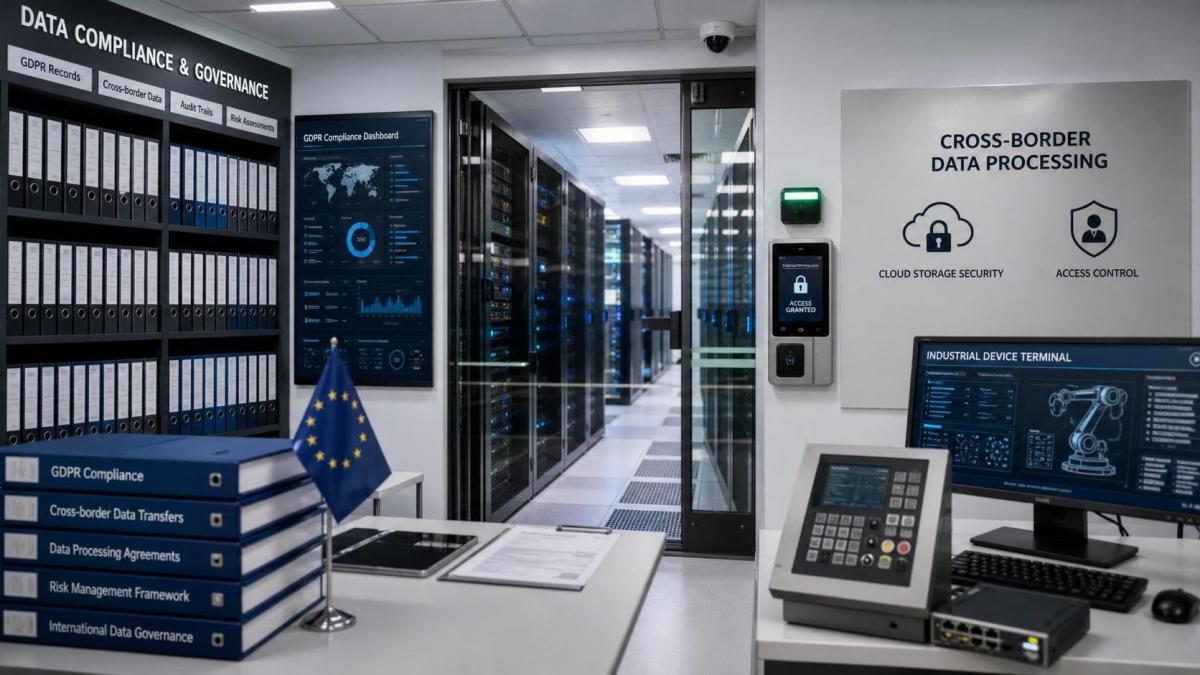
For SHSS-related sectors, data transfers rarely stay simple. A smart lock vendor may collect installer contacts in Germany, store support tickets in Singapore, and process incident logs in the United States.
A lighting platform may track occupancy-based energy data across several sites. A PPE supplier may retain distributor, warranty, and training records in multiple systems. Each movement creates a compliance question.
The core issue is not only where data sits. It is also why it moves, who can access it, what legal basis supports it, and whether the receiving environment protects individuals to an EU-acceptable level.
This is where GDPR compliance becomes business-critical. Poor transfer controls can trigger regulatory scrutiny, contract disputes, delayed procurement approvals, and hesitation from enterprise buyers with strict vendor due diligence.
What Counts as Personal Data in These Operations
In industrial and security environments, personal data appears in more places than many teams expect. Basic examples include names, emails, phone numbers, shipping addresses, and account credentials.
The risk rises when records become more sensitive. Biometric templates, facial recognition outputs, visitor logs, geolocation traces, maintenance histories tied to named users, and CCTV-linked identifiers require tighter handling.
For GDPR compliance, special category data deserves extra caution. In the SHSS context, biometric security systems are the clearest example. A fingerprint or iris pattern is not just another account field.
It may trigger stricter legal conditions, stronger security expectations, and a higher threshold for necessity. Teams that treat biometric data like ordinary customer information usually create avoidable exposure.
A Working Checklist for GDPR Compliance
A useful checklist should support daily decisions, not just audits. The points below are the controls that most often determine whether cross-border data handling is defensible.
Map the data flow before reviewing contracts
Start with a transfer map. Identify what data is collected, the source, the destination, the processor, the storage region, and the business reason behind each movement.
Without that map, contract language often gives a false sense of control. GDPR compliance begins with visibility, not paperwork.
Confirm the legal basis for processing
Every transfer depends on lawful processing at the start. That may involve contract performance, legal obligation, legitimate interests, or explicit consent in narrower cases.
For biometric use cases, legal analysis should be more careful. If the justification is vague, the transfer becomes harder to defend.
Check the transfer mechanism
If data leaves the EEA, confirm the transfer tool in use. This may involve an adequacy decision, Standard Contractual Clauses, or another recognized safeguard.
A vendor statement alone is not enough. GDPR compliance depends on documented transfer logic, not informal reassurance.
Assess destination-country risk
Cross-border handling now requires more than signing SCCs. Teams should review whether local laws, government access powers, or weak enforcement could undermine the protection promised on paper.
This transfer impact review is especially relevant for cloud-hosted security data and centrally managed access platforms.
Minimize the data set
Only transfer what is necessary. Remote diagnostics for a smart lock platform may need device logs, but not full identity records. Warranty verification may require order history, but not unused access metadata.
Data minimization is one of the most practical GDPR compliance controls because it reduces both legal and technical risk.
Set retention and deletion rules
Cross-border copies tend to remain in backups, mirrored servers, analytics tools, and third-party ticketing systems. A compliant process defines how long each dataset remains available and how deletion is verified.
Secure access and logging
Role-based access, encryption, MFA, and tamper-resistant logs are basic expectations. In higher-risk cases, pseudonymization and segregation of identifiers should also be considered.
For GDPR compliance, a secure system is not enough unless access decisions are controlled and provable.
Where Problems Usually Appear in Practice
Many failures happen outside formal systems. Teams often approve a regional distributor portal, then forget the connected CRM, email archive, analytics dashboard, and service subcontractor behind it.
Another common issue is function creep. Data collected for product support is later reused for marketing profiling, installer scoring, or security analytics without a fresh compliance review.
Biometric deployments create a separate cluster of risk. Fast recognition performance does not reduce privacy obligations. In fact, stronger identification capability usually means stricter GDPR compliance controls are required.
Documentation That Supports Defensible Decisions
Strong GDPR compliance depends on records that explain why a transfer exists and how it is controlled. This documentation should be usable during procurement review, internal audit, or regulatory inquiry.
- Records of processing activities that identify cross-border flows.
- Data processing agreements with processors and sub-processors.
- Transfer assessments for non-EEA destinations.
- Retention schedules and deletion evidence.
- Incident response steps for data breaches affecting transferred records.
- Privacy notices that accurately describe international transfers.
In practice, this documentation also improves internal alignment. Legal, security, product, and operations teams make better decisions when the transfer model is written clearly and updated regularly.
How to Apply the Checklist Across SHSS-Related Environments
The checklist becomes more useful when applied by scenario. Different SHSS sectors face different transfer pressures, even when the GDPR compliance framework stays consistent.
Biometric security and access control
This is the highest-sensitivity area. Edge processing, template minimization, restricted retention, and tightly governed cloud synchronization should be reviewed early, not after rollout.
Connected industrial tools and service platforms
Device telemetry may look harmless until it links back to named users, locations, or shift patterns. Product teams should separate machine performance data from identifiable operator data where possible.
Smart buildings and lighting ecosystems
Occupancy, badge interactions, and environment data can become personal data when tied to building users. Transfer reviews should consider aggregation, anonymization, and vendor-side observability limits.
Distributor, warranty, and training networks
These channels often rely on shared spreadsheets, reseller systems, and regional service desks. That makes GDPR compliance less about advanced technology and more about discipline, permissions, and record ownership.
A Practical Next Step
The most effective starting point is usually a transfer inventory tied to real systems, not a generic policy refresh. From there, review high-risk datasets first, especially biometric, access, and cloud-hosted customer records.
Then compare each transfer against legal basis, destination safeguards, minimization, retention, and access controls. Gaps found at this stage are often easier to fix than after procurement escalation or a customer audit.
For organizations working across smart hardware, industrial systems, and security infrastructure, GDPR compliance is best treated as a design requirement. When data movement is understood early, cross-border operations stay faster, cleaner, and easier to defend.
Recommended News