
Search News
Industry Portal
Hot Articles
Smart City Infrastructure in Europe: Funding Models and Project Risks in 2026
Time
Click Count
Europe’s smart city investment cycle is getting more selective
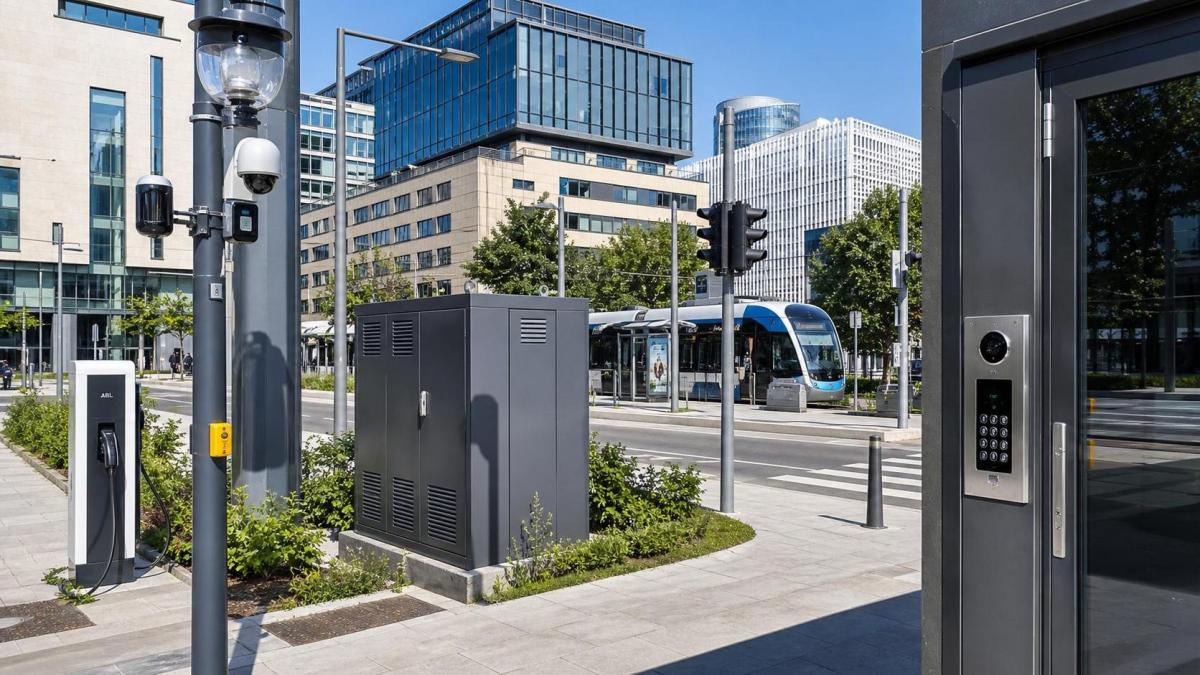
Smart city infrastructure Europe is entering 2026 with stronger ambition, but also tighter discipline around money, security, and operational resilience.
The earlier phase rewarded visible pilots.
The new phase rewards systems that can survive audits, budget stress, cyber incidents, and long asset lives.
That shift matters because urban programs now connect physical infrastructure, data platforms, and safety-critical hardware much more tightly than before.
In practical terms, smart lighting, access control, transport sensors, secure edge devices, and structural hardware are being financed as interdependent assets.
This is where smart city infrastructure Europe becomes less about experimentation and more about bankable execution.
From the SHSS perspective, that is a meaningful signal.
Urban modernization now depends on the same physical anchors and last-line defenses that shape industrial sites, transport hubs, and secure buildings.
A streetlight is no longer only an energy device.
A biometric gate is no longer only an access point.
A fastener, an edge controller, or protective gear package can influence project uptime, liability exposure, and financing confidence.
What changed in smart city infrastructure Europe during the last two years
The clearest change is that public spending alone is no longer expected to carry every urban technology upgrade.
Municipal balance sheets remain under pressure from energy volatility, inflation in construction inputs, and social spending demands.
As a result, cities are redesigning project structures rather than delaying every modernization plan.
More projects now combine grants, municipal borrowing, utility participation, concession models, and private co-investment.
The second change is technical.
Infrastructure once treated as isolated hardware now has to work as a connected operational stack.
Lighting networks feed mobility analytics.
Access systems support critical facility protection.
Sensors, gateways, and cabinets create new cyber and maintenance obligations.
The third change is regulatory.
Data governance, procurement scrutiny, ESG reporting, and resilience standards now shape project viability earlier in the pipeline.
That is especially visible in smart city infrastructure Europe where GDPR, critical infrastructure concerns, and sovereignty debates overlap.
Why these signals are strengthening now
- Cities need measurable payback, not just innovation narratives.
- Energy efficiency projects still attract capital, but only with stronger operational data.
- Cyber incidents have made unsecured devices a financing concern, not just an IT concern.
- Ageing transport, lighting, and public building assets need renewal at the same time.
- Physical reliability is receiving more attention because failures now cascade through digital systems.
Funding models are becoming more layered and performance-driven
In 2026, the funding conversation around smart city infrastructure Europe is less about finding one source of capital.
It is more about assembling structures that match asset life, risk profile, and measurable service outcomes.
For smart lighting, the logic is often straightforward.
Energy savings, maintenance reductions, and controllability can support performance-based financing or utility-linked models.
For secure access, data infrastructure, and mobility systems, financing becomes more complex because return depends on avoided losses and operational continuity.
That makes contract design more important than many early programs assumed.
A notable consequence follows from this.
Vendors and project sponsors increasingly need to present assets in financial terms, not only technical ones.
Long-life LED systems, tamper-resistant access hardware, and durable fastening components all influence total cost, service risk, and lender confidence.
Project risk is shifting from construction delay to lifecycle exposure
The old risk model focused heavily on delivery timelines and budget overruns.
Those still matter, but smart city infrastructure Europe now faces a deeper lifecycle question.
Can the system remain compliant, secure, and maintainable for ten to fifteen years?
That question affects financing decisions from the start.
Where risk is intensifying
- Cybersecurity exposure at the device and edge gateway level.
- GDPR and biometric data liabilities in access-heavy environments.
- Single-vendor lock-in that weakens future interoperability.
- Premature hardware degradation in harsh weather or vibration zones.
- Maintenance gaps caused by fragmented ownership after deployment.
This is why resilient hardware is returning to the center of strategy.
SHSS has long emphasized that city intelligence still rests on physical reliability.
High-strength fasteners determine whether poles, cabinets, and enclosures survive vibration and fatigue.
Secure biometric systems determine whether critical spaces remain protected without creating unlawful data risk.
Special PPE shapes maintenance safety when urban assets are serviced in traffic, dust, heat, or electrical exposure.
In other words, digital ambition is now judged through physical endurance.
Impact is spreading across more than one urban workflow
The impact of smart city infrastructure Europe is no longer limited to municipal IT or engineering departments.
It reaches financing teams, insurers, facility operators, contractors, and security governance functions.
That wider impact explains why project assumptions are being challenged earlier.
Take public lighting as one example.
A connected luminaire program can cut electricity demand and improve maintenance visibility.
Yet it also introduces software update obligations, communications dependencies, and cabinet security requirements.
The same pattern appears in transit nodes and municipal buildings.
Biometric or advanced access layers can reduce credential abuse.
They can also trigger privacy review, local storage design changes, and tougher vendor due diligence.
Even construction execution is shifting.
Brushless tools, safer PPE, and better fastening systems shorten downtime and improve install quality for distributed urban assets.
Those details rarely headline policy announcements, but they directly affect lifecycle economics.
What deserves closer attention before capital is committed
From recent demand signals, four checkpoints stand out in smart city infrastructure Europe.
1. Revenue logic must be realistic
Savings-based projects should separate structural savings from temporary energy price spikes.
Avoided-risk projects should define measurable service continuity outcomes.
2. Compliance design cannot be postponed
For access control, biometric processing, and cloud-connected infrastructure, legal review must shape architecture early.
Retrofit compliance is expensive and often politically damaging.
3. Hardware specifications need a lifecycle lens
Mean time between failure, corrosion resistance, ingress protection, fastening integrity, and remote maintainability deserve financial scrutiny.
Cheap components often create expensive urban liabilities.
4. Governance after installation matters as much as deployment
Ownership of data, update responsibility, incident response, and field maintenance should be contractually visible from day one.
The next phase will favor resilient systems, not the most ambitious slide decks
The next chapter for smart city infrastructure Europe will likely be defined by fewer symbolic pilots and more operationally serious programs.
Cities still want cleaner mobility, lower energy use, and better public safety.
What changed is the threshold for trust.
Financiers want durable assumptions.
Operators want maintainable architecture.
Public authorities want compliant, defensible systems that can withstand scrutiny long after ribbon-cutting events end.
That is why the strongest positions in 2026 will come from disciplined assessment.
Map funding options against actual asset behavior.
Test cyber and privacy exposure before procurement finalization.
Check whether structural hardware, secure access layers, lighting controls, and field safety provisions can support long-term performance.
For anyone tracking smart city infrastructure Europe, that is the practical next move.
Build a phased review of financing, compliance, and physical resilience together, because future-ready urban systems now depend on all three.
Recommended News