
Search News
Industry Portal
Hot Articles
How to Use Fastener Specification Resources for Safer Bolt Selection
Time
Click Count
Safer bolt selection rarely depends on one number. It depends on reading fastener specification resources in context, then matching those details to load, environment, installation method, and failure consequences.
That matters more now because construction, industrial equipment, smart infrastructure, and AIoT systems all rely on compact mechanical joints that must perform without surprise. A small mismatch in grade, coating, or thread form can undermine a much larger system.
Within SHSS coverage, high-strength hardware sits beside brushless tools, biometric security, smart lighting, and protective gear for a reason. Physical safety and operational continuity often start at the fastening point.
What fastener specification resources actually tell you
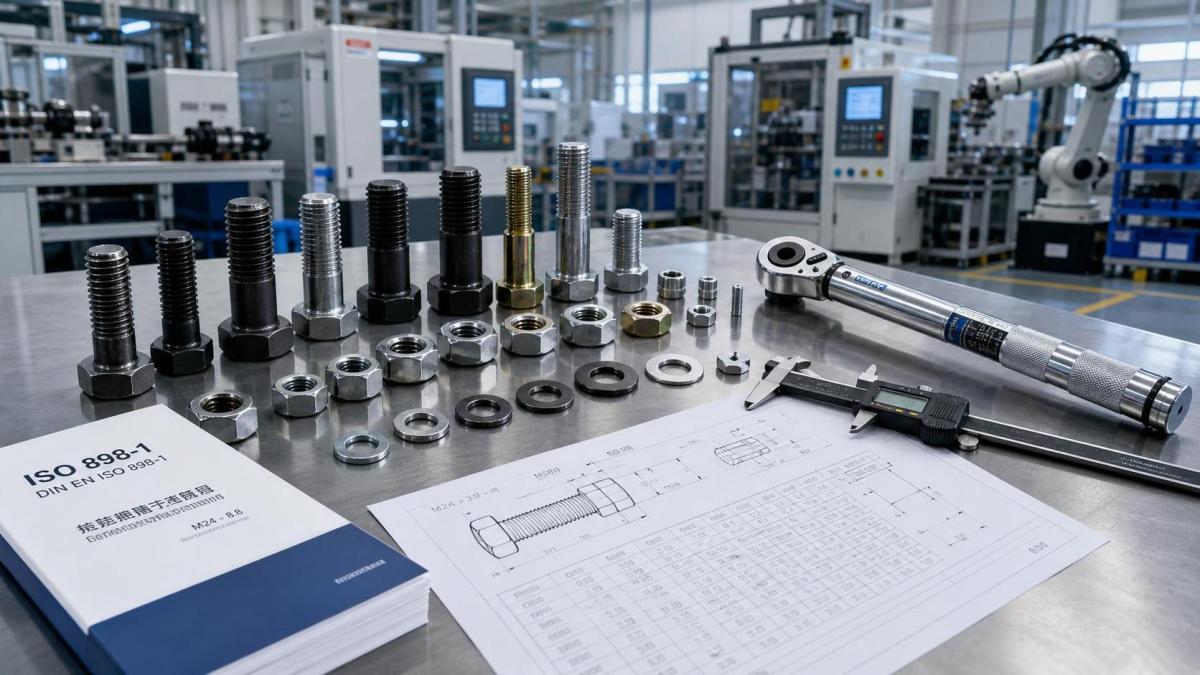
Fastener specification resources include standards tables, manufacturer datasheets, torque charts, coating references, mechanical property sheets, and application guidance tied to codes or assemblies.
Used well, these references do more than describe a bolt. They explain the limits of a bolted joint, the assumptions behind performance claims, and the conditions under which that performance changes.
A grade marking, for example, is not just a label. It points to tensile strength, yield behavior, hardness range, and sometimes heat treatment expectations.
Thread data is similar. Pitch, tolerance, and thread form affect clamp load, mating compatibility, assembly speed, and loosening resistance under vibration.
In practice, the most useful fastener specification resources are the ones that connect properties to application conditions rather than listing isolated numbers.
Why interpretation matters more than simple comparison
Two bolts can look interchangeable and still behave very differently in service. One may carry the required preload but lose corrosion resistance. Another may resist corrosion but create hydrogen embrittlement risk.
This is why safer selection is not a catalog exercise. It is a translation task between specification language and real operating conditions.
Across transport structures, access-control housings, industrial tools, lighting poles, and guarded enclosures, the same basic question appears: what exactly is this bolt expected to survive?
Fastener specification resources help answer that by clarifying whether the priority is static load, cyclic fatigue, shear transfer, clamp retention, corrosion durability, tamper resistance, or installation repeatability.
More importantly, they expose hidden tradeoffs. Higher strength is not automatically safer if installation control is weak or joint materials are sensitive to over-tightening.
The parameters that deserve the closest reading
Some data fields carry more decision value than others. They should be read together, not one by one.
Material grade and mechanical properties
Start with material class, proof load, tensile strength, yield ratio, and hardness. These determine whether the fastener can create and maintain the needed clamp force.
Where fatigue or shock is expected, basic tensile values are not enough. Look for fatigue performance guidance, notch sensitivity notes, and any limits related to dynamic loading.
Thread standard and fit
Unified, metric, fine, and coarse threads are not interchangeable decisions. They affect engagement length, stripping resistance, adjustment precision, and contamination tolerance during assembly.
Tolerance class also matters. A loose fit may speed assembly but reduce consistency. A tighter fit can improve control but increase installation sensitivity.
Coating and environmental resistance
Zinc plating, hot-dip galvanizing, mechanical galvanizing, phosphate, and stainless options each influence corrosion behavior, friction, and dimensional buildup.
The coating also changes torque-tension behavior. Fastener specification resources that separate dry torque from lubricated or coated torque are much more useful for safe selection.
Geometry and head style
Grip length, shank design, head type, washer face, and under-head bearing area influence load distribution and tool access. In compact assemblies, geometry can decide whether the joint is serviceable at all.
How this applies across real systems
Fastener decisions rarely sit in isolation. They affect tool performance, enclosure integrity, maintenance planning, and life-cycle reliability across several SHSS-covered sectors.
In industrial brushless tools, repeated torque pulses make preload retention and thread durability more important than headline strength alone.
In biometric access systems, fasteners may have lower structural loads but stricter needs around tamper resistance, corrosion control, and stable enclosure alignment.
For smart lighting poles and outdoor controls, weather exposure, galvanic compatibility, and maintenance access often become the selection drivers.
In protective or hazardous settings, a failed fastener can disable guards, housings, or mounting frames that support the last physical layer of safety.
That is why fastener specification resources should be read alongside the whole assembly, including substrate material, vibration profile, service interval, and installation tooling.
A practical reading sequence for safer bolt selection
A disciplined sequence helps avoid attractive but unsuitable options.
- Define the joint function first: clamp, locate, secure against tampering, or carry direct shear.
- Confirm operating conditions: vibration, moisture, chemicals, temperature swing, and maintenance frequency.
- Use fastener specification resources to shortlist material grades and thread standards that match those conditions.
- Check coating effects on friction and torque before finalizing preload values.
- Review dimensional compatibility with mating parts, washers, tool clearance, and installation access.
- Compare manufacturer data against relevant standards rather than relying on one source alone.
- Flag any missing data. An incomplete sheet is itself a selection risk.
This process is especially useful when a bolt appears to meet the load requirement but the joint still faces vibration loosening, corrosion creep, or inconsistent field tightening.
Signals that a specification source may be too weak
Not all fastener specification resources support sound decisions. Some provide only marketing-level descriptions or partial mechanical data.
Be cautious when the source lacks standard references, test conditions, coating thickness details, or torque assumptions. Missing friction conditions make torque values especially unreliable.
Another warning sign is data that looks precise but is disconnected from assembly reality. A bolt may have strong tensile values yet no guidance for joint design, fatigue, or environmental exposure.
Good fastener specification resources help reduce uncertainty. Weak ones shift the uncertainty into installation and field performance.
Where evaluation should go next
The next step is to build a comparison sheet around the joint, not just the bolt. Include load path, substrate, torque method, coating system, inspection interval, and replacement criteria.
Then use fastener specification resources to test each candidate against that framework. This makes tradeoffs visible before procurement, assembly, or field service begins.
For organizations working across construction, equipment, security hardware, or smart city assets, the strongest results usually come from a shared review standard for bolt selection.
When the reference set is consistent, safer decisions become faster. And when the joint is critical, that discipline protects far more than a single component.
Recommended News