
Search News
Industry Portal
Hot Articles
IoT Lighting Control ROI in 2026 Streetlight Upgrades
Time
Click Count
As cities plan 2026 streetlight upgrades, IoT lighting control is moving from a technical option to a financial priority. For enterprise decision-makers and municipal buyers, the real question is no longer whether smart lighting works, but how quickly it can reduce energy use, maintenance costs, and operational risk while supporting safer, data-driven urban infrastructure.
Why IoT lighting control is now a board-level ROI question
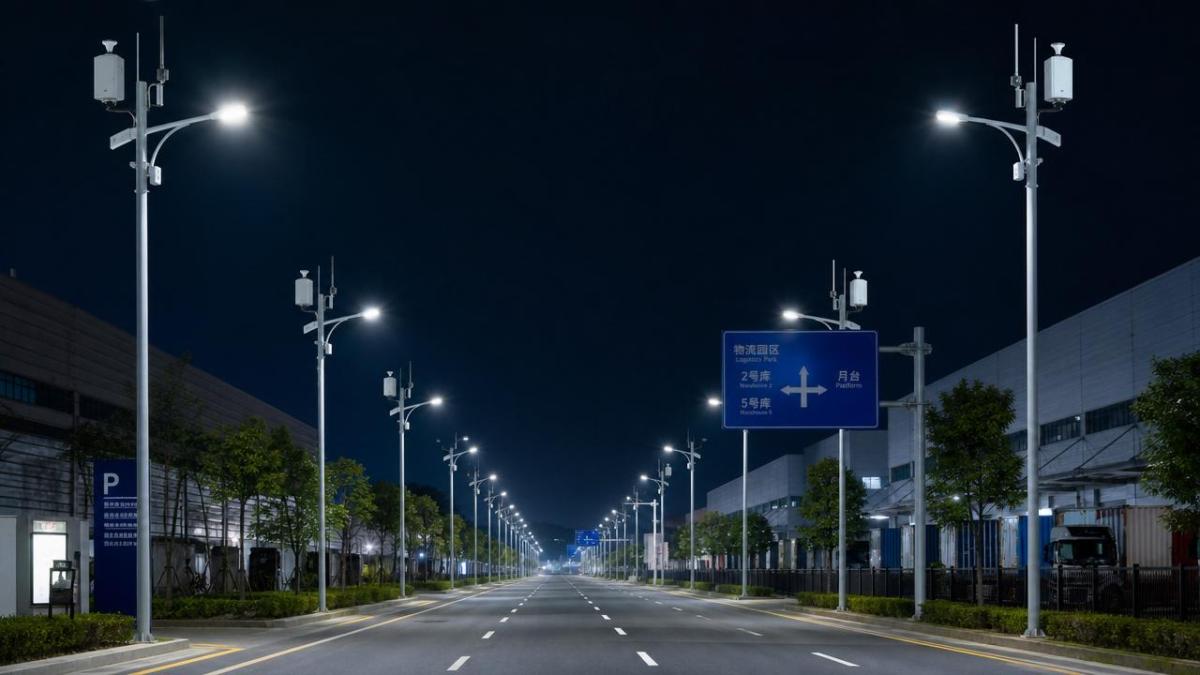
Streetlight projects used to be judged mainly on fixture price, wattage, and replacement cycles. In 2026, that approach is too narrow. IoT lighting control connects luminaires, sensors, gateways, and software into an operational system that affects energy budgets, contractor scheduling, public safety, and maintenance planning.
For decision-makers, the value is not just dimming lights remotely. It is the ability to convert fixed lighting assets into responsive infrastructure. A connected streetlight network can detect failures earlier, reduce truck rolls, support adaptive brightness policies, and create a cleaner data trail for finance, procurement, and compliance teams.
What has changed since earlier smart lighting cycles
- Electricity prices remain volatile, making energy savings more strategic than before.
- Cities and industrial campuses want measurable service levels instead of reactive maintenance.
- Open protocol expectations, such as DALI and Zigbee in relevant architectures, are reducing fear of vendor lock-in.
- AIoT planning increasingly links lighting with security, traffic, and asset management.
This is where SHSS brings unusual value. Its cross-disciplinary view of smart lighting, physical security, hardware durability, and procurement economics helps buyers judge streetlight upgrades as critical urban operating assets, not as isolated electrical components.
What drives ROI in 2026 streetlight upgrades?
The strongest ROI cases for IoT lighting control usually come from four levers working together. Many projects focus on only one. That leads to underperformance and slow payback.
The four main ROI levers
- Energy reduction through scheduled dimming, adaptive operation, and more precise light output by time and zone.
- Maintenance savings through fault alerts, driver diagnostics, and route optimization for field crews.
- Asset life extension because fixtures do not run at full output all night, every night.
- Operational risk reduction from better visibility, reporting, and control during outages, special events, or seasonal demand shifts.
The table below shows how enterprise buyers should frame IoT lighting control beyond the fixture itself.
A useful takeaway is that ROI is rarely created by hardware alone. It is created by the interaction of controls, software visibility, maintenance logic, and procurement discipline. That broader system view is essential for 2026 upgrade planning.
Which streetlight scenarios benefit most from IoT lighting control?
Not every road segment has the same performance target. A smart expressway corridor, an industrial logistics park, and a mixed-use downtown each require different control logic. Buyers who map scenarios first usually get better returns than buyers who standardize too aggressively.
High-value deployment environments
- Municipal arterial roads where energy use is high and fault visibility matters to service quality.
- Industrial campuses where lighting is linked to shift timing, perimeter security, and logistics flows.
- Ports, yards, and transport hubs where maintenance access is costly and downtime creates safety exposure.
- Smart city pilot districts where lighting may later integrate with cameras, environmental sensors, or emergency systems.
The next table helps compare common application scenarios for IoT lighting control and their procurement focus.
This scenario-based approach fits SHSS well because streetlight upgrades often sit at the intersection of smart lighting, physical infrastructure durability, and urban security operations. Lighting should not be specified in isolation from the rest of the built environment.
How should buyers compare control architectures and hardware choices?
A common mistake is to choose an IoT lighting control solution based on dashboard appearance or upfront node price. Decision-makers should compare the entire stack: luminaires, drivers, communication modules, gateways, sensors, and software governance.
Key evaluation criteria
- Protocol compatibility: confirm whether the system supports current and future control standards relevant to your roadmap.
- Failure visibility: remote diagnostics should identify driver, node, or communication issues clearly enough for field action.
- Outdoor durability: housing, connectors, and fasteners must tolerate vibration, moisture, and thermal cycling.
- Cyber and access discipline: any cloud or platform layer needs role-based access, logging, and practical control over remote commands.
Because SHSS covers smart access, structural hardware, and lighting together, it can help procurement teams ask better cross-functional questions. For example, a rugged luminaire body means little if connector quality is weak, if bracket fasteners degrade early, or if software permissions are loosely governed.
Questions that reveal real solution maturity
- Can failed assets be identified at pole level without manual nighttime inspection?
- Can dimming schedules be adjusted by district, event, or traffic pattern?
- How does the system behave during communication loss or power instability?
- What is required to integrate future sensors or adjacent smart city devices?
What costs are often missed in streetlight upgrade budgets?
Enterprise and municipal buyers usually budget for fixtures, poles, controls, and installation. Yet the hidden budget gap often appears later in communications, software onboarding, maintenance transition, and field retrofits. This is where many ROI models become too optimistic.
Look beyond capex alone
The total cost profile of IoT lighting control includes not only acquisition but also system commissioning, data management, firmware updates, staff training, and ongoing network support. Buyers should request a lifecycle cost map before issuing a final award.
It is also worth comparing full smart deployment against phased adoption. In some portfolios, central monitoring plus scheduled dimming may produce faster early returns than advanced sensor-rich configurations. In other environments, adaptive lighting can justify itself sooner because safety or access conditions vary sharply by time and zone.
Cost control checklist
- Separate one-time installation cost from recurring platform or connectivity cost.
- Confirm whether legacy poles, brackets, and electrical interfaces need reinforcement or replacement.
- Quantify field labor savings expected from remote diagnostics instead of stating them qualitatively.
- Test the payback model against conservative energy price and maintenance assumptions.
What standards, compliance, and risk controls deserve attention?
Streetlight modernization is no longer just an electrical procurement. It also touches network security, software accountability, outdoor reliability, and public-sector documentation. Even where local requirements differ, decision-makers should ask for a clear compliance path.
Practical compliance areas to review
- Electrical safety and luminaire performance documentation suitable for the project jurisdiction.
- Ingress protection, environmental suitability, and corrosion resistance for outdoor operation.
- Software access control, event logging, and update governance for connected assets.
- Data handling rules if lighting nodes interact with security systems, camera platforms, or occupancy datasets.
SHSS is especially relevant in this area because smart infrastructure decisions often overlap with access control, sensor networks, and edge intelligence. A lighting project that later links to public safety or site security functions needs disciplined architecture from the start, not after deployment.
FAQ: what do decision-makers ask before approving IoT lighting control?
How fast can IoT lighting control pay back in a 2026 upgrade?
Payback depends on baseline wattage, burn hours, tariff conditions, maintenance practices, and how deeply control functions are used. Projects with high nightly runtime and expensive field service often recover faster than projects that only replace fixtures without using remote diagnostics or dimming strategies.
Is IoT lighting control suitable for phased rollout?
Yes, and for many buyers a phased plan is more practical. A portfolio may begin with high-consumption corridors or maintenance-intensive districts, then expand after the first operating cycle confirms energy and service assumptions. This reduces budget pressure and sharpens future specifications.
What are the most common procurement mistakes?
Three mistakes appear repeatedly: choosing on fixture price alone, underestimating communications and software costs, and failing to define response workflows for alarms and diagnostics. A connected system creates value only when operational teams are prepared to use its visibility.
Can smart streetlights support broader smart city goals?
Often yes, provided the architecture is planned carefully. Streetlights can become mounting or power points for additional sensors and connected services. But expansion should be governed by interoperability, maintenance access, and cybersecurity discipline, not by adding devices without a clear operating model.
Why work with SHSS when evaluating 2026 streetlight upgrades?
SHSS approaches IoT lighting control from the perspective that modern infrastructure is only as strong as its physical anchors, digital oversight, and procurement logic. That matters for streetlight upgrades because a successful project depends on more than lamps and software. It depends on durable hardware choices, safe installation logic, secure control pathways, and a realistic operating-cost model.
For enterprise decision-makers, SHSS can support high-value discussions in the areas that usually decide whether ROI is real or only theoretical.
- Parameter confirmation for luminaires, control nodes, communication methods, and outdoor durability assumptions.
- Solution selection guidance based on municipal roads, industrial sites, logistics yards, or mixed smart city environments.
- Delivery cycle evaluation, especially for projects with phased installation or contractor coordination constraints.
- Certification and compliance review for electrical, environmental, and connected-system requirements.
- Quotation alignment and sample support planning so technical comparisons can be made on consistent criteria.
If your team is assessing 2026 streetlight upgrades, contact SHSS to review the ROI model, compare IoT lighting control architectures, validate specification priorities, and identify the most suitable rollout path for your budget, operating risks, and long-term smart infrastructure goals.
Recommended News