
Search News
Industry Portal
Hot Articles
Fastener Application Guide: How to Avoid Joint Failure in Mixed Materials
Time
Click Count
Why mixed-material joints fail for different reasons
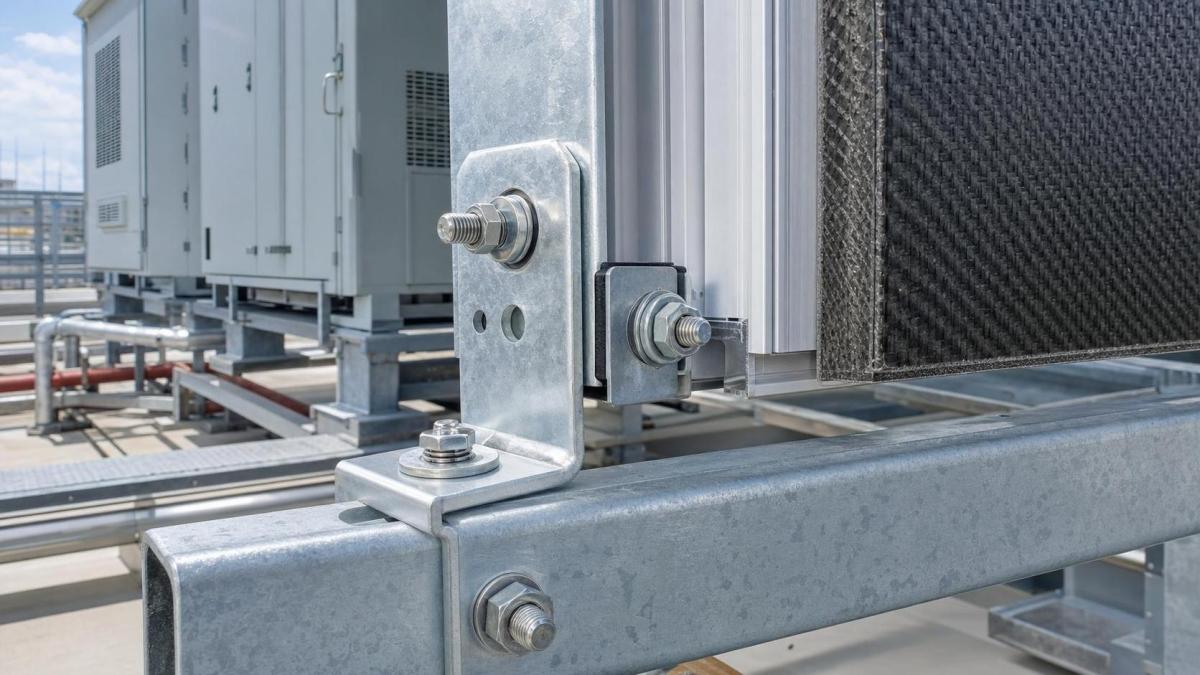
A reliable joint rarely depends on fastener strength alone.
In a mixed-material assembly, failure usually starts where materials behave differently under load, heat, moisture, or vibration.
That is why a practical fastener application guide must begin with the service condition, not the catalog page.
Steel, aluminum, composites, plastics, and coated substrates transfer force in different ways.
A joint that survives on a shop floor may loosen on a rooftop enclosure, a transit platform, or a smart lighting pole.
Within the SHSS view of modern infrastructure, fasteners are not isolated parts.
They connect power tools, biometric housings, lighting systems, safety equipment, and structural hardware into one dependable chain.
When that chain includes mixed materials, the judgment points change quickly.
Load path, galvanic potential, installation torque, edge distance, and thermal movement all become part of the fastening decision.
A useful fastener application guide therefore helps reduce failure before cracks, leaks, loosening, or compliance issues appear.
The same connector behaves differently across real installations
In practice, mixed-material joints are common because lightweighting, corrosion control, and smart equipment integration keep expanding.
Yet similar-looking assemblies often need very different fastening logic.
Outdoor steel-to-aluminum assemblies
Streetlight brackets, control boxes, and access hardware often combine galvanized steel frames with aluminum housings.
The visible concern is strength, but the hidden problem is galvanic corrosion.
When moisture bridges dissimilar metals, the joint can deteriorate long before the fastener reaches its rated capacity.
Here, a fastener application guide should prioritize isolation washers, compatible coatings, drainage, and inspection access.
Composite panels attached to metal frames
Façade elements, equipment covers, and transport enclosures often use composites for weight reduction.
These panels may not crush, split, or creep in the same way as sheet metal.
The critical question becomes bearing stress around the hole and long-term clamp retention.
Oversized heads, bonded inserts, and controlled torque usually matter more than choosing the highest hardness.
High-vibration equipment zones
Brushless tools, motor mounts, security gate mechanisms, and mechanical platforms create repeated dynamic loading.
Mixed materials in these areas shift and relax at different rates.
A joint that passes static pull testing may still lose preload during vibration.
This is where prevailing torque nuts, thread-locking strategy, and validated tightening sequence become more important than nominal tensile values.
Different scenarios change the judgment priorities
A strong fastener application guide compares conditions instead of assuming one standard setup.
The table below highlights where decisions usually shift.
This is why one drawing note rarely covers every field condition.
The better approach is to define the joint by exposure, movement, and maintenance reality.
Where load path and torque matter more than bolt grade
A common mistake is selecting a stronger bolt to solve a weak joint.
In mixed materials, the surrounding material often fails before the fastener does.
That makes load path analysis essential in any fastener application guide.
If clamp force travels through a soft layer, thin coating, or brittle composite edge, extra torque can accelerate damage.
If the joint relies on friction, under-torque allows slip.
If the joint relies on shear transfer, hole quality and fit become dominant.
In tool-driven assembly lines, installation consistency matters just as much.
BLDC fastening tools can improve repeatability, but only when torque settings match the stack-up and lubrication state.
The same torque value can produce very different preload if coating friction changes.
A sound fastener application guide therefore links torque validation with washer selection, surface condition, and tightening sequence.
Thermal movement becomes visible in smart city hardware
Mixed-material fastening is especially sensitive in equipment exposed to sun, cold nights, and intermittent operation.
Smart lighting poles, access control enclosures, and sensor cabinets often combine metals, polymers, and electronics.
These systems may look static, but they expand and contract every day.
When the fastener application guide ignores thermal expansion mismatch, seals distort, threads relax, and panels begin to rattle.
More reliable practice uses slots, floating points, compressible interfaces, or selective hard points.
The goal is not maximum rigidity everywhere.
It is controlled restraint where structure needs it and controlled movement where materials demand it.
That distinction often separates durable urban hardware from assemblies that need constant service calls.
Misjudgments that look minor but create expensive failure
Several errors appear repeatedly across construction, equipment, and infrastructure projects.
- Assuming stainless fasteners always solve corrosion, even when the surrounding metal becomes the sacrificial element.
- Copying torque values from steel-only joints into aluminum or composite stack-ups.
- Treating indoor-tested assemblies as suitable for outdoor humidity, salt spray, or condensation cycles.
- Focusing on purchase price while ignoring rework, leak risk, inspection frequency, and downtime.
- Using one locking method everywhere, even when maintenance access or disassembly is required.
- Checking fastener grade carefully, but skipping hole tolerance, edge distance, and substrate thickness.
These mistakes usually come from treating similar assemblies as identical.
A fastener application guide is most valuable when it separates similar-looking joints by actual operating condition.
How to adapt fastening choices before release and installation
A practical decision process does not need to be complicated, but it must be disciplined.
- Map the material stack-up and identify the weakest layer in compression, shear, and bearing.
- Define the real exposure profile, including moisture, vibration, temperature swing, and service interval.
- Match the fastener system, washer, insert, and coating as one joint package.
- Validate installation torque with the actual surface condition and production tool settings.
- Check whether the joint must remain fixed, permit movement, or support repeat disassembly.
- Run targeted tests that reflect field loads, not only static lab values.
That approach fits the broader SHSS perspective.
Physical safety depends on how tools, structures, enclosures, and protective systems work together under real stress.
A strong fastener application guide supports that goal by turning material differences into manageable design inputs.
Before finalizing any mixed-material joint, compare the use scenario, confirm the failure mode to avoid, and document the installation window.
That next step usually prevents more problems than upgrading to a stronger fastener after the fact.
Recommended News