
Search News
Industry Portal
Hot Articles
Industrial Fasteners: When High-Strength Bolts Fail Under Fatigue Loads
Time
Click Count
Industrial fasteners are often specified by tensile grade, coating, and torque values, yet fatigue loading can defeat even high-strength bolts long before static capacity is reached. For technical evaluators assessing bridges, machinery, pressure equipment, or vibration-prone assemblies, the real question is not whether a bolt is strong enough once, but whether it can survive millions of fluctuating stress cycles. This article examines why fatigue failures occur, how preload, thread geometry, material quality, and joint design interact, and what evaluation practices help prevent critical fastener breakdowns in demanding industrial environments.
Why Do High-Strength Industrial Fasteners Fail Before Their Rated Load?
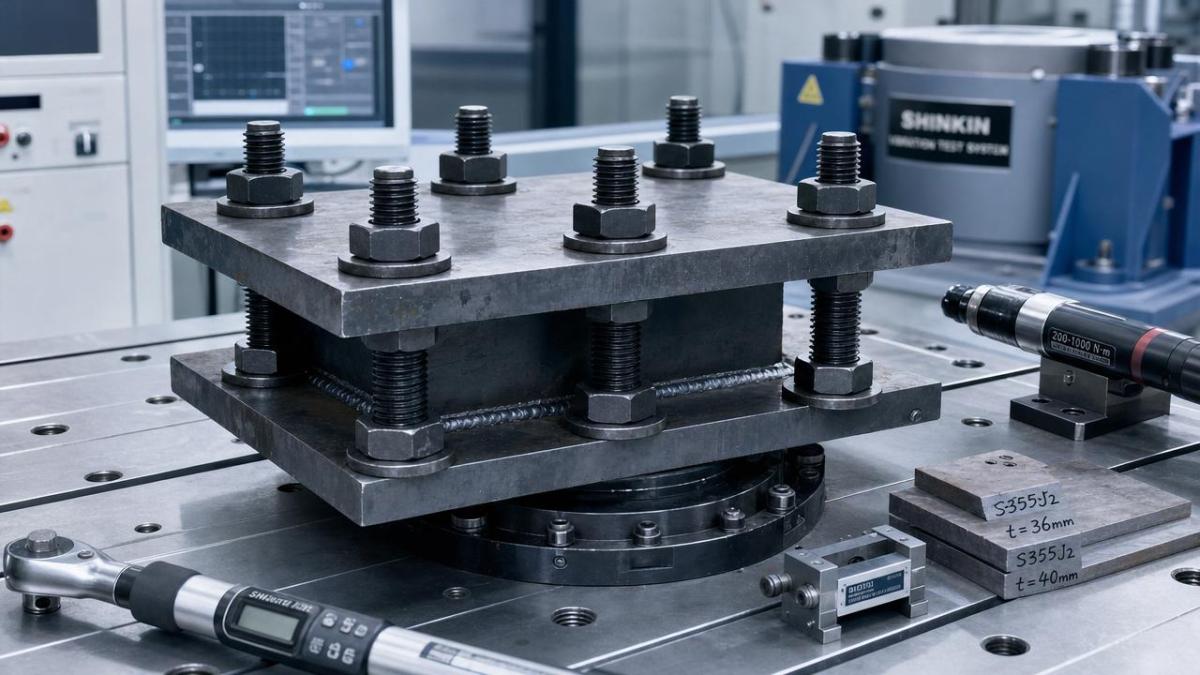
A fatigue failure rarely announces itself with visible plastic deformation. A bolt may look correctly tightened, carry a respectable property class, and still crack from a microscopic stress riser.
For industrial fasteners, fatigue damage accumulates when cyclic stress repeatedly opens and closes small discontinuities at the first engaged thread, underhead radius, or transition zone.
Static strength is not fatigue assurance
Technical evaluators often receive datasheets emphasizing tensile strength, yield strength, and hardness. Those values matter, but fatigue depends more on stress range, notch sensitivity, surface integrity, and joint stiffness.
A high-strength bolt can be less forgiving than a lower-strength bolt if hardness increases notch sensitivity or if hydrogen embrittlement risk is poorly controlled after plating.
- Fatigue cracks commonly initiate at thread roots because geometry concentrates stress and surface finish strongly affects crack nucleation.
- Joint separation increases the alternating load carried by the bolt, even when the initial tightening torque seemed acceptable.
- Corrosion pits, decarburization, laps, seams, and coating defects can reduce fatigue life without changing the nominal bolt grade.
SHSS treats industrial fasteners as physical anchors of industrial civilization, not commodity parts. That perspective is critical when a single bolted joint supports bridge members, rotating equipment, cranes, rail infrastructure, or pressure vessels.
Where Fatigue Loads Punish Bolted Joints Most Severely
Fatigue problems appear in any assembly where vibration, thermal expansion, pressure pulsation, impact, or changing live loads alter clamping force over time.
The following table helps technical evaluators connect application conditions with likely failure mechanisms when reviewing industrial fasteners for procurement or redesign.
This matrix shows why one specification cannot serve every joint. Industrial fasteners in static building frames, vibrating drives, and hot flanges require different fatigue assumptions.
A technical review should therefore start with the load spectrum, not the catalog page. The best bolt is the one whose material, geometry, preload, and installation method match the duty cycle.
A practical warning sign: repeated retightening
If maintenance teams repeatedly retighten the same joint, the problem may not be operator discipline. It may indicate embedment loss, joint slip, insufficient grip length, gasket relaxation, or vibration-induced loosening.
Which Parameters Actually Matter in Fatigue Evaluation?
Torque is easy to write into a procedure, but it is an indirect method for creating clamp load. Friction scatter can produce wide preload variation from the same torque setting.
When evaluating industrial fasteners, the following parameters deserve more attention than a single nominal grade or a generic “high tensile” description.
The table highlights a common procurement gap. A bolt can meet a dimensional standard and still be unsuitable if coating friction, preload method, or joint stiffness is ignored.
For SHSS, high-strength hardware evaluation links metallurgical detail with field reality. The goal is not over-specification; it is controlled risk under real cyclic loading.
Preload: the hidden fatigue shield
A properly preloaded bolt behaves differently from a loose bolt. The external load first reduces compression between clamped parts instead of directly increasing bolt stress.
However, preload is only protective when it remains stable. Embedment, paint creep, gasket compression, and thermal relaxation can lower clamp force after installation.
How to Compare Bolt Grades, Materials, and Coatings Without Overbuying
Technical evaluators are often pushed toward the highest grade available. That decision may look conservative, but it can create cost, corrosion, or embrittlement issues.
Industrial fasteners should be compared through service conditions, not isolated strength numbers. The right choice balances strength, ductility, fatigue resistance, maintainability, and supply reliability.
Decision checklist for grade and coating selection
- Define whether the joint is tension-loaded, shear-loaded, slip-critical, gasketed, or exposed to combined bending and vibration.
- Confirm environmental exposure, including salt spray, chemicals, temperature, humidity, and galvanic contact with dissimilar metals.
- Specify installation method, lubrication condition, washer type, and retightening policy before finalizing torque values.
- Require traceable material certificates and, for critical service, evidence of heat treatment and coating process control.
- Assess availability and replacement strategy, because fatigue reliability also depends on consistent parts across maintenance cycles.
For many assemblies, a slightly lower strength level with better toughness, corrosion resistance, and preload control may outperform a harder bolt with poor installation repeatability.
This is where SHSS connects structural mechanics insight with B2B procurement logic: avoiding both under-designed joints and expensive specifications that do not address the root risk.
What Standards and Certifications Should Technical Evaluators Review?
Standards do not eliminate engineering judgment, but they provide a common language for dimensions, mechanical properties, testing, and acceptance criteria.
For industrial fasteners, evaluators should map the applicable standard to the assembly type, jurisdiction, client specification, and safety consequence of failure.
A certificate should be treated as evidence to review, not a substitute for technical evaluation. Confirm that the certificate covers the actual batch, coating, and purchased configuration.
In regulated or safety-critical projects, procurement teams should align standards review with design engineers, quality teams, site supervisors, and maintenance planners before release.
How to Investigate a Suspected Fatigue Failure
When industrial fasteners fail in service, replacing them with stronger bolts may only delay the next incident. A structured investigation identifies whether the failure began in design, supply, installation, or operation.
Failure review sequence
- Preserve failed parts, mating nuts, washers, and surrounding components before cleaning or discarding fracture surfaces.
- Record installation data, including torque tools, lubrication, tightening sequence, operator notes, and service hours.
- Inspect fracture morphology for beach marks, ratchet marks, overload zones, corrosion products, and thread-root initiation.
- Compare the actual joint with drawings, including grip length, hole alignment, surface flatness, washer seating, and contact marks.
- Review operating loads for resonance, unexpected vibration, pressure pulsation, thermal expansion, or impact events.
This process separates symptom from cause. A cracked bolt may be the visible victim of joint slip, overloaded equipment, misalignment, or uncontrolled tightening friction.
For technical evaluators, the value of investigation is not blame. It creates procurement rules, installation controls, and design changes that prevent repeated fatigue failures.
Procurement Guidance: What Should Be in a Fatigue-Aware Fastener Specification?
A useful purchase specification tells suppliers what performance must be controlled and tells receiving inspectors what evidence to verify.
For industrial fasteners used in cyclic service, the specification should go beyond size, grade, and quantity. It should describe risk context and acceptance requirements.
Recommended specification elements
- Mechanical property class, material standard, hardness range, and any toughness requirement relevant to temperature or impact exposure.
- Thread form, thread rolling requirement where justified, surface finish expectations, and restrictions on visible laps or seams.
- Coating type, maximum coating thickness at threads, lubrication condition, and target torque-tension coefficient if installation control depends on torque.
- Lot traceability, inspection certificate type, batch identification, and requirements for replacement part consistency.
- Packaging and handling controls to avoid mixed lots, damaged threads, contamination, or corrosion before installation.
Budget limits matter, especially in large infrastructure and equipment programs. But low unit price can become expensive when rework, downtime, inspection, and liability are included.
A fatigue-aware procurement approach compares total joint risk, not only bolt cost. It also prevents emergency substitutions during tight delivery schedules.
Common Misconceptions About Industrial Fasteners Under Fatigue
Misconceptions are costly because they turn small engineering assumptions into field failures. The following points deserve attention during technical reviews and supplier discussions.
“A higher grade always improves fatigue life”
Not always. Higher strength may allow higher preload, but it can also increase notch sensitivity and reduce tolerance for surface damage or hydrogen effects.
“Torque control is enough for critical joints”
Torque control is practical, but friction variation can be significant. Critical joints may require calibrated tools, controlled lubrication, tension indicating methods, or documented tightening sequences.
“Coating only affects corrosion resistance”
Coating also affects thread fit, friction, preload scatter, and embrittlement risk. Any coating change should trigger a review of installation parameters.
FAQ for Technical Evaluators
These questions reflect common search and procurement concerns when industrial fasteners are selected for vibration-prone or safety-critical assemblies.
How can I tell whether a bolt failure was caused by fatigue?
Fatigue fractures often show progressive crack growth features, such as beach marks or a smooth initiation region followed by a final overload zone. Laboratory examination is recommended for critical failures.
Should I specify rolled threads for all high-strength bolts?
Rolled threads can improve fatigue performance, especially through better surface condition and residual stress. However, the decision should consider size, standard, supplier capability, and service criticality.
What is the most overlooked factor in fatigue-resistant fastening?
Stable preload is often overlooked. If the joint loses clamp force, external cyclic loads transfer more directly into the bolt, accelerating crack initiation and loosening.
How long does technical evaluation usually take?
A basic specification review may take days if drawings and load conditions are clear. Failure analysis, supplier qualification, or coating validation can require longer planning.
Why Choose SHSS for Fastener Evaluation and Procurement Support?
SHSS focuses on the hardware systems that hold modern industry together: high-strength industrial fasteners, brushless tools, biometric security, smart lighting, and protective equipment.
Our perspective is cross-disciplinary. We connect structural mechanics, field installation practice, supplier documentation, and procurement economics so technical evaluators can make defensible decisions.
Consult us before the joint becomes the failure point
You can consult SHSS for parameter confirmation, bolt grade comparison, coating review, torque-tension strategy, certification requirements, sample evaluation, and quotation communication.
For urgent projects, we can help structure a technical checklist for delivery schedule discussions, supplier clarification, and replacement planning without overlooking fatigue risks.
If your assembly faces vibration, pressure pulsation, thermal cycling, or high consequence of failure, evaluate industrial fasteners as engineered safety components, not interchangeable commodities.
Recommended News