
Search News
Industry Portal
Hot Articles
High-Strength Fasteners: When Bolt Grade Failure Becomes a Project Risk
Time
Click Count
Why can a small bolt grade mistake become a major project risk?
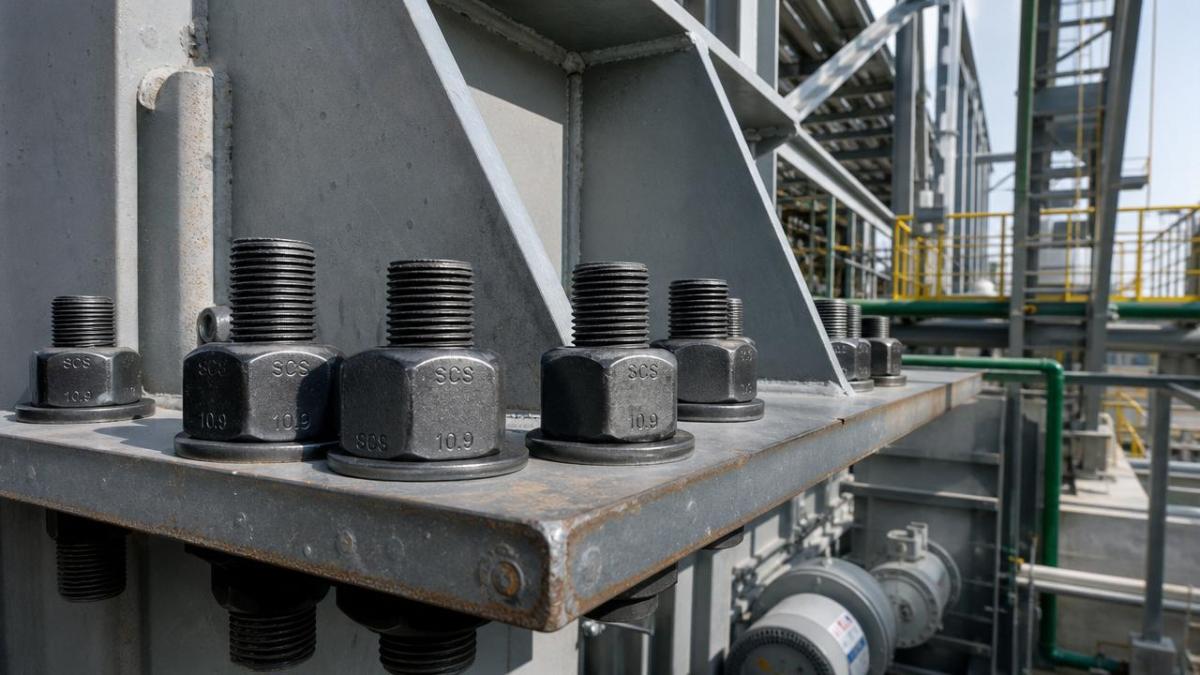
In complex builds, high-strength fasteners rarely attract attention until something goes wrong. That is exactly the problem.
A grade mismatch may look minor on paper. In service, it can trigger loosening, fatigue cracking, preload loss, or joint separation.
The project risk is not limited to one failed connection. It often spreads into rework, shutdowns, claims, inspection delays, and damaged confidence.
That is why high-strength fasteners are often described as the steel sutures of industrial systems. They hold together structures, machines, access platforms, lighting supports, and safety-critical assemblies.
In practice, bolt grade failure usually comes from decisions made much earlier. Specification gaps, substitution pressure, rushed installation, and weak traceability create the real exposure.
For organizations tracking smart infrastructure, heavy industry, and urban resilience, this issue sits beside other safety layers. A secure door, a reliable tool, or compliant PPE means little if the mechanical anchor fails.
What does “bolt grade failure” really mean in high-strength fasteners?
It does not always mean a bolt snaps in half.
More often, it means the selected high-strength fasteners cannot reliably deliver the tensile strength, ductility, preload retention, corrosion resistance, or fatigue performance the joint requires.
Sometimes the grade itself is wrong. Sometimes the grade is correct, but the coating, heat treatment, thread fit, or installation method undermines performance.
A common misunderstanding is to treat all high-strength fasteners as interchangeable once the diameter matches. Real assemblies do not work that way.
Dynamic equipment, bridge nodes, steel frames, pipe supports, and smart lighting poles each load bolts differently. Vibration, temperature cycling, humidity, and maintenance access all change the risk picture.
The table below helps separate frequent warning signs from their likely implications.
Where do high-strength fasteners fail most often in real projects?
The highest risk usually appears where load is variable, access is difficult, or schedules push teams into substitutions.
Steel structures are one obvious area, but not the only one. Industrial frames, energy equipment, access-control housings, lifting systems, and outdoor smart infrastructure also rely on correct joint behavior.
More exposed conditions include:
- Connections facing repeated vibration from motors, compressors, or heavy traffic.
- Assemblies installed outdoors with moisture, salt, or heat variation.
- Retrofit work where old drawings do not match field conditions.
- Critical supports that are hidden after enclosure, cladding, or commissioning.
In these settings, the cost of getting high-strength fasteners wrong is never just the unit price. Access equipment, shutdown windows, and verification work usually cost far more than the bolts.
This is one reason technical intelligence platforms such as SHSS look at hardware decisions in context. Fasteners interact with power tools, inspection routines, protective equipment, and the broader safety system around the asset.
How can you tell whether the specified grade is actually suitable?
A useful check starts with the joint, not the catalog.
Ask what the fastener must resist over time. Static tension is only one part. Shear, shock, bending, thermal expansion, and corrosion exposure may control the selection.
Then review whether the chosen high-strength fasteners align with the actual installation method. A correct grade can still fail if torque tools are inaccurate or lubrication assumptions change friction.
A practical suitability check often includes these points:
- Confirm the governing standard, marking, and mechanical class.
- Match coating and base material to the operating environment.
- Verify preload method, torque values, and tool calibration records.
- Review fatigue exposure, not only ultimate strength.
- Check documentation for lot traceability and test certificates.
Where specifications are vague, substitutions become easier and risk grows quietly. Tight documentation prevents many failures before the first installation begins.
Why do compliant high-strength fasteners still fail after installation?
Because compliance on paper is not the same as performance in service.
Many joint failures happen after a chain of small decisions. A coating changes friction. A reused bolt loses reliability. A battery tool is powerful enough, but not calibrated for the target preload.
In real installations, three causes appear repeatedly.
Installation control drifts faster than teams expect
Fast-paced work can blur the difference between snug-tight and engineered preload. Once clamp force varies across a joint, load sharing becomes unpredictable.
Environment changes the joint after handover
Humidity, chlorides, temperature swings, and vibration slowly attack performance. The fastener may remain intact while the joint function degrades.
Procurement substitutions break the original engineering logic
An “equivalent” part may differ in hardness, thread tolerance, finish, or certification quality. Those details decide long-term behavior.
This is where disciplined review matters more than reacting to the cheapest available stock. The life-cycle cost of failed high-strength fasteners is usually multiple times the purchase savings.
What is the most effective way to reduce bolt grade risk before it reaches the site?
The strongest approach is to treat high-strength fasteners as a controlled system, not a commodity line item.
That means linking design intent, sourcing rules, installation practice, and inspection evidence into one workflow.
A workable risk-reduction routine often looks like this:
- Freeze approved grades, finishes, and standards early in the design package.
- Define substitution rules before supply pressure appears.
- Require batch traceability, mill certificates, and marking verification on receipt.
- Align tightening procedures with calibrated tools and field supervision.
- Plan inspection points before joints become inaccessible.
- Record deviations immediately, even if the issue seems minor.
In high-consequence sectors, this discipline mirrors the logic used in biometric security or PPE programs. Small controls, applied consistently, prevent large failures later.
A final point is worth keeping in mind. High-strength fasteners support the credibility of the whole asset. If the physical anchor is uncertain, every other performance promise becomes weaker.
Before the next package is released, review grade assumptions, installation controls, and traceability gaps. That single check often protects schedule, safety, and asset life better than late-stage troubleshooting.
Recommended News